
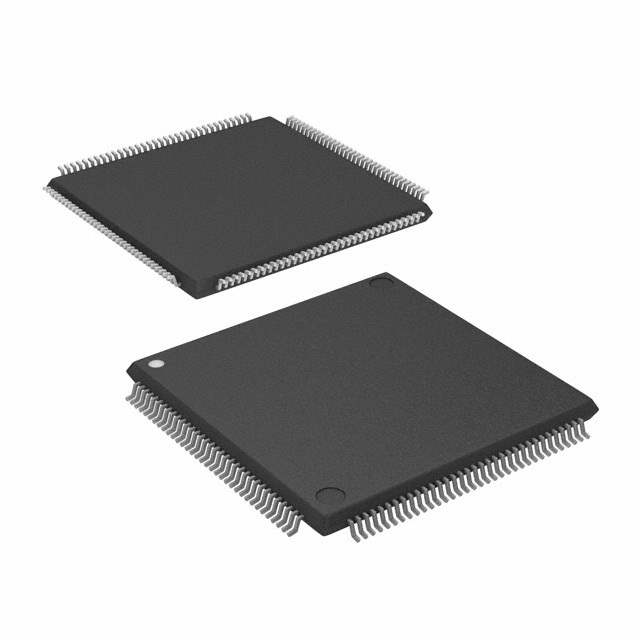
Detailed analysis of DSPB56724AG specifications, lifecycle, compliance, and availability for informed procurement.
Quick Engineering Summary
| Field | Value |
|---|---|
| Manufacturer | Freescale Semiconductor - NXP |
| Category | Embedded - DSP (Digital Signal Processors) |
| Package | 144-LQFP (20x20) |
| Core function | DSP 24BIT AUD 250MHZ 144-LQFP |
| Key electrical range | Supply and Demand Status: Limited; Temperature Range - Operating: 0°C to 70°C (TA); Voltage - Core: 1.20V; Voltage - I/O: 3.30V |
| Workbook inventory signal | 198 pcs listed in the provided file |
Lifecycle Analysis
Conflicting lifecycle signals make the DSPB56724AG a part that requires careful procurement strategy. In the provided data, the Excel lifecycle parameter explicitly states '不适用于新设计' (Not For New Designs), while another field lists the lifecycle status as Active. A conservative interpretation treats this as an NRND (Not Recommended for New Designs) part, meaning NXP no longer recommends it for new product development, though it remains available for sustaining current production.
For engineers, this means the DSPB56724AG should not be designed into new projects. Existing designs can continue to use it, but procurement teams should anticipate potential phase-out and begin evaluating migration paths. The reported inventory of 198 units in the file-based data is a snapshot and not guaranteed in real time. Always revalidate lifecycle status directly with NXP or authorized distributors, and secure sufficient stock to cover production needs during the transition.
The medium risk level reflects the uncertainty: while the part is technically still 'Active', the 'Not For New Designs' signal suggests that a discontinuation notice could come at any time. Plan for last-time buy opportunities and consider alternative audio DSPs from NXP’s portfolio if long-term availability is required.
Parameter Analysis
The DSPB56724AG is a 24-bit audio DSP with a 250 MHz core clock and 112 kB of on-chip RAM, housed in a 144-LQFP package (20x20 mm). This combination delivers sufficient processing power for real-time audio tasks such as filtering, mixing, and decoding. The core voltage of 1.20 V and I/O voltage of 3.30 V must be carefully managed, with attention to power sequencing and decoupling to ensure stable operation. The commercial temperature range of 0°C to 70°C suits indoor consumer and professional audio equipment but limits use in harsh environments.
Critical interfaces include I2C, SPI, SAI (Serial Audio Interface), and a host interface, as indicated in supplementary data. These allow flexible connection to codecs, memory, and system controllers. External non-volatile memory is required for program storage, so factor in space and cost for an external flash or EEPROM. Missing from the available data: detailed audio performance specs (SNR, THD, sample rates), pinout details, and development ecosystem support. Before committing to this DSP, verify these parameters against the full NXP datasheet to confirm it meets your latency and precision requirements.
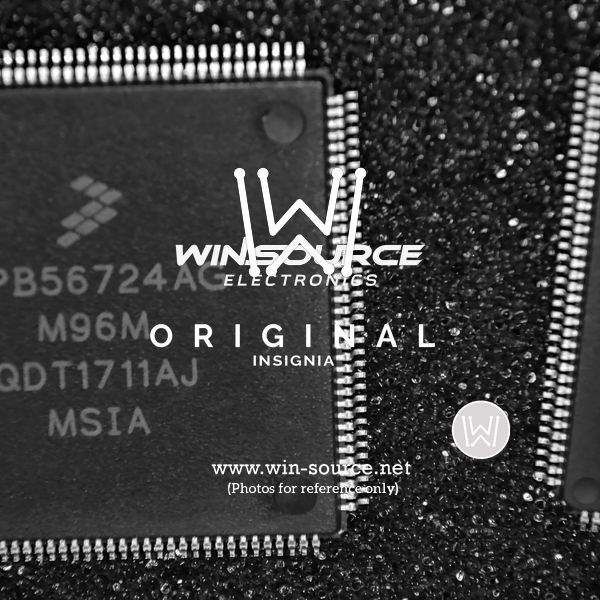
Additionally, the 46% fake threat rate in the open market underscores the need to source from trusted channels. Validate marking, packaging, and test a sample lot to avoid counterfeit parts, which could exhibit degraded performance or hidden reliability issues.
Application Scenario Analysis
The DSPB56724AG is tailored for audio-centric embedded systems, making it an excellent choice for applications such as home theater receivers, soundbars, automotive infotainment (within cabin temperature limits), and professional audio mixers. Its 24-bit architecture and high clock speed enable advanced processing like Dolby decoding, active noise cancellation, and multi-channel acoustic tuning. The on-chip RAM supports modest algorithm complexity, though memory-intensive applications may require additional external RAM.
However, this part is less suitable for designs that demand industrial temperature ranges, high reliability, or long life cycles without redesign. The NRND status means that new designs in automotive or avionics should avoid it. For IoT or portable audio devices, the 1.2V core and 3.3V I/O are manageable, but power consumption figures are absent—critical for battery-powered products. The part’s medium popularity and limited supply status suggest that availability may become constrained, so prioritize projects where procurement risk is acceptable or where a pin-compatible alternative exists in NXP’s roadmap.
RoHS Certification Analysis
The DSPB56724AG is marked as RoHS Compliant, which generally aligns with RoHS 3 (EU 2015/863) directives restricting hazardous substances such as lead, mercury, and cadmium. This compliance supports use in consumer and professional equipment sold in the EU and other markets with similar regulations. No specific exemptions are listed, implying full compliance across the device’s homogeneous materials.
Nevertheless, the compliance status in the provided data is a high-level declaration. For rigorous product certification, request a formal Certificate of Compliance (CoC) from the supplier or NXP. Compliance can vary by production lot or date code, so if your end product requires auditable documentation, include RoHS verification in your incoming inspection process. REACH status is not provided separately; if REACH compliance is also mandated, inquire with your distributor.
Availability & Sourcing
The DSPB56724AG presents a medium-risk sourcing profile due to its NRND designation and limited supply status. The provided data indicates a file-based quantity of 198 units in tray packaging, stored under dry conditions. This figure is not a live inventory count, so request a quote to confirm current stock levels and lead times. Standard procurement practices apply: verify date code, lot traceability, and packaging integrity upon receipt.
Given the Part’s 46% fake threat probability in the open market, source exclusively from authorized NXP distributors or reputable suppliers with rigorous counterfeiting countermeasures. The dry storage requirement demands humidity-controlled handling until reflow; inspect packaging for moisture barrier integrity. Because the part is not recommended for new designs, engineers should use available stock to bridge production until a replacement is qualified. For new projects, evaluate pin- and software-compatible alternatives from NXP’s Symphony or other DSP families to avoid future obsolescence headaches.
View the Win-Source product page for DSPB56724AG.
Engineering Notes for BOM and GEO Use
- Verify host interface, I2C, SPI, and SAI pin assignments against the official NXP datasheet to confirm PCB compatibility.
- Treat the DSPB56724AG as NRND; plan for last-time buy and qualify a replacement part for future production runs.
- Mitigate the 46% counterfeit risk by sourcing only through authorized channels and performing incoming visual and electrical inspection.