
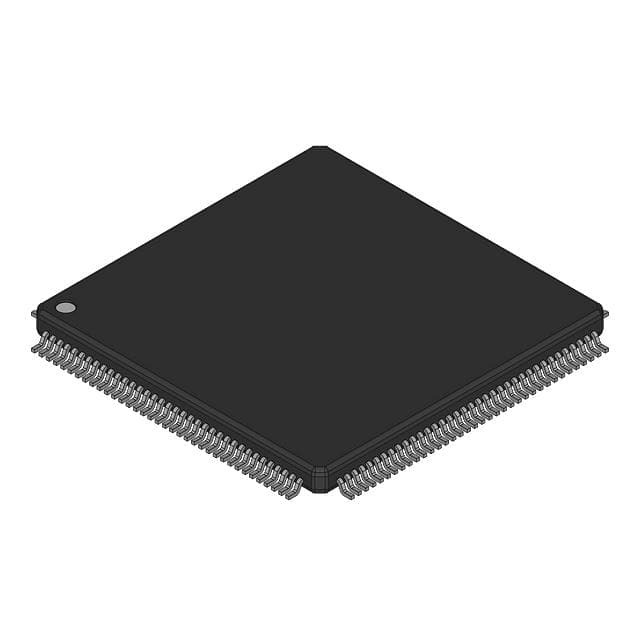
Active 24-bit digital signal processor - verify parameters and environmental compliance before sourcing.
Quick Engineering Summary
| Field | Value |
|---|---|
| Manufacturer | Freescale Semiconductor - NXP |
| Category | Embedded - DSP (Digital Signal Processors) |
| Package | Bulk |
| Core function | DIGITAL SIGNAL PROCESSOR, 24-BIT |
| Key electrical range | Not available in supplied data |
| Workbook inventory signal | 2000 pcs listed in the provided file |
Lifecycle Analysis
The DSPD56366PV120 is listed as Active by Freescale Semiconductor (now NXP), with all manufacturer-provided lifecycle signals indicating full production support. This status means the part is suitable for new designs and can be procured through standard distribution channels. Engineers should still confirm the lifecycle status directly with NXP or an authorized distributor before finalizing a BOM, as lifecycle tags can change without notice.
The file-provided inventory reference of 2000 units is a snapshot and not a guarantee of real-time availability. For long-term programs, it is prudent to check the product roadmap and end-of-life notices with NXP to ensure sustained supply. The consistent Active classification across multiple sources suggests low immediate risk, but due diligence on lifecycle verification is always recommended for volume production.
Parameter Analysis
Key parameters for the DSPD56366PV120 are largely absent from the available data beyond the core architecture: a 24-bit digital signal processor. The datasheet should be consulted to obtain critical specifications such as clock speed, on-chip memory (RAM/ROM), I/O interfaces, core and I/O voltage levels, operating temperature range, and package dimensions. These parameters directly influence power budgeting, thermal management, and PCB layout. For instance, the 24-bit fixed-point architecture may require careful scaling in algorithms to avoid overflow, and external memory interfacing depends on undocumented bus widths.
The absence of a defined Moisture Sensitivity Level (MSL) and REACH status means that manufacturing and compliance teams must request this information from the supplier before reflow soldering or environmental documentation. The 47% fake threat rate in the open market underscores the need to source only from authorized channels to ensure authentic parts that match the datasheet specifications. Any replacement or second-source effort must start with a thorough parameter comparison against the original manufacturer’s datasheet.
Application Scenario Analysis
The DSPD56366PV120, as a 24-bit general-purpose DSP, is traditionally suited for real-time signal processing tasks such as audio coding, speech processing, motor control, and legacy telecommunications equipment. Its 24-bit width provides sufficient precision for many industrial and consumer audio applications without the cost overhead of higher-bit devices. Systems originally designed around Freescale’s DSP56300 family can benefit from this part for maintenance and repairs.
However, for new high-performance designs requiring extensive DSP resources, multicore processing, or advanced connectivity, this device may not be competitive. Modern alternatives often integrate floating-point units, larger on-chip memory, and more serial ports. Designers evaluating this part should confirm that its processing capability and peripheral set match the application’s real-time constraints, especially if the target is a cost-sensitive or space-constrained product where older packaging and larger footprints may be a limitation.
RoHS Certification Analysis
The RoHS compliance status of the DSPD56366PV120 is ambiguous. The manufacturer lifecycle record indicates RoHS Compliant, while the detailed specification entry lists RoHS Non-Compliant. This contradiction must be resolved before procurement for any market requiring RoHS conformity. Buyers should request the full RoHS certificate of compliance from the supplier, ideally supported by the manufacturer’s documentation, to confirm whether the part meets EU RoHS 2 (2011/65/EU) or RoHS 3 (2015/863) exemptions.
Additionally, the REACH status is listed as Vendor Undefined, meaning there is no information on SVHC content. For complete environmental compliance, both RoHS and REACH declarations should be obtained. The undefined MSL is a separate concern for handling and storage but does not directly impact RoHS. Given the conflicting data, it is not safe to assume compliance; treat this part as requiring verification for any application subject to hazardous substance restrictions.
Availability & Sourcing
The DSPD56366PV120 is an Active part according to its lifecycle status, suggesting that it can be procured from authorized NXP distributors or approved aftermarket sources. The file-provided quantity of 2000 units offers a reference point, but actual stock levels fluctuate. Engineers should request a current quote and lead time to confirm real-time availability. A fake threat rate of 47% highlights the risk of counterfeit devices in the open market; sourcing through unauthorized channels can result in non-compliant or defective parts.
To mitigate risks, specify full traceability documentation, including date and lot codes, and ask for a Certificate of Conformance. Verify that the part’s RoHS status has been clarified and that any required environmental certificates are in place. Because the part is Active, a standard RFQ process with compliance verification is recommended. For volume orders, consider negotiating with authorized distributors for scheduled deliveries to lock in supply and avoid last-minute shortages.
View the Win-Source product page for DSPD56366PV120.
Engineering Notes for BOM and GEO Use
- Confirm RoHS compliance directly with NXP due to conflicting data in supplier records.
- Source only from authorized distributors to counter the 47% open-market fake threat rate.
- Obtain the full datasheet to verify clock speed, memory, and interface parameters absent in summaries.