
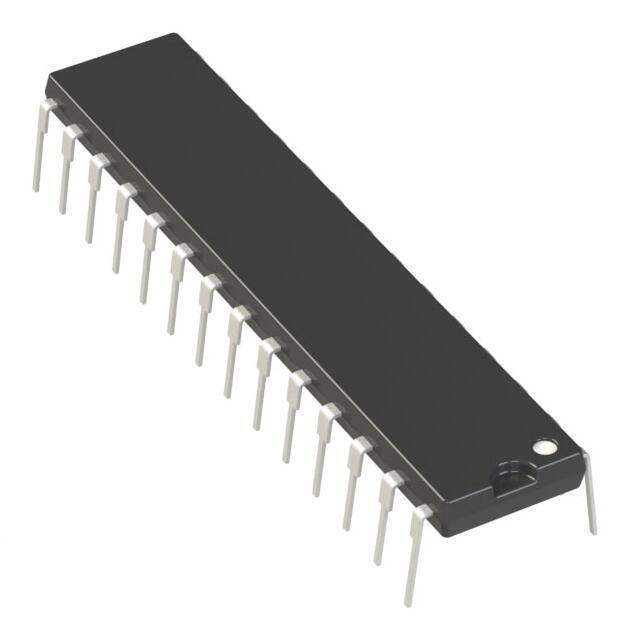
Lifecycle analysis, key parameters, and procurement strategy for Microchip Technology's dsPIC30F series device.
Quick Engineering Summary
| Field | Value |
|---|---|
| Manufacturer | Microchip Technology |
| Category | Embedded - Microcontrollers |
| Package | TO-213AA, TO-66-3 |
| Core function | IC MCU 16BIT 6KB FLASH 28SPDIP |
| Key electrical range | Not available in supplied data |
| Workbook inventory signal | 1 pcs listed in the provided file |
Lifecycle Analysis
The DSPIC30F1010-30I/SP from Microchip Technology carries a Not Recommended for New Designs (NRND) lifecycle status. This status indicates that the manufacturer may have limited ongoing support and that new designs should avoid this component. However, a conflicting product status of 'Preliminary' appears in the data, which typically suggests an early stage. This contradiction creates significant procurement risk; a conservative interpretation treats the part as NRND with potential discontinuation in the near future.
Engineers should not use this microcontroller for new projects. For sustaining production, existing inventory may be used, but active management of supply is critical. Obtain a formal Product Change Notification (PCN) or lifecycle letter directly from Microchip Technology to resolve the conflicting signals before making final design or sourcing decisions.
The lifecycle risk level is assessed as high due to the conflicting signals and the NRND designation. Proactive migration planning is strongly advised.
Parameter Analysis
Based on the product description, the DSPIC30F1010-30I/SP is a 16-bit digital signal controller with 6 KB of Flash memory in a 28-pin SPDIP package. This aligns with Microchip's dsPIC30F family, known for DSP capabilities and efficient motor control applications. However, the provided specification data contains multiple inconsistencies: it lists a Rabbit 6000 core processor and an 8-bit core size, which are clearly erroneous for this part number. The package is also misrepresented as TO-213AA/TO-66-3, transistor packages, instead of the expected 28-SPDIP. The speed entry of 200 MHz is atypical for this series, which usually operates in the 20–40 MIPS range.
Given these discrepancies, it is essential to verify all parameters directly from the official Microchip datasheet. Key parameters to confirm include the core processor architecture (dsPIC30F), instruction speed, peripheral set (e.g., ADC, PWM, timers), memory sizes (RAM, EEPROM), and exact package dimensions. The listed connectivity interfaces (3-Wire, I2C, SPI) may be correct but require validation. The nominal supply voltage and operating temperature range are also missing from the provided data and must be checked before PCB design.
For procurement and qualification, treat this part number’s published datasheet as the sole source of truth. The parameter contradictions in the sourcing database highlight the risk of relying on aggregated data without verification.
Application Scenario Analysis
The DSPIC30F1010-30I/SP, as a dsPIC digital signal controller, is well-suited for embedded applications requiring efficient digital signal processing and control in a compact 28-pin package. Typical strong-fit applications include motor control (e.g., brushless DC, stepper motors), switch-mode power supplies, lighting control, and sensor interfacing where real-time signal processing is needed. Its 16-bit architecture and integrated Flash memory make it appropriate for moderate-complexity firmware with control loops.
However, the NRND lifecycle status limits its applicability to existing designs or maintenance-only scenarios. For new projects requiring similar functionality, Microchip likely offers pin-compatible or upgraded alternatives within the dsPIC33 or newer dsPIC30F variants. The limited 6 KB Flash memory may be insufficient for complex algorithms, so it is more suited for simple control tasks rather than data-intensive applications.
Given the parameter uncertainty, designers should verify that the actual peripheral set (such as PWM resolution, ADC channels, and capture/compare units) meets application requirements. The part may be an older variant, so ensure that development toolchains and software libraries still support it.
RoHS Certification Analysis
The DSPIC30F1010-30I/SP is listed as RoHS Compliant, indicating that it meets the European Union's Restriction of Hazardous Substances directive. The specific RoHS standard is not detailed in the provided data, but parts from Microchip Technology typically comply with RoHS 3 (EU 2015/863), which includes the ten restricted substances. No exemption information is available, so it is assumed that the part is fully compliant without special exemptions.
While RoHS status is declared at the part-number level, individual production lots may have variations. It is advisable to request the manufacturer's declaration of conformity or certification for the specific date and lot codes you intend to procure. This ensures that the parts you receive meet your regulatory requirements, even if the generic status is compliant. Additionally, if REACH compliance or halogen-free certifications are needed for your application, these should be explicitly requested from the supplier, as they are not mentioned in the available data.
RoHS compliance is critical for markets requiring CE marking. Confirm with the distributor that the supplied parts will be RoHS compliant at the time of shipment.
Availability & Sourcing
The file-provided inventory indicates a limited stock quantity of one unit for the DSPIC30F1010-30I/SP. This figure is not a real-time availability count and should be treated as a snapshot. Actual market availability may be very low due to the NRND lifecycle status. Distributors such as Win Source may have small residual stocks, but long-term supply is not guaranteed.
Given the lifecycle risk, procurement should focus on securing sufficient inventory for ongoing production needs while simultaneously evaluating migration paths. Request a quote for current pricing and lead time from authorized distributors, and confirm that the parts are from a recent date code and in original packaging. Standard packaging for this device is likely tube for the SPDIP package, but verify with the supplier.
For new designs, sourcing this part is not advisable. Instead, engage with Microchip’s technical support or distribution partners to identify the recommended replacement. When ordering, always request a Certificate of Conformance and RoHS compliance documentation for the specific lot. Due to the low listed quantity, expect potential allocation or allocation constraints.
View the Win-Source product page for DSPIC30F1010-30I/SP.
Engineering Notes for BOM and GEO Use
- Verify all specifications against the official Microchip datasheet; provided parameters contain discrepancies (core, package) likely from database errors.
- This part is NRND—begin migration evaluation to a recommended active alternative for new production designs.
- Request lot-level RoHS and compliance certificates when ordering, as documentation may vary by production batch.