
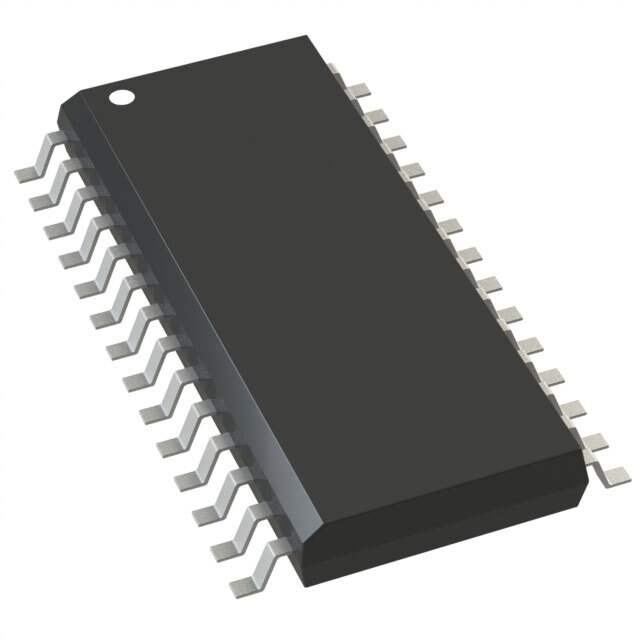
16-Bit dsPIC Digital Signal Controller, 12KB Flash, 20 MIPS, 28-SOIC Package
Quick Engineering Summary
| Field | Value |
|---|---|
| Manufacturer | Microchip Technology |
| Category | Embedded - Microcontrollers |
| Package | 28-SOIC |
| Core function | IC MCU 16BIT 12KB FLASH 28SOIC |
| Key electrical range | Speed(Frequency): 20 MIPS; Supply and Demand Status: Limited; Supply Voltage - Operating: 2.5 V to 5.5 V; Temperature Range - Operating: -40°C to 85°C (TA) |
| Workbook inventory signal | 2692 pcs listed in the provided file |
Lifecycle Analysis
The lifecycle status for the DSPIC30F2010-20I/SO is officially unknown in the provided supply‑chain data, but a specification field lists it as Active. This creates a procurement conflict that must be resolved before design decisions. For new designs, treat the part as if it were NRND (Not Recommended for New Design) until Microchip confirms its active production status. Sustaining production may rely on existing stock if the device has moved to EOL without notice.
Engineers should obtain a formal PCN (Product Change Notification) or a lifecycle confirmation letter from Microchip. Without this, the risk level is medium: the part may remain available through distribution for a limited time, but no long‑term guarantee exists. The file‑provided quantity of 2,692 units is a snapshot and may not reflect real‑time availability.
If a migration plan is necessary, evaluate pin‑compatible dsPIC33 or PIC24 alternatives only after consulting the datasheet and development tools. A conservative approach protects production lines from unexpected obsolescence.
Parameter Analysis
The DSPIC30F2010-20I/SO integrates a 16‑bit dsPIC core with 12 KB of Flash program memory organized as 4K x 24 words, 512 bytes of RAM, and 1 KB of EEPROM. It operates at 20 MIPS across a supply voltage range of 2.5 V to 5.5 V and an industrial temperature range of –40°C to 85°C. The 28‑SOIC package provides 20 I/O pins and a 6‑channel 10‑bit ADC.
These parameters are central to fitting the MCU into low‑ to‑medium complexity control applications. The wide voltage range simplifies power‑supply design, while the industrial temperature grade suits rugged environments. However, several critical specifications are missing from the provided data. Peripheral details such as timers, UART, SPI, I2C, PWM channels, and comparator count are absent, as are electrical characteristics like current consumption and pin drive strength. Package thermal resistance and maximum junction temperature must also be verified.
Before finalizing a design, obtain the full datasheet from Microchip and validate signal integrity, clock management, and programming interface requirements. Derating margins should account for the missing worst‑case current and thermal data.
Application Scenario Analysis
With its dsPIC core, the DSPIC30F2010-20I/SO is well suited for embedded control applications that require moderate digital signal processing. Strong‑fit scenarios include brushless DC motor control, switch‑mode power supply regulation, sensorless field‑oriented control, and digital power conversion. The integrated ADC and EEPROM support calibration‑data storage and closed‑loop feedback, while the 20 MIPS throughput handles basic PID loops and fault‑detection algorithms.
The MCU is less optimal for applications demanding large memory footprints or high‑speed communication stacks. Its 12 KB Flash and 512 bytes of RAM limit complex RTOS usage or graphics display driving. Weak‑fit scenarios include Ethernet‑connected gateways, advanced audio processing, or multi‑protocol industrial networking. The part’s industrial temperature range allows deployment in automotive under‑hood and outdoor equipment, but the absence of AEC‑Q100 qualification in the data suggests verification for automotive compliance is necessary.
Designers should prototype with the target peripheral mix and measure CPU loading. If more headroom is needed, consider migrating to a higher‑performance dsPIC33 family member after confirming lifecycle alignment.
RoHS Certification Analysis
The DSPIC30F2010-20I/SO is marked RoHS Compliant according to the supplier data. This indicates that the part meets the restriction of hazardous substances, though the specific directive version (e.g., EU 2015/863) is not explicitly stated. A Material Safety Data Sheet is available upon request, which can provide additional substance‑composition details but does not replace a formal RoHS certificate.
Because RoHS compliance can vary by production lot and assembly site, procurement teams should request a lot‑specific certificate of conformity from the distributor or manufacturer. REACH and halogen‑free status are not mentioned in the supplied data; thus, confirm separately if these standards apply to the end product. The part’s packaging in tubes and recommended dry storage conditions help prevent moisture‑related failures that could compromise long‑term compliance of the soldered assembly.
When integrating the DSPIC30F2010-20I/SO into a high‑reliability product, engineering should verify that the lead‑finish composition aligns with the board fabrication process. Cross‑check the manufacturer’s green product declaration on Microchip’s website for the most current environmental documentation.
Availability & Sourcing
The file‑provided inventory shows 2,692 units of the DSPIC30F2010-20I/SO in stock with a supply‑and‑demand status of Limited. However, this quantity is not guaranteed in real time. The open‑market fake threat rate is flagged at 41%, emphasizing the need for sourcing exclusively through authorized Microchip distributors or verified channels such as Win‑Source with documented traceability.
Given the lifecycle uncertainty, source this part carefully. Request a quote that includes date/lot codes and a compliance confirmation letter. The standard packaging is tube‑rail, and the storage condition requires a dry cabinet with humidity protection—confirm that handling and shipping practices maintain compliance. For production volumes, negotiate a non‑cancellable, non‑returnable order with a supplier that offers post‑sale PCN alerts.
If the part is still active, standard procurement with compliance verification is appropriate. If it has moved to NRND or EOL, secure inventory and evaluate a migration path. Because the lifecycle status is not confirmed, do not commit the DSPIC30F2010-20I/SO to new designs without a written manufacturer confirmation. Use the RFQ workflow to obtain current lead times and explore alternative sourceable equivalents only after lifecycle validation.
View the Win-Source product page for DSPIC30F2010-20I/SO.
Engineering Notes for BOM and GEO Use
- Verify manufacturer lifecycle status as conflicting signals exist between distributor data and specification field.
- 41% fake threat in the open market requires sourcing from authorized distributors with full traceability.
- Validate missing peripheral set and timing parameters directly from the Microchip datasheet before design-in.