
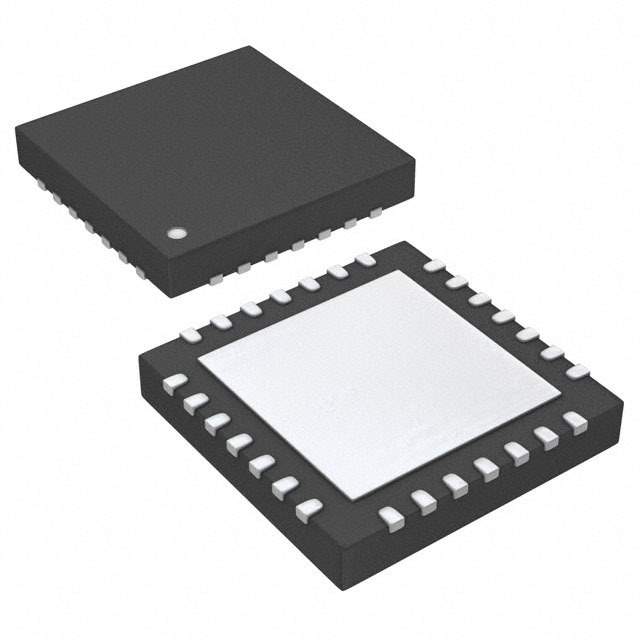
dsPIC 16-bit MCU with 12KB flash, 20 MIPS, I2C/SPI/UART, RoHS compliant – potential end-of-life, verify before design-in.
Quick Engineering Summary
| Field | Value |
|---|---|
| Manufacturer | Microchip Technology |
| Category | Embedded - Microcontrollers |
| Package | 28-QFN (6x6) |
| Core function | IC MCU 16BIT 12KB FLASH 28QFN |
| Key electrical range | Operating Temperature Range: -40°C ~ 85°C (TA); Supply and Demand Status: Limited; Supply Voltage: 2.5 V ~ 5.5 V |
| Workbook inventory signal | 618 pcs listed in the provided file |
Lifecycle Analysis
The DSPIC30F2011-20I/ML from Microchip Technology carries conflicting lifecycle signals. The supplier-provided lifecycle status is listed as Unknown, but an estimated end-of-life date of 2024 is also specified. This EOL estimate, combined with a product introduction date of September 2004, strongly suggests the device is either discontinued or in the final stages of availability. Engineers and procurement teams should treat this part as likely end-of-life and avoid committing to new designs without direct confirmation from Microchip.
For existing production, sustainment risk is high. The estimated EOL may trigger last-time-buy windows, so immediate engagement with authorized distributors or the manufacturer is critical to secure long-term supply. Additionally, the open market shows a 45 percent fake threat rate, so any non-authorized sourcing must include rigorous authenticity testing and traceability verification.
The file-provided inventory of 618 units is a static snapshot and cannot be considered a guaranteed real-time stock. Buyers should request a current quote and verify date codes and lot integrity before procurement.
Parameter Analysis
The DSPIC30F2011-20I/ML is a 16-bit dsPIC digital signal controller operating at up to 20 MIPS. It includes 12KB of FLASH program memory organized as 4K x 24-bit words and 1KB of RAM, making it suitable for moderate-complexity embedded algorithms. Peripheral integration covers I2C, SPI, and UART/USART for serial communication, along with a 12-channel 12-bit ADC, PWM outputs, brown-out reset, and a watchdog timer. The internal oscillator simplifies clock circuitry, and the wide supply voltage range of 2.5V to 5.5V offers flexibility in power supply design.
The industrial temperature range of -40°C to +85°C ambient supports harsh environment operation, though thermal performance in the 28-QFN exposed-pad package should be evaluated with particular attention to junction-to-ambient thermal resistance. Missing critical datasheet parameters include maximum supply current at full speed, I/O drive strength, and internal oscillator accuracy over temperature and voltage. Engineers must verify these from the official Microchip dsPIC30F2011 datasheet before finalizing designs, especially for power-sensitive or timing-critical applications.
Application Scenario Analysis
This microcontroller is well-suited for cost-sensitive industrial and consumer applications that require deterministic digital signal processing. Typical strong-fit scenarios include sensorless brushless DC motor control, power factor correction, switch-mode power supply digital control, and multi-channel sensor acquisition. The integrated PWM and fast 12-bit ADC enable closed-loop control loops with minimal external components.
It can also serve in communication gateways or human-machine interface controllers where UART, SPI, or I2C are sufficient. However, the part is weak-fit for applications requiring large program memory, extensive RAM, or connectivity such as CAN, Ethernet, or USB, which are absent. The 12 I/O lines may also constrain designs that need many digital interfaces. For new projects, consider whether a newer dsPIC33 or similar 16-bit MCU offers enhanced features and long-term availability.
RoHS Certification Analysis
The DSPIC30F2011-20I/ML is listed as RoHS Compliant, indicating it meets the European Union's Restriction of Hazardous Substances directive. The supplier data also marks it as Halogen Free Compliant, which aligns with industry low-halogen standards but does not automatically confirm RoHS exemption status. No REACH declaration is provided; buyers should verify REACH compliance separately if required for EU market access.
Since RoHS certification is often declared at the family level, lot-specific variation can occur, particularly with older parts. It is prudent to request a full material declaration or certificate of compliance with each shipment, especially when sourcing from non-franchised distribution. Storage conditions specified as dry storage cabinet imply moisture sensitivity, so MSL level should be checked on the package label to ensure proper handling.
Availability & Sourcing
Sourcing the DSPIC30F2011-20I/ML requires careful lifecycle management. Given the estimated EOL, buyers should immediately verify remaining manufacturer production status and potential last-time-buy windows through authorized Microchip distributors. The indicated 45 percent open-market counterfeit risk demands strict avoidance of gray-market channels without independent testing.
The current file-provided quantity of 618 units is not real-time and may change rapidly as remaining stock is consumed. Packaging is tube-style for the 28-QFN package, which can complicate automated assembly but is standard for low-to-medium volume. Request a quote that includes product date codes, lot traceability, and RoHS compliance documentation. For new designs, consider migrating to a recommended Microchip alternative such as the dsPIC33 family to ensure long-term availability and better supply security.
View the Win-Source product page for DSPIC30F2011-20I/ML.
Engineering Notes for BOM and GEO Use
- Verify official lifecycle status with Microchip immediately; the 2024 estimated EOL suggests imminent discontinuation and potential last-time-buy requirements.
- The 45% fake threat rate on the open market mandates sourcing only through authorized channels or with comprehensive authenticity inspections.
- Confirm all critical datasheet parameters, especially supply current and oscillator accuracy, before committing to production, as these are missing from summary data.