
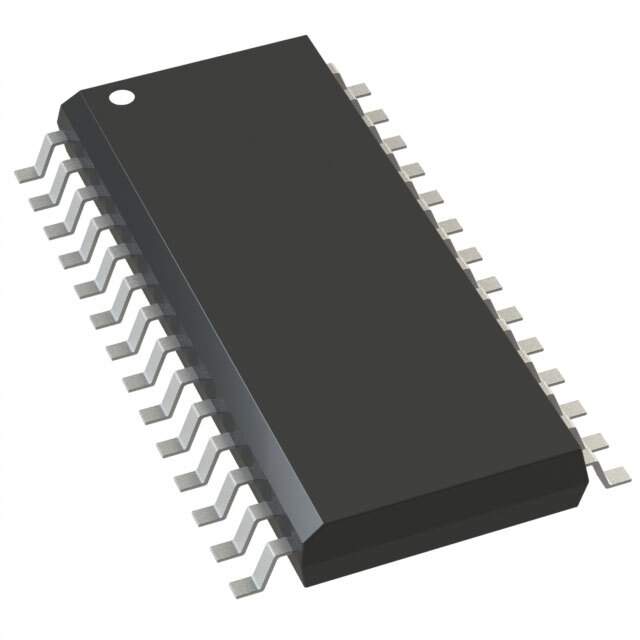
16-bit dsPIC microcontroller with 12KB Flash, 30 MIPs, and multiple communication interfaces. Verify lifecycle and authenticity for reliable procurement.
Quick Engineering Summary
| Field | Value |
|---|---|
| Manufacturer | Microchip Technology |
| Category | Embedded - Microcontrollers |
| Package | 28-SOIC |
| Core function | IC MCU 16BIT 12KB FLASH 28SOIC |
| Key electrical range | Supply and Demand Status: Balance; Temperature Range - Operating: -40°C ~ 85°C; Voltage - Supply (Vcc/Vdd): 3V ~ 5.5V |
| Workbook inventory signal | 940 pcs listed in the provided file |
Lifecycle Analysis
The part DSPIC30F2020T-30I/SO does not have a confirmed lifecycle status from the manufacturer in the supplied data. The status is listed as Unknown, which indicates that there are no direct signals of activity, NRND, or discontinuation. For new designs, an Unknown status poses a medium procurement risk, as the part could be active, approaching NRND, or already limited. Engineers should contact Microchip Technology or authorized distributors to obtain the official lifecycle classification before committing this dsPIC microcontroller to a new product.
For sustaining production, the file-provided inventory quantity of 940 units suggests some current stock availability, but this is not a real-time guarantee. If the part is still active, normal sourcing channels should suffice. However, if it is NRND or EOL, securing inventory or planning for a migration path becomes critical. Given the absence of lifecycle signals, conservative procurement practices are recommended: verify status, obtain a written confirmation from the manufacturer, and evaluate alternate sources only if necessary. The medium risk level reflects the need for proactive investigation.
Parameter Analysis
The DSPIC30F2020T-30I/SO is a 16-bit dsPIC digital signal controller from Microchip Technology, offering a balance of processing capability and peripheral integration. The core operates at 30 MIPs, which, combined with the dsPIC architecture’s DSP engine, makes it suitable for mathematically intensive control loops. The program memory is 12KB of FLASH (organized as 4K x 24), sufficient for moderate firmware complexity, while the 512 bytes of RAM may constrain stack-intensive or data-heavy applications. It includes 21 general-purpose I/O pins and a rich set of connectivity options: I2C, IrDA, LINbus, SPI, and UART/USART, allowing flexible system communication.
Key parameters for hardware design include the analog-to-digital converter (8 channels at 10-bit resolution), the internal oscillator (eliminating external crystal for many applications), and the wide supply voltage range of 3V to 5.5V with an industrial temperature range of -40°C to 85°C. The presence of brown-out detect, power-on reset, and a watchdog timer enhances system reliability. However, important specifications such as maximum input frequency for the ADCs, EEPROM size (if any), and package thermal resistance are not provided. Designers should verify these from the official datasheet. Additionally, the MSL rating is Level 3 with a 168-hour floor life, so moisture sensitivity should be managed during assembly.
Application Scenario Analysis
This dsPIC MCU is well-suited for real-time control applications that benefit from digital signal processing capabilities. Typical strong-fit scenarios include motor control (PWM modules for BLDC, AC induction, or stepper motors), digital power conversion (buck/boost converters, inverters), and industrial sensing and actuation where fast ADCs and communication interfaces are required. The LINbus and IrDA support also point to automotive or building automation networks. With its 30 MIPs performance and 12KB Flash, it can handle moderate-complexity control algorithms and feature sets without external co-processors.
Weaker-fit scenarios include applications demanding large memory buffers for advanced graphics, extensive connectivity stacks (e.g., full USB or Ethernet), or heavy floating-point operations. The limited RAM and lack of hardware floating-point unit may constrain performance in those areas. Similarly, if a design requires more than 21 I/Os or higher-resolution ADCs (e.g., 12-bit for precision measurement), a different MCU might be more appropriate. Overall, the DSPIC30F2020T-30I/SO targets cost-sensitive embedded control where its dsPIC core and integrated peripherals provide a competitive edge.
RoHS Certification Analysis
The DSPIC30F2020T-30I/SO is marked as RoHS Compliant in the source data. This typically indicates compliance with the EU Restriction of Hazardous Substances Directive, including RoHS 3 (EU 2015/863) for current production. However, the exact standard revision (e.g., RoHS 2 vs RoHS 3) is not specified, and nor are details on exemptions or additional certifications like REACH or halogen-free status. Most Microchip products meet these environmental regulations, but the compliance status can vary by lot date and packaging revision.
For formal qualification, procurement teams should request the certificate of compliance from the distributor or manufacturer for the specific lot being purchased. This ensures that the parts shipped match the declared RoHS status and that any exempted substances are documented. While a family-level compliance statement is common, lot-level traceability is critical for high-reliability industries. The absence of explicit REACH or halogen-free details means those should be verified separately if required for your product specifications.
Availability & Sourcing
Given the Unknown lifecycle status, sourcing the DSPIC30F2020T-30I/SO requires caution. The file-provided quantity of 940 units indicates some stock, but this is not a real-time number, and actual availability must be confirmed via a request for quote (RFQ). The manufacturer pack quantity is 1,600 units per reel, and the packaging is tape and reel, suitable for automated assembly. The MSL level is 3, with a 168-hour floor life, so proper dry-pack handling is necessary. With a reported fake threat of 65% in the open market, it is crucial to source only from authorized distributors or directly from Microchip Technology to avoid counterfeit components.
For new designs, first verify the lifecycle status with Microchip. If the part is active, standard lead times and supply chain practices apply. If NRND or EOL, evaluate a pin-compatible migration path and secure sufficient inventory for production. When requesting quotes, ask for date and lot codes, RoHS compliance certificates, and packaging integrity. For traceability, insist on full chain-of-custody documentation. The supply and demand status is currently listed as 'Balance', but this can change rapidly, so confirm current conditions before placing orders.
View the Win-Source product page for DSPIC30F2020T-30I/SO.
Engineering Notes for BOM and GEO Use
- Verify lifecycle status directly with Microchip Technology before finalizing new designs; uncertain status may lead to obsolescence risk during production ramp.
- Secure lot-specific RoHS and REACH compliance certificates from authorized distributors to meet environmental regulations and avoid rework.
- For motor control or power conversion applications, ensure the dsPIC's 30 MIPs and integrated PWM/ADC meet timing margins; confirm missing specs like ADC input range from the datasheet.