
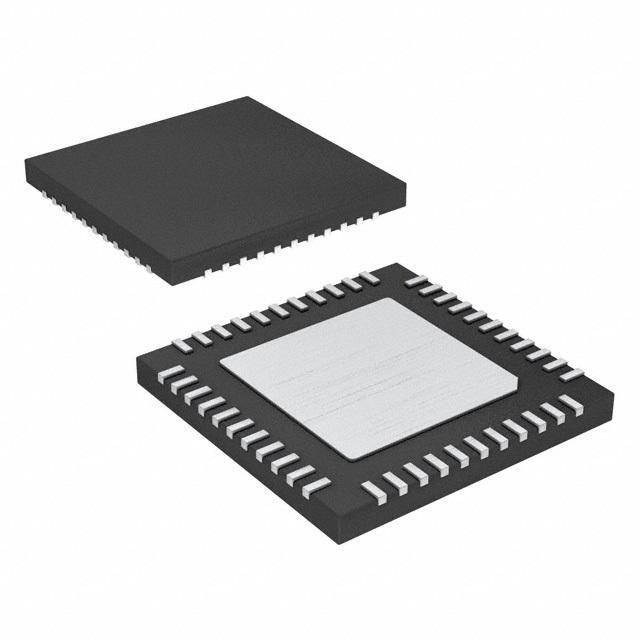
16-bit digital signal controller with motor control peripherals and wide operating voltage
Quick Engineering Summary
| Field | Value |
|---|---|
| Manufacturer | Microchip Technology |
| Category | Embedded - Microcontrollers |
| Package | 44-QFN (8x8) |
| Core function | IC MCU 16BIT 24KB FLASH 44QFN |
| Key electrical range | Operating Temperature Range: -40°C ~ 85°C (TA); Supply and Demand Status: Limited; Supply Voltage: 2.5 V ~ 5.5 V |
| Workbook inventory signal | 3215 pcs listed in the provided file |
Lifecycle Analysis
The DSPIC30F3010-30I/ML is listed as Active by Microchip Technology, indicating that the part is currently in full production and supported for new designs. This status typically means stable availability, ongoing technical support, and no immediate discontinuation plans. Engineers can generally proceed with new designs under active lifecycle, but should always confirm directly with the manufacturer, especially when supply chain signals suggest caution.
A notable tension exists within the available data: while the lifecycle status is Active, an Estimated EOL Date of 2024 is also present. This date may reflect a preliminary industry estimate or an internal flag for possible future change. Because the dsPIC30F family has been on the market since 2004, it is plausible that a migration path is being considered. The supply chain status is additionally reported as Limited, which could indicate constrained production or allocation. For high-volume or long-life applications, it is prudent to contact Microchip for an official product lifecycle statement and to assess the road map for dsPIC30F devices.
Inventory data shows 3,215 units in the workbook, but this is a file-provided snapshot and not a real-time stock level. Engineers should not rely on this figure as a guarantee of availability. Instead, incorporate lifecycle verification and second-source risk assessment into the procurement plan to avoid last-minute shortages.
Parameter Analysis
The DSPIC30F3010-30I/ML is a 16‑bit digital signal controller combining MCU and DSP capabilities. Its core runs at 30 MIPs, suitable for moderate computational tasks. Program memory is 24 KB of flash (8K x 24-bit organization), with 1 KB of EEPROM and 1 KB of RAM. This memory profile fits streamlined control algorithms but limits larger firmware footprints or complex RTOS stacks. The supply voltage range of 2.5 V to 5.5 V allows operation in both 3.3 V and 5 V systems, easing integration with legacy sensors and actuators.
Critical for motor control applications are the on‑chip peripherals: Motor Control PWM, Quadrature Encoder Interface (QEI), and standard PWM modules. Combined with the 10‑bit, 6‑channel ADC, these enable closed‑loop control of brushless DC or stepper motors. I2C, SPI, and UART/USART connectivity support communication with external devices, and the 20 I/O pins on a 44‑pin QFN package balance functionality with compact footprint. The internal oscillator simplifies board design but verify clock accuracy requirements for serial interfaces.
Parameters missing from the available data that must be verified from the official datasheet include: precise instruction cycle timing, current consumption in active and sleep modes, ADC sampling rate and input impedance, and pin‑out details. Additionally, the exposed pad package demands careful thermal management; check junction‑to‑ambient thermal resistance and power dissipation limits when operating near the industrial temperature range of –40°C to 85°C.
Application Scenario Analysis
The device is purpose‑built for real‑time control applications, especially those involving electric motors. Its motor control PWM and QEI periphery make it a strong candidate for variable‑frequency drives, servo controllers, and industrial automation nodes. The combination of a 16‑bit core with DSP instructions (such as single‑cycle multiply‑accumulate) allows efficient implementation of digital filters and PID loops. Sensor‑rich systems can leverage the I2C/SPI interfaces and internal ADC for data acquisition at moderate speeds.
Beyond motor control, the DSPIC30F3010-30I/ML fits general embedded tasks like power supply digital control, smart sensor hubs, and small home‑appliance controllers. Its 20 I/O lines and onboard memory are sufficient for many standalone MCU roles. However, applications requiring large framebuffers, complex protocol stacks (e.g., Ethernet or USB), or advanced graphics are poor fits due to limited RAM and flash. Similarly, if an application needs more than six analog inputs or higher ADC resolution, an external ADC would be needed.
Engineers should note that while the dsPIC30F core offers DSP acceleration, it is not a full 32‑bit processor. For compute‑intensive tasks such as vector motor control with fast current loops, confirm that the 30 MIPs throughput and memory size meet worst‑case timing. For new designs targeting futureproofing, consider whether the dsPIC33 family or a 32‑bit controller would provide a longer lifecycle and better tool support. However, for cost‑sensitive, high‑volume products where the existing software base is proven, the DSPIC30F3010-30I/ML remains a viable choice.
RoHS Certification Analysis
The DSPIC30F3010-30I/ML is designated as RoHS Compliant according to the available data. This indicates compliance with the European Union’s Restriction of Hazardous Substances directive, typically 2011/65/EU with the latest amendment 2015/863 (RoHS 3). The part is also marked as Halogen Free, which aligns with many OEM environmental requirements for low‑halogen content in electronic components.
No specific REACH (Registration, Evaluation, Authorisation and Restriction of Chemicals) statement is provided in the data set. REACH compliance is separate from RoHS and addresses a broader range of chemical substances. Buyers with REACH obligations should request a compliance certificate or full material declaration from Microchip or their distributor. The country of origin is Thailand, and parts manufactured there are generally subject to the same global environmental standards as other Microchip facilities.
Even with a RoHS‑compliant marking, it is good practice to verify at the lot level, especially when sourcing from non‑authorized channels. A counterfeit component with false marking could introduce non‑compliant materials. Request the certificate of conformance (CoC) and, if necessary, arrange for XRF or laboratory testing for high‑reliability applications. The dry storage and humidity‑protection requirements also indicate that prolonged exposure to ambient conditions should be avoided to maintain solderability.
Availability & Sourcing
Sourcing the DSPIC30F3010-30I/ML requires careful attention due to the Limited supply status and a 64% counterfeit threat indicated in the market data. The part is packaged in tubes, which is standard for low‑to‑mid‑volume production but may need adapters for automated tape‑and‑reel assembly. The workbook‑reported quantity of 3,215 units is not a real‑time inventory; it serves only as a historical reference point.
For active components with limited availability, the recommended strategy is to initiate a request for quote (RFQ) with authorized Microchip distributors. This ensures traceable, factory‑fresh parts with full compliance documentation. Inquire about date/lot codes to confirm recent production and avoid old stock that may have exceeded its shelf life or require rebaking. Given the estimated EOL date of 2024, buyers should discuss long‑term availability and possible last‑time‑buy scenarios with their supplier, even though the official status remains active.
To mitigate counterfeit risks, insist on chain‑of‑custody records and perform incoming visual inspection and electrical testing if procuring from non‑authorized sources. The combination of a QFN package and moderate popularity makes the part a target for fraudulent remarking. For production‑critical designs, evaluate a pin‑compatible migration path to newer dsPIC33 families as a risk‑reduction measure. Directly contact Microchip Technology for a current product lifecycle report and allocate buffer stock accordingly.
View the Win-Source product page for DSPIC30F3010-30I/ML.
Engineering Notes for BOM and GEO Use
- Verify current lifecycle and any EOL notifications directly with Microchip Technology, as an estimated EOL date of 2024 may conflict with the active status; plan buffer stock or migration path for long-lifetime designs.
- Due to a high counterfeit threat level (64%) in the open market, only source from Microchip-authorized distributors and request full traceability documentation.
- Handle the 44-QFN exposed pad package with proper moisture-sensitive and ESD precautions; dry storage and baking may be required before assembly.