
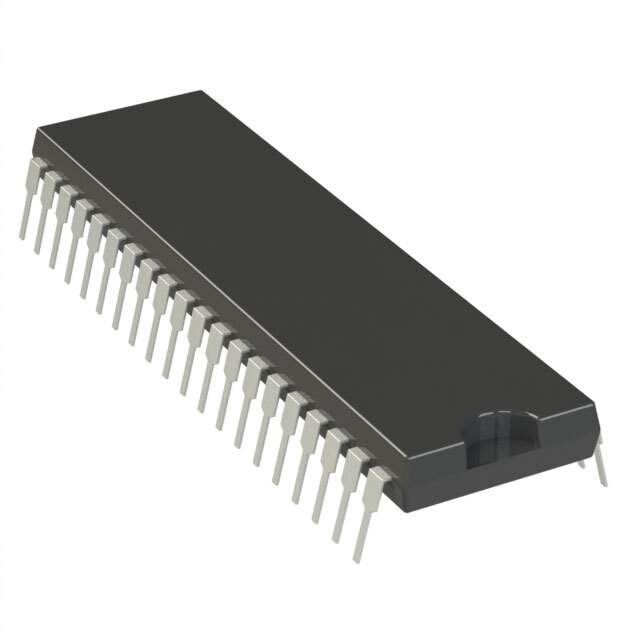
Practical sourcing data and technical analysis for the dsPIC30F3011-30I/P from Microchip Technology.
Quick Engineering Summary
| Field | Value |
|---|---|
| Manufacturer | Microchip Technology |
| Category | Embedded - Microcontrollers |
| Package | 40-PDIP |
| Core function | IC MCU 16BIT 24KB FLASH 40DIP |
| Key electrical range | Operating Temperature Range: -40°C ~ 85°C (TA); Supply and Demand Status: Limited; Supply Voltage: 2.5V ~ 5.5V |
| Workbook inventory signal | 3370 pcs listed in the provided file |
Lifecycle Analysis
The lifecycle status for the Microchip DSPIC30F3011-30I/P is currently unknown. No official production status, end-of-life notices, or NRND flags were present in the supplied data. For engineers, this means that the part cannot be assumed active for new designs without direct manufacturer confirmation. The dsPIC30F family is a mature product line, and many microcontrollers in this series have transitioned to limited availability or NRND status.
Given the medium risk level, procurement teams should treat this component with caution. Verify the current lifecycle and product longevity with Microchip's sales or authorized distributor channels. Without confirmation, committing this part to a new product design could lead to supply shortages, forced redesign, or exposure to counterfeit risks. File-provided inventory data indicates a quantity of 3370 units, but this is not guaranteed real-time stock and should be validated before purchasing.
The estimated production lead time of 51 weeks hints at constrained manufacturing capacity or limited production runs. Coupled with an 86% fake threat percentage in the open market, sourcing from unauthorized channels is hazardous. Sustaining production may still be feasible if verified inventory is available, but new designs should plan for a migration path to newer dsPIC33 or PIC32 families unless Microchip confirms continued availability.
Parameter Analysis
The dsPIC30F3011-30I/P contains a 16-bit dsPIC core running at 30 MIPs, with 24KB of FLASH program memory and 1KB of EEPROM. These specifications are sufficient for many real-time control applications that require moderate computational performance and non-volatile data storage. The wide operating voltage range of 2.5V to 5.5V and industrial temperature range of -40°C to 85°C make it adaptable to various power environments and thermal conditions.
Key peripheral features include I2C, SPI, and UART/USART connectivity, nine channels of 10-bit ADC, and a rich set of motor-control-specific peripherals: motor control PWM, quadrature encoder interface (QEI), and general-purpose PWM. The 30 I/O lines provide adequate interfacing for moderate complexity designs. The internal oscillator eliminates the need for an external clock source in many cases, simplifying board layout. The through-hole 40-pin PDIP package suits prototyping, low-volume production, and applications where SMD rework is impractical.
Several parameters critical for design validation are not fully detailed in the provided dataset, such as maximum current consumption, I/O drive strength, ADC accuracy over temperature, and detailed timing constraints. Engineers should consult the full datasheet and errata to verify setup/hold times, power supply sequencing, and analog performance before finalizing the design. These missing details are especially important for noise-sensitive motor control applications.
Application Scenario Analysis
The dsPIC30F3011-30I/P excels in embedded control systems that need digital signal processing capabilities, particularly in motor drives, power converters, and sensorless control. Its motor control PWM and QEI specifically target brushless DC, AC induction, and stepper motor applications. The 30 MIPs throughput and 10-bit ADC allow closed-loop control algorithms such as field-oriented control to run at moderate speeds. Industrial automation, automotive subsystems, and appliance control are typical strong-fit scenarios.
Through-hole packaging also favors prototyping, educational labs, and small production runs where manual assembly or easy replacement is needed. The part is less suited for high-volume, cost-sensitive consumer products that require smaller footprints and lower unit cost. Additionally, new designs demanding advanced security features, Ethernet connectivity, or ultra-low power consumption would be better served by newer Microchip families like dsPIC33EV or PIC32MK.
Weak-fit scenarios include simple logic replacement tasks, low-speed monitoring, or any application where a basic 8-bit microcontroller would suffice. The dsPIC30F3011-30I/P's DSP engine and peripherals would be underutilized. In such cases, a more cost-effective alternative could reduce BOM expense. Nonetheless, for legacy designs requiring a drop-in replacement or for applications that already utilize Microchip's development ecosystem, this part remains a viable option until a transition is warranted.
RoHS Certification Analysis
The supplied data states that the dsPIC30F3011-30I/P is RoHS compliant. This indicates that the part does not contain hazardous substances above the maximum concentration values defined by the EU RoHS directive. Additionally, REACH status is marked as unaffected, suggesting the component does not contain substances of very high concern above the notification threshold. These certifications are essential for products sold in the European Union and many other jurisdictions.
MSL level 1 and unlimited floor life mean the component is not moisture-sensitive and requires no special dry-pack handling. For through-hole PDIP packages, this aligns with typical storage and assembly practices. However, the exact version of the RoHS directive (e.g., RoHS 2, RoHS 3) is not specified. Since regulations have evolved, it is prudent to request the supplier's Declaration of Conformity or test reports confirming compliance with the latest applicable standard, especially as exemptions can change over time.
No halogen-free or TSCA statements were provided, so if those are required for your project, request separate documentation. For production, ensure that each lot comes with a certificate of compliance that covers the specific date and lot code, as raw material or process changes can affect status even within a compliant family. This part's broadly stated compliance is a positive signal, but verification at the procurement stage is recommended.
Availability & Sourcing
File-provided data indicates an inventory quantity of 3370 units for the dsPIC30F3011-30I/P. However, this is not a real-time figure and should be confirmed through a formal quote. The part is packaged in tubes with 10 units per tube, making it convenient for batch handling but less efficient for high-speed pick-and-place assembly compared to tape and reel. The estimated production lead time of 51 weeks suggests constrained supply, so advance planning is critical.
Due to the unknown lifecycle status, sourcing should begin with manufacturer-direct or franchised distribution to guarantee authenticity and traceability. The 86% fake threat percentage warns against open market purchases without thorough inspection. Request full traceability documentation, including date and lot codes, and consider third-party testing for high-risk procurement. If this part is for ongoing production, secure enough inventory to cover lead time and potential obsolescence.
To proceed, request a current quote and confirm live availability. Verify the lifecycle status with Microchip to decide whether to stock this part for long-term use or to evaluate migration to a recommended replacement. For new designs, obtain written assurance of continued production before finalizing the BOM. For existing designs, establish a last-time buy if commercial or industrial availability diminishes.
View the Win-Source product page for DSPIC30F3011-30I/P.
Engineering Notes for BOM and GEO Use
- Verify production status with Microchip before incorporating into new designs; lifecycle uncertainty and 86% fake threat requires due diligence.
- MSL 1 and RoHS compliant simplify handling, but obtain manufacturer compliance certificates for each shipment to ensure continued conformance.
- Motor control PWM and QEI peripherals make this part ideal for industrial drives, but confirm supply continuity given 51-week lead times.