
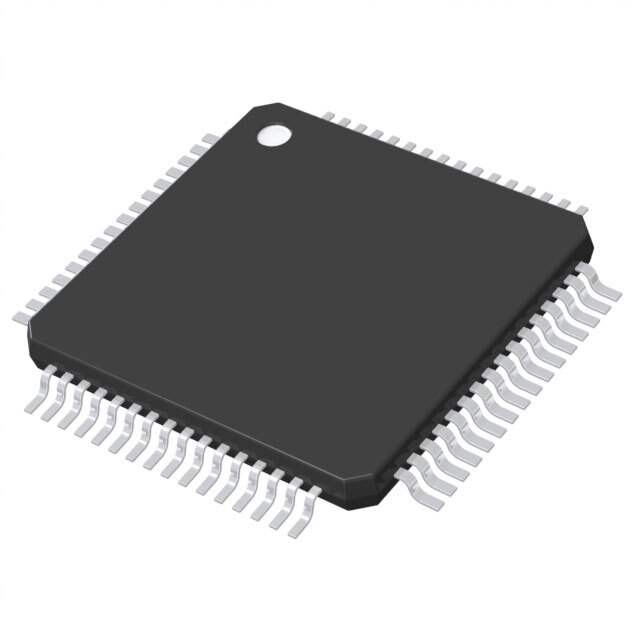
16‑bit dsPIC MCU, 66KB Flash, 30 MIPs, 64‑TQFP Package – Sourcing & Compliance Guide
Quick Engineering Summary
| Field | Value |
|---|---|
| Manufacturer | Microchip Technology |
| Category | Embedded - Microcontrollers |
| Package | 64-TQFP (10x10) |
| Core function | IC MCU 16BIT 66KB FLASH 64TQFP |
| Key electrical range | Speed(Frequency): 30 MIPs; Supply and Demand Status: Limited; Supply Voltage - Operating: 2.5 V to 5.5 V; Temperature Range - Operating: -40°C to 85°C (TA) |
| Workbook inventory signal | 1200 pcs listed in the provided file |
Lifecycle Analysis
The DSPIC30F5015T-30I/PT presents conflicting lifecycle information. A specification field labels it as 'Active,' yet the automated lifecycle assessment returns 'Unknown' with no confirming signals. This discrepancy creates a medium risk for new design-in. Engineers should treat the part cautiously and not assume long‑term availability.
For new designs, direct verification with Microchip Technology is essential. Request an official product notification or lifecycle statement before committing. Without confirmation, the part should be considered at risk of change or discontinuation.
A file‑provided inventory of 1200 units exists, but this is not a real‑time guarantee. For sustaining production, secure buffer stock while investigating alternate sources or migration paths. The medium popularity and limited supply‑demand status underscore the need for proactive lifecycle validation.
Parameter Analysis
Key parameters for the DSPIC30F5015T-30I/PT include its dsPIC 16‑bit core, 66KB of FLASH program memory, 2KB RAM, and 1KB EEPROM. The 30 MIPs speed sets real‑time processing capability, while 52 I/O pins and a 16‑channel 10‑bit ADC define peripheral connectivity. The wide operating voltage (2.5 V–5.5 V) and industrial temperature range (−40 °C to 85 °C) suit many embedded environments.
These values matter for derating and PCB layout: the 64‑TQFP package requires adequate thermal dissipation, and the voltage range allows flexible power supply design. Memory sizes directly constrain firmware complexity; developers must map code and data within 66KB and 2KB, respectively.
Missing from the supplied data are detailed peripheral specifications (timers, communication interfaces like UART/SPI/I²C), electrical characteristics (I/O drive strength, supply current), and oscillator options. These must be reviewed in the full Microchip datasheet to ensure compatibility with your application’s timing and power budgets.
Application Scenario Analysis
The DSPIC30F5015T-30I/PT fits well in industrial control and motor‑drive applications where its dsPIC core provides a blend of microcontroller convenience and digital signal processing. The 30 MIPs throughput and 16‑channel ADC support closed‑loop control, sensor fusion, and power conversion tasks. The wide temperature range and 5.5 V tolerance suit ruggedized designs.
It is a weaker fit for battery‑powered, ultra‑low‑power devices because no standby or active current data is available to evaluate energy efficiency. High‑volume consumer products may also be challenged by the part’s limited supply‑demand status and 41% fake‑threat rating, which introduce sourcing risk.
Designers should cross‑check the part’s peripheral set, interrupt latency, and memory segmentation against application‑specific requirements. If the system needs Ethernet, CAN, or USB connectivity, verify that the dsPIC30F5015T‑30I/PT provides the necessary modules; the data provided does not confirm these.
RoHS Certification Analysis
The DSPIC30F5015T-30I/PT is labeled RoHS Compliant according to the supplier. This typically indicates conformance to the European Union’s Restriction of Hazardous Substances directive, but the exact directive version (e.g., 2011/65/EU or recast 2015/863) is not specified.
RoHS compliance is generally assessed at the family or part‑number level. For production‑critical applications, request lot‑level certification that confirms the absence of lead, mercury, cadmium, and other restricted substances beyond the dates of relevant exemptions. The supplied data does not list any exemptions, but the device may rely on exemptions like lead in high‑melting‑temperature solder or in internal chip interconnects.
Note that REACH compliance is not covered by this RoHS statement. If your market requires REACH documentation, obtain a separate declaration from Microchip Technology. The storage condition (dry cabinet, humidity protection) suggests MSL sensitivity, yet no MSL rating is provided; verify moisture sensitivity level before reflow processing.
Availability & Sourcing
The DSPIC30F5015T-30I/PT is distributed through channels such as Win Source, with a file‑supplied quantity of 1200 units. This snapshot is not a live inventory promise. The part is supplied on tape‑and‑reel, making it suitable for automated placement, but the limited supply‑demand status indicates constrained availability.
Given the lifecycle uncertainty, an RFQ should explicitly request production date/lot codes, traceability documentation, and RoHS certificates. The 41% fake‑threat rating in the open market underlines the importance of sourcing only from authorized or verified distributors. For sustaining production, consider purchasing a small buffer to cover lead time variability, and begin evaluating a potential migration to a pin‑compatible alternative if one is approved by Microchip.
Because lifecycle cannot be confirmed as Active without manufacturer revalidation, treat this part as medium risk: verify directly before new designs, and for current builds, secure known‑good inventory along with compliance paperwork. Never commit to high‑volume production without explicit, current lifecycle confirmation from Microchip.
View the Win-Source product page for DSPIC30F5015T-30I/PT.
Engineering Notes for BOM and GEO Use
- Verify lifecycle status directly with Microchip; conflicting signals between 'Active' listing and risk assessment.
- Ensure firmware compatibility if redesigning; 66KB program memory and 2KB RAM may limit certain applications.
- Check temperature range (−40°C to 85°C) and voltage tolerance (2.5V–5.5V) for industrial use; 64‑TQFP requires proper thermal management.