
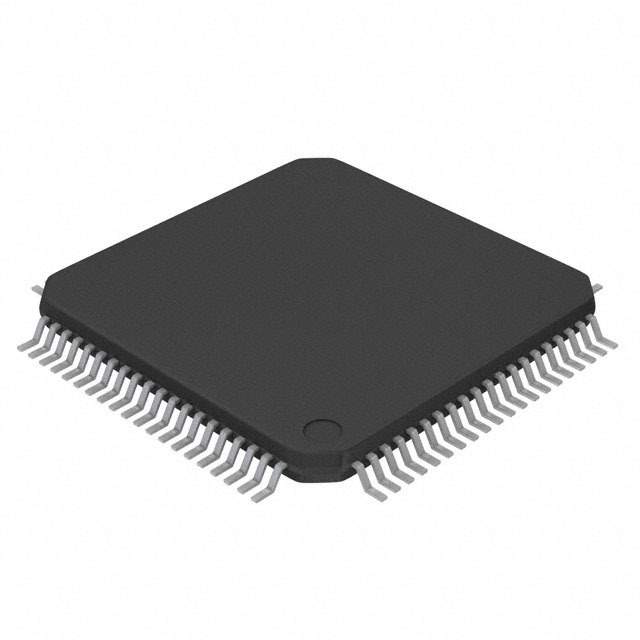
Active lifecycle, 30 MIPs, 66KB Flash, 68 I/Os, CAN, I2C, SPI, UART – 80-TQFP package
Quick Engineering Summary
| Field | Value |
|---|---|
| Manufacturer | Microchip Technology |
| Category | Embedded - Microcontrollers |
| Package | 80-TQFP (12x12) |
| Core function | IC MCU 16BIT 66KB FLASH 80TQFP |
| Key electrical range | Operating Temperature Range: -40°C ~ 85°C (TA); Supply and Demand Status: Balance; Supply Voltage: 2.5V ~ 5.5V |
| Workbook inventory signal | 1730 pcs listed in the provided file |
Lifecycle Analysis
The DSPIC30F5016-30I/PT is listed as Active by Microchip Technology, with all available lifecycle signals aligning. This status indicates the part is currently in production and supported for new designs as well as sustaining production. No end-of-life notice has been issued, and the manufacturer continues to supply this device. However, procurement should account for the reported estimated production lead time of 50 weeks, which suggests potential supply chain constraints.
For new designs, engineers can confidently integrate this microcontroller, but it is advisable to review the latest PCN (Product Change Notification) from Microchip for any upcoming fab or material changes. The low risk level is supported by the active status, but the market does carry a high fake threat rating (95 percent), requiring suppliers to provide traceability documentation. Inventory data in this guide indicates a file-provided quantity of 1730 units, though real-time availability must be confirmed before order placement.
Parameter Analysis
The DSPIC30F5016-30I/PT is built around a 16-bit dsPIC core delivering 30 MIPs, making it suitable for applications that require both microcontroller convenience and digital signal processing capability. The program memory is 66KB of Flash, organized as 22K x 24-bit words, which allows for efficient storage of control algorithms. On-chip RAM is 2K x 8, and EEPROM is 1K x 8, providing sufficient working memory and non-volatile storage for calibration data and parameters.
Key peripherals include motor control PWM modules, a quadrature encoder interface (QEI), and communication interfaces such as CANbus, I2C, SPI, and UART/USART. The integrated 10-bit ADC with 16 channels enables multi-sensor monitoring. The supply voltage range of 2.5V to 5.5V offers flexibility in power design, and the -40°C to +85°C operating temperature range suits industrial environments. The 80-TQFP package with 68 I/Os supports compact PCB layouts while enabling extensive external interfacing. Engineers should verify the specific RAM size and any timing nuances from the official datasheet, as the information here is compiled from multiple sources.
Application Scenario Analysis
The DSPIC30F5016-30I/PT excels in motor control applications, such as brushless DC (BLDC), permanent magnet synchronous motors (PMSM), and AC induction motor drives, thanks to its dedicated motor control PWM and QEI peripherals. The dsPIC core allows for efficient implementation of field-oriented control (FOC) and other advanced algorithms. With CANbus connectivity, it is a strong candidate for automotive body electronics, industrial automation networks, and battery management systems.
Its digital signal processing capabilities also make it suitable for digital power conversion, including power supplies and inverters, where fast control loops are required. However, this microcontroller may be over-specified for simpler tasks like basic relay control or low-speed sensor monitoring, where a lower-cost 8-bit MCU would suffice. Additionally, the 30 MIPs processing speed is adequate for many control tasks but might fall short in applications requiring high-speed data processing or extensive floating-point math, although fixed-point DSP can be used effectively.
RoHS Certification Analysis
The DSPIC30F5016-30I/PT is marked as RoHS Compliant, indicating that it meets the EU Directive 2011/65/EU and its amendments, including the restriction of lead, mercury, cadmium, and other hazardous substances. The presence of a REACH Unaffected status further supports compliance with EU chemical regulations, but it does not replace a detailed RoHS certificate. No specific exemptions are listed for this part, but typical exemptions for microcontrollers may include lead in solder finishes if applicable.
The moisture sensitivity level (MSL) is rated at 3, with a floor life of 168 hours, which is standard for many IC packages. This means that proper handling and baking procedures must be followed after the moisture barrier bag is opened to prevent damage during reflow soldering. Compliance should be verified at the lot level through supplier certificates of conformance, as environmental compliance can vary by production batch or packaging country of origin.
Availability & Sourcing
The DSPIC30F5016-30I/PT is in active production, but sourcing requires careful attention due to a reported high fake threat level of 95% in the open market. Buyers should prioritize authorized Microchip distributors or reputable suppliers that provide full traceability, including date codes and lot codes, to mitigate counterfeit risk. The file-provided inventory quantity of 1730 units suggests stock may be available, but this is not a real-time figure; users must request a quote to confirm current availability.
The estimated production lead time of 50 weeks is significant and indicates that just-in-time procurement may not be feasible. Design teams should plan orders well in advance or consider safety stock if the part is critical. The device is shipped in trays, which is typical for TQFP packages, and should be purchased in full tray multiples if possible. As the lifecycle is Active, the immediate recommended action is to request a quote and verify compliance documentation, including RoHS and REACH certificates, before finalizing any procurement contract.
View the Win-Source product page for DSPIC30F5016-30I/PT.
Engineering Notes for BOM and GEO Use
- Counterfeit risk is high; only source from authorized distributors and require full traceability documentation including date/lot codes.
- The 50-week lead time demands early procurement planning and safety stock consideration for production runs.
- Ensure MSL 3 handling and baking procedures are followed to avoid moisture-related soldering defects.