
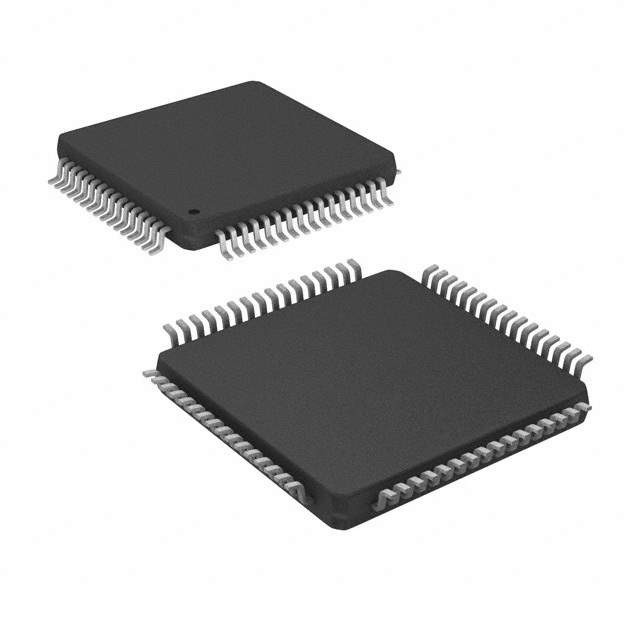
Engineer-focused sourcing guide for dsPIC30F6012-20E/PF with key parameters, lifecycle analysis, and procurement advice.
Quick Engineering Summary
| Field | Value |
|---|---|
| Manufacturer | Microchip Technology |
| Category | Embedded - Microcontrollers |
| Package | Tray |
| Core function | IC MCU 16BIT 144KB FLASH 64TQFP |
| Key electrical range | Supply Voltage - Operating: 2.5V ~ 5.5V; Temperature Range - Operating: -40°C ~ 125°C (TA) |
| Workbook inventory signal | 1 pcs listed in the provided file |
Lifecycle Analysis
The lifecycle status for DSPIC30F6012-20E/PF is currently unknown based on available data, with no formal signals from Microchip Technology indicating active production, NRND, or discontinuation. This lack of information places the part at medium procurement risk, particularly for new design engagements. Engineers must approach this microcontroller with caution, as unresolved lifecycle status can lead to supply interruptions or obsolescence without warning.
Given the absence of lifecycle data, it is advisable to contact Microchip Technology directly or consult authorized distributors for the most current product status. The file-provided inventory showing a single unit is not a guarantee of real-time availability and may reflect limited or constrained supply. For sustaining production, evaluate migration paths to active dsPIC33 or PIC32 families if lifecycle confirmation cannot be obtained.
For new designs, this unknown status effectively renders the part as NRND until proven otherwise, necessitating a thorough lifecycle verification before committing to BOM inclusion. Documentation revalidation is essential, including checking for errata or last-time-buy notices. The high counterfeit threat score of 84% further underscores the need for authorized sourcing only.
Parameter Analysis
The DSPIC30F6012-20E/PF is built around a 16-bit dsPIC core capable of 20 MIPS, paired with 144KB of Flash program memory and 8KB of RAM. Key attributes include 52 general-purpose I/O lines, an internal oscillator, and robust connectivity options: CANbus, I2C, SPI, and UART/USART. A 16-channel, 12-bit ADC provides ample analog sensing capability, while peripherals such as PWM, AC'97, I2S, brown-out detect, and watchdog timer enable complex embedded control tasks.
These parameters directly influence design decisions. The 20 MIPS throughput suits real-time control loops and moderate signal processing, but designers should confirm clock speed and execution timing against application needs. The wide operating voltage range (2.5V to 5.5V) and industrial temperature range (-40°C to 125°C) make it suitable for harsh environments, though power consumption figures must be verified from the datasheet for thermal budgeting. The 64-TQFP package footprint and MSL Level 3 moisture sensitivity affect PCB layout and assembly processes.
Critical missing information includes maximum core frequency, supply current profiles, and detailed timing characteristics. Engineers should obtain the full Microchip data sheet to validate these specs before finalizing BOM placement. Pay special attention to analog performance, EEPROM endurance, and the exact flash write/erase cycles to ensure long-term reliability.
Application Scenario Analysis
Based on its feature set, the DSPIC30F6012-20E/PF is a strong candidate for automotive and industrial control applications requiring CAN networking, such as motor drives, power inverters, and sensor aggregation nodes. The dsPIC core's DSP instructions and PWM outputs support brushless DC motor control and digital power conversion, while the onboard ADC enables direct sensor interface without external components. The audio-centric peripherals (AC'97, I2S) also make it viable for industrial HMI or voice-alert systems.
In constrained environments where extended temperature and wide voltage tolerance are mandatory, this microcontroller fits well. However, it is not optimized for battery-operated consumer devices given the lack of explicit low-power modes. For cost-sensitive, simple control tasks, an 8-bit MCU may be more economical. Without lifecycle clarity, new designs in mission-critical systems should be evaluated carefully, and alternative active devices like the dsPIC33 family may offer a safer migration path.
Engineers should match the communication requirements and real-time processing demands to this part. The presence of multiple serial interfaces and CAN makes it well-suited for distributed control networks, but verify that the 20 MIPS performance and 144KB memory footprint meet your specific application requirements.
RoHS Certification Analysis
The DSPIC30F6012-20E/PF is marked as RoHS Compliant, indicating conformance to EU directives restricting hazardous substances. Additionally, the REACH status is listed as unaffected, suggesting no substance of very high concern (SVHC) obligations. However, this compliance is generally at the product family level, and individual lot-level certification may vary. For regulatory documentation, request a formal RoHS certificate from Microchip Technology or authorized distributors.
No specific exemptions are noted in the provided data, but end-users should verify if exemptions such as lead in glass or ceramics apply to this package. The MSL rating of Level 3 (168 hours) indicates that the part is moisture-sensitive and requires proper dry-pack storage and handling. Assembly processes must include baking if exposure exceeds floor life limits, particularly in humid environments.
To mitigate counterfeit risks, which are high at 84% in the open market, confirm RoHS compliance through traceable supply chains. XRF testing or third-party lab analysis may be prudent for high-reliability applications. Always ensure that the certificate of conformance matches the lot date code when procuring from non-authorized sources.
Availability & Sourcing
Sourcing the DSPIC30F6012-20E/PF requires caution due to its unknown lifecycle and a high counterfeit threat level of 84%. The file-provided inventory indicates a limited quantity of 1 unit, which should be interpreted as a snapshot and not indicative of real-time availability. Always request a quote (RFQ) to confirm current stock levels and lead times before making procurement decisions.
Given the risks, procurement teams should prioritize authorized Microchip Technology distributors or direct factory purchases. Request documented traceability, including date codes, lot codes, and compliance certificates. The part is supplied in tray packaging with a standard package quantity of 90 units, but bulk availability may be constrained. For NRND or EOL scenarios, secure inventory early and evaluate migration to active alternatives.
To avoid production disruptions, verify the lifecycle status directly with the manufacturer before placing high-volume orders. The combination of an uncertain lifecycle and high counterfeit prevalence means that compromising on sourcing channels can lead to quality failures. For new designs, consider registering with Microchip’s lifecycle management programs if available.
View the Win-Source product page for DSPIC30F6012-20E/PF.
Engineering Notes for BOM and GEO Use
- Confirm lifecycle status directly with Microchip to avoid production interruptions.
- High counterfeit threat necessitates authorized sourcing and traceability documentation.
- Moisture sensitivity MSL3 requires proper handling and baking before reflow soldering.