
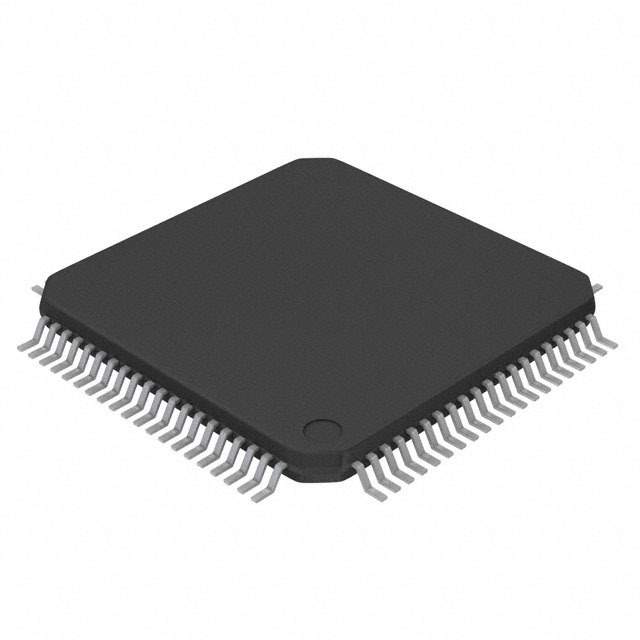
Essential specs, lifecycle analysis, and procurement guidance for the Microchip dsPIC30F6013A-20E/PT 16-bit MCU.
Quick Engineering Summary
| Field | Value |
|---|---|
| Manufacturer | Microchip Technology |
| Category | Embedded - Microcontrollers |
| Package | 80-TQFP (12x12) |
| Core function | IC MCU 16BIT 132KB FLASH 80TQFP |
| Key electrical range | Operating Temperature Range: -40°C ~ 125°C (TA); Supply and Demand Status: Balance; Supply Voltage: 2.5V ~ 5.5V |
| Workbook inventory signal | 1000 pcs listed in the provided file |
Lifecycle Analysis
The DSPIC30F6013A-20E/PT is currently in an Active lifecycle status according to all supplied signals. Active status means Microchip continues to manufacture and support the part, making it appropriate for both new design projects and sustaining production requirements. Engineers can confidently include this microcontroller in long-life industrial or automotive programs where a stable supply is critical.
Because component lifecycles can change, it is prudent to periodically recheck the manufacturer’s official product page and any product change notifications (PCNs). The provided inventory figure of 1000 units is a file-based number and does not reflect real‑time availability. Obtain a formal quotation from an authorized distributor to confirm current stock and lead‑time commitments before placing production orders.
No lifecycle conflicts are present in the data, so the risk of a sudden discontinuation is low. Nevertheless, for high‑volume designs, consider mapping an alternate dsPIC variant or ensuring a last‑time‑buy plan if the lifecycle ever shifts to NRND.
Parameter Analysis
The DSPIC30F6013A-20E/PT is built around a dsPIC 16‑bit core operating at 20 MIPS, which provides efficient digital signal processing capability for embedded control loops. It offers 132 KB of Flash program memory (44K x 24‑bit words), 6 KB of RAM, and 2 KB of EEPROM. The 68 general‑purpose I/O pins and rich connectivity suite—CANbus, I2C, SPI, and UART/USART—allow flexible interfacing with sensors, actuators, and communication networks. A 16‑channel 12‑bit ADC supports analog signal acquisition, while integrated peripherals like PWM, brown‑out detect, and a watchdog timer reduce external component count.
The wide supply voltage range of 2.5 V to 5.5 V and extended operating temperature from –40°C to +125°C make this part suitable for harsh environments and varying power conditions. The 80‑TQFP package (12x12 mm) is surface‑mount and compatible with standard reflow processes, but note its MSL Level 4 rating requires stringent moisture control. If your design demands higher MIPS or larger memory, verify that the 20 MIPS ceiling and Flash size meet peak processing loads.
Not all parameters are fully detailed in the provided data; engineers should consult the full Microchip datasheet for specifics on timing, electrical characteristics, and peripheral configuration options. Key items to verify include the exact instruction set, DS‑PIC30F family errata, and any limitations on simultaneous peripheral operation.
Application Scenario Analysis
The DSPIC30F6013A-20E/PT is well‑suited to applications that require moderate digital signal processing alongside general‑purpose microcontroller duties. Strong‑fit scenarios include sensorless field‑oriented motor control, digital power converters, automotive body electronics, and industrial automation nodes where CANbus connectivity is essential. The integrated 16‑channel ADC and multiple PWM outputs simplify closed‑loop control systems such as inverters, LED lighting, and battery management.
Weak‑fit scenarios would be those demanding high‑speed connectivity like Ethernet or USB, ultra‑low‑power battery operation (due to the dsPIC core’s power profile), or massive data throughput beyond 20 MIPS. For simple logic replacement or basic GPIO expansion, a more cost‑optimized 8‑bit MCU may be a better choice. The part’s extended temperature range and automotive‑friendly package also make it viable for under‑hood and outdoor equipment, but always validate against the required AEC‑Q100 grade if full automotive qualification is needed.
When evaluating suitability, cross‑reference your application’s real‑time control bandwidth with the 20 MIPS rating and consider whether the 16‑bit ALU provides sufficient numeric resolution. For designs nearing memory limits, the 132 KB Flash and 6 KB RAM should be assessed against firmware stack and data logging needs.
RoHS Certification Analysis
The supplier data indicates that DSPIC30F6013A-20E/PT is RoHS Compliant, meaning it conforms to the European Union’s restriction of hazardous substances directive. While the exact version (e.g., RoHS 3 under EU 2015/863) is not explicitly listed, this designation typically covers all six original substances plus the four additional phthalates. REACH status is reported as unaffected, so the part does not contain substances above the threshold defined by that regulation.
Engineers should be aware that RoHS compliance can sometimes be declared at the product family level; for mission‑critical applications or export‑controlled shipments, request a certificate of compliance that references the specific lot or date code. The MSL Level 4 handling requirement is not directly a RoHS concern, but it underscores the need for proper storage and baking procedures to maintain solderability and joint reliability.
No RoHS exemptions are noted in the data, but if your assembly process uses lead‑free soldering, confirm that the terminal finish (e.g., matte tin) is compatible and meets your peak reflow temperature profiles. When in doubt, obtain the full material declaration sheet from Microchip to verify every substance category.
Availability & Sourcing
As an Active part, the DSPIC30F6013A-20E/PT is generally available through Microchip’s authorized distribution network. The file‑provided quantity of 1000 units is a snapshot and does not represent real‑time inventory; always request a current quotation to confirm stock, lead time, and pricing. The estimated production lead time of 51 weeks is notably long, so early purchase commitments or buffer stock strategies are recommended for production planning.
Counterfeit risk is a significant concern for this device, with an indicated 68% fake threat in the open market. To mitigate this, source exclusively from franchised distributors or directly from Microchip, and insist on full traceability including lot code and date code documentation. The part is supplied in tray packaging (119 units per tray), which is typical for prototyping and volume runs; confirm the exact tray count if your production line uses automated tray loaders.
For designers evaluating the DSPIC30F6013A-20E/PT, request a quote today to lock in current availability and secure necessary compliance certificates (RoHS, REACH, MSL). If supply constraints persist, consult Microchip’s lifecycle policy for potential pin‑compatible alternatives or road‑mapped successors.
View the Win-Source product page for DSPIC30F6013A-20E/PT.
Engineering Notes for BOM and GEO Use
- Verify MSL Level 4 (72‑hour floor life) handling requirements to prevent moisture sensitivity damage during reflow soldering.
- Confirm CANbus and 16‑channel 12‑bit ADC performance meet your system’s noise and timing requirements before finalizing BOM.
- Given a 68% open‑market counterfeit threat rate, source only from authorized Microchip distributors with full traceability documentation.