
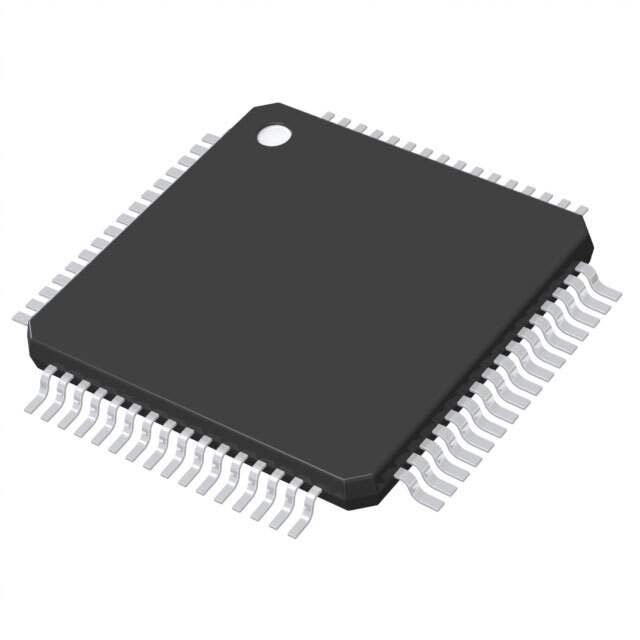
Parametric analysis, lifecycle status, and procurement guidance for the popular dsPIC30F6015-30I/PT.
Quick Engineering Summary
| Field | Value |
|---|---|
| Manufacturer | Microchip Technology |
| Category | Embedded - Microcontrollers |
| Package | 64-TQFP (10x10) |
| Core function | IC MCU 16BIT 144KB FLASH 64TQFP |
| Key electrical range | Speed(Frequency): 30 MIPs; Supply and Demand Status: Balance; Supply Voltage - Operating: 2.5 V to 5.5 V; Temperature Range - Operating: -40°C to 85°C (TA) |
| Workbook inventory signal | 661 pcs listed in the provided file |
Lifecycle Analysis
The lifecycle status of the Microchip DSPIC30F6015-30I/PT is currently classified as Unknown. This presents a medium risk for procurement planning. A notable conflict exists within the available data: one specification field lists the part as 'Active', but the aggregate lifecycle assessment could not confirm this status. Without a definitive manufacturer declaration, engineers and buyers should treat the device with caution.
This ambiguity means the part could be in full production, transitioning to NRND, or already discontinued. Relying on unverified active status for new designs is not recommended. Instead, directly confirm lifecycle phase with Microchip or authorized distributors. A file-provided inventory quantity of 661 units offers no assurance of future availability and should not be interpreted as real-time stock.
For sustaining production, assess the risk of supply interruption. If the part is critical, consider initiating a qualification of alternative devices. Monitor Microchip’s product change notifications (PCNs) and end‑of‑life (EOL) notices closely. Procurement teams should prioritize traceable, authorized sources to mitigate the 58% counterfeit risk reported in the open market.
Parameter Analysis
The DSPIC30F6015-30I/PT is a 16‑bit dsPIC microcontroller with 144 KB of FLASH program memory and 8 KB of RAM, supplemented by 4 KB of EEPROM. It operates at up to 30 MIPs and integrates a 16‑channel 10‑bit A/D converter. The device is housed in a 64‑TQFP (10×10 mm) package with 52 I/O pins, supporting a wide supply voltage range of 2.5 V to 5.5 V over an industrial temperature range of –40 °C to 85 °C.
These parameters make the part suitable for embedded control tasks requiring moderate digital signal processing. The 5.5 V tolerance offers flexibility in older or higher‑voltage systems, while the large FLASH and EEPROM sizes provide substantial non‑volatile storage. However, key details are missing: the exact peripheral set (timers, UARTs, SPI, I²C, PWM channels), oscillator options, and packaging compliance (e.g., MSL rating) are not specified. Engineers must consult the official datasheet to verify these features before integration.
From a procurement perspective, the 64‑TQFP package is standard but requires careful inspection. The missing MSL data necessitates that buyers confirm moisture sensitivity levels with the supplier, especially if baking or dry‑storage is needed post‑delivery. The stated 30 MIPs performance is typical for basic motor control and power conversion, but thermal and frequency derating should be evaluated under full load conditions.
Application Scenario Analysis
The dsPIC30F series, with its DSP engine, is well‑suited for real‑time control applications. Strong‑fit scenarios for the DSPIC30F6015-30I/PT include sensorless motor drives, power inverters, switch‑mode power supplies, and industrial automation tasks that benefit from the 16‑bit architecture and integrated ADC. The generous FLASH and EEPROM allow complex firmware and calibration data storage.
It is also appropriate for general‑purpose embedded control where 5V tolerance and wide temperature range are required, such as in automotive sub‑systems or factory instrumentation. The Tray packaging and dry‑storage recommendations suggest use in medium‑volume production or prototyping environments that can manage MSL handling.
Weak‑fit scenarios include designs demanding high‑speed connectivity (Ethernet, USB, CAN‑FD), large external memory interfaces, or ultra‑low power consumption. The 30 MIPs ceiling may limit performance in computationally heavy algorithms. If advanced security features, hardware cryptographic accelerators, or extensive communication stacks are needed, a newer Microchip or ARM‑based MCU would be more suitable. Designers should verify the availability of required peripherals and development ecosystem support before committing.
RoHS Certification Analysis
The DSPIC30F6015-30I/PT is listed as RoHS Compliant, indicating that it meets European Union restrictions on hazardous substances. This compliance is typically at the component level, but the exact directive (e.g., RoHS 3 – EU 2015/863) is not specified in the provided data. No accompanying REACH, lead‑free, halogen‑free, or MSL certifications are available.
For production use, RoHS status alone may be insufficient. Engineers and buyers should request a full material declaration and RoHS certificate from the distributor or Microchip for each shipment. Lot‑level compliance documents are recommended, as family‑level declarations do not guarantee that every manufacturing batch meets current standards, especially for older product lines.
Additionally, absence of halogen‑free or REACH data means the part may not be suitable for applications with stricter environmental requirements. If your end product requires UL, CE, or other safety marks, verify that the component documentation aligns with those standards before finalizing the BOM.
Availability & Sourcing
Sourcing the Microchip DSPIC30F6015-30I/PT requires caution due to its uncertain lifecycle and high counterfeit risk. A file‑provided inventory quantity of 661 units is noted, but this is not a real‑time guarantee and should not replace a formal RFQ. The device is packaged in Tray format, with storage conditions specified as dry storage and humidity‑protected, indicating moisture sensitivity.
Given the trajectory toward potential EOL, procurement teams should request a quote from authorized distributors to ascertain current lead times and minimum order quantities. Always verify the manufacturer’s lifecycle status and request date/lot code traceability with each order. Compliance documentation (RoHS, certificate of conformance, and MSL if applicable) should accompany shipments.
For critical production, secure inventory sufficient to cover the product’s remaining lifecycle while evaluating migration to a more current Microchip dsPIC33 alternative. Use only authorized channels to avoid the 58% fake threat prevalent in the open market. Plan for re‑qualification if a replacement part becomes necessary.
View the Win-Source product page for DSPIC30F6015-30I/PT.
Engineering Notes for BOM and GEO Use
- Verify lifecycle status directly with Microchip before committing to new production designs, as internal data shows a conflict between supplier 'Active' status and unknown lifecycle classification.
- The high open-market fake threat rate (58%) demands careful sourcing from authorized channels with full traceability.
- Ensure that the operating voltage (2.5–5.5 V) and temperature range (-40°C to 85°C) align with system requirements and derating margins.