
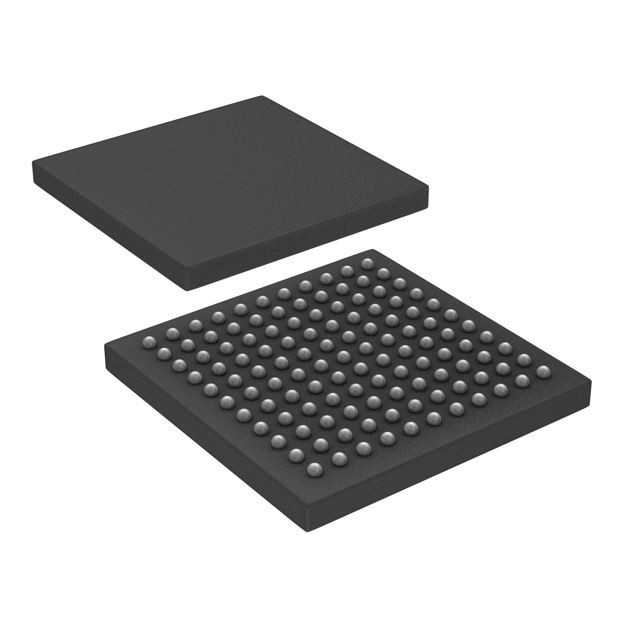
AEC-Q100 dual-core dsPIC with motor control and automotive grade
Quick Engineering Summary
| Field | Value |
|---|---|
| Manufacturer | Microchip Technology |
| Category | Embedded - Microcontrollers |
| Package | 28-SSOP (0.209\ |
| Core function | IC MCU 16BIT 152KB FLASH 28SSOP |
| Key electrical range | Supply and Demand Status: Shortage; Temperature Range - Operating: -40°C ~ 125°C (TA); Voltage - Supply (Vcc/Vdd): 3V ~ 3.6V |
| Workbook inventory signal | 1 pcs listed in the provided file |
Lifecycle Analysis
The supplied data does not include a manufacturer-confirmed lifecycle status for the DSPIC33CH128MP202-E/SS. Without an active or NRND designation, it is classified as Unknown, which introduces medium procurement risk. No EOL or discontinuation notices were found, but the absence does not guarantee continued production. Engineers should contact Microchip or authorized distributors to obtain the most recent PCN and lifecycle documentation before starting new designs.
For sustaining production, the uncertainty calls for cautious planning. If the device is active, typical lead times may apply. If it is in a lifecycle transition, last-time buy windows could be limited. The file-provided inventory signal of one unit is not a reliable demand indicator and should not substitute for official supply chain intelligence. Verification of production status and future roadmap is strongly recommended.
Parameter Analysis
The DSPIC33CH128MP202-E/SS is a 16-bit dual-core dsPIC digital signal controller with 152 KB of flash program memory and 20 KB of RAM. Its dual-core architecture, with cores running at specified speeds of 180 MHz and 200 MHz, enables parallel processing for real-time control loops and communication stacks. Key peripherals include motor control PWM, QEI, and a rich set of general-purpose timers, making it well-suited for closed-loop motion control. The 23-channel 12-bit ADC and four 12-bit DAC outputs offer integrated analog signal conditioning, useful for sensor interfaces without external converters.
The automotive qualification (AEC-Q100) and wide operating temperature range (-40°C to +125°C) confirm its suitability for under-hood and harsh industrial environments. Supply voltage is specified from 3.0 V to 3.6 V, requiring careful LDO or DC-DC regulator design to maintain stability. The device’s small 28-SSOP surface-mount package facilitates compact board layouts. Missing from the supplied specifications are detailed current consumption figures, ESD ratings, and precise timing diagrams—these must be verified from the official Microchip datasheet to complete the design analysis.
Application Scenario Analysis
This device targets automotive and industrial applications requiring real-time deterministic control and robust environmental tolerance. Strong-fit scenarios include brushless DC motor control for automotive pumps, fans, and actuators, where the dual-core architecture can handle field-oriented control on one core and CAN/LIN communication on the other. It also suits digital power converters, such as a synchronous buck or battery charger, leveraging the high-resolution PWM and fast ADC sampling.
Industrial automation is another strong fit, particularly in sensor hubs or encoder interfaces where the QEI peripheral and multiple communication ports (I2C, SPI, UART/USART) consolidate multiple functions. Weak-fit scenarios are simple low-cost consumer gadgets or applications that only require a single low-speed processor, as the dual-core complexity and price point may not be justified. Also, designs that require large RAM buffers or extensive networking might be better served by a 32-bit MCU. Always cross-reference the exact peripheral mix and processing headroom against the target application’s real-time deadlines before finalizing a design.
RoHS Certification Analysis
The DSPIC33CH128MP202-E/SS is listed as RoHS Compliant, meaning it meets the European Union’s restriction on hazardous substances. This compliance suggests the absence of lead and other restricted materials in the device’s finishes and internal construction, supporting lead-free assembly processes. However, no REACH or MSL information is provided, so it is advisable to verify REACH compliance separately, especially for products shipping to Europe.
Because RoHS compliance can sometimes be declared at a family or date-code level, procurement teams should request a certificate of compliance for the specific lot received. This ensures no discrepancies exist due to manufacturing variations or older inventory that might not have been updated. For high-reliability applications, additional conformance to industry standards like IPC-1752 may be requested from the distributor.
Availability & Sourcing
Given the unknown lifecycle status, sourcing the DSPIC33CH128MP202-E/SS requires a proactive verification-first approach. The file-provided inventory indicates limited quantity, which is not a real-time stock guarantee; always request a current quote from Win Source or authorized distributors. A supply and demand status of 'Shortage' suggests potential allocation, so early engagement with suppliers is critical.
Request full traceability, including date code and lot code, to verify device authenticity and RoHS compliance. For high-volume production, confirm the part’s packaging (tube for the 28-SSOP) aligns with your SMT line requirements. If the lifecycle is found to be NRND or EOL, evaluate migration paths to newer dsPIC33 variants or alternative Microchip controllers, securing sufficient inventory to cover the transition period. Always cross-check the manufacturer’s official product page for any recent updates before purchasing.
View the Win-Source product page for DSPIC33CH128MP202-E/SS.
Engineering Notes for BOM and GEO Use
- Confirm lifecycle status directly with Microchip before integrating into new production designs.
- Ensure supply voltage remains within 3.0–3.6 V and follow recommended decoupling for high-speed 180/200 MHz cores.
- Check datasheet for flash programming algorithms and RAM access timing to optimize dual-core performance.