
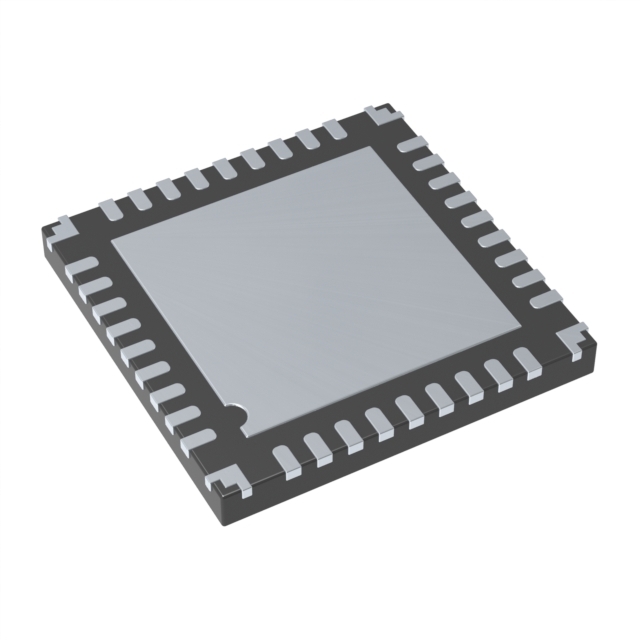
16-bit dual-core MCU, 152KB Flash, 28-SSOP, -40°C to +85°C, from Microchip Technology
Quick Engineering Summary
| Field | Value |
|---|---|
| Manufacturer | Microchip Technology |
| Category | Embedded - Microcontrollers |
| Package | 28-SSOP (0.209\ |
| Core function | IC MCU 16BIT 152KB FLASH 28SSOP |
| Key electrical range | Supply and Demand Status: Shortage; Temperature Range - Operating: -40°C ~ 85°C (TA); Voltage - Supply (Vcc/Vdd): 3V ~ 3.6V |
| Workbook inventory signal | 648 pcs listed in the provided file |
Lifecycle Analysis
The DSPIC33CH128MP202-I/SS from Microchip Technology is reported as Active in the provided lifecycle data. For new designs requiring a 16-bit dual-core microcontroller, this status indicates that the part is in volume production and supported for future availability. No lifecycle conflicts are present across the gathered signals. However, for programs with extended lifetime requirements, it is prudent to request a formal lifecycle confirmation from Microchip or your authorized distributor.
The file-provided inventory quantity of 648 units should not be considered a real-time stock guarantee. Always verify current production status and lead times before placing large orders. For sustaining production, the active status suggests continued supply, but monitor any future product change notices (PCNs) or EOL announcements that could affect planning.
Parameter Analysis
The DSPIC33CH128MP202-I/SS integrates a dual-core dsPIC processing unit with core speeds up to 180 MHz and 200 MHz, making it suitable for time-critical control loops. With 152KB of flash memory and 20KB of RAM, it provides sufficient program storage for complex algorithms while the dual-core architecture enables segregation of real-time control and communication tasks. On-chip peripherals include motor control PWM, quadrature encoder interface (QEI), and a rich set of analog resources: 23-channel 12-bit ADC and 4-channel 12-bit DAC, which simplify precision sensor interfacing.
Connectivity options span I2C, IrDA, LINbus, SPI, and UART/USART, covering most industrial and automotive communication needs. The supply voltage range is 3.0V to 3.6V with an operating temperature range of -40°C to +85°C, typical for extended industrial environments. Designers should note that the 'Not Verified' programmability status means verification status was not confirmed at the time of data retrieval; consult the latest datasheet and Microchip development tools for programming support. Key missing parameters to verify include specific power consumption figures, EEPROM availability, and package thermal resistance, all critical for power budgeting and thermal design.
Application Scenario Analysis
The DSPIC33CH128MP202-I/SS is well-suited for applications requiring high-performance digital signal control, particularly in motor drives, power conversion, and industrial automation. Its dual-core configuration allows one core to handle fast control loops (e.g., field-oriented control) while the other manages communication protocols or system monitoring. Peripherals like multiple PWM generators and a QEI directly target brushless DC, permanent magnet synchronous motor, and stepper motor systems. The integrated ADC and DAC enable sensorless or sensor-based control without external components.
Conversely, for simple, cost-sensitive applications such as basic I/O expanders or low-speed sensor nodes, this MCU may be over-specified. The absence of a CAN interface might limit use in some automotive or industrial networks, though LINbus support partially addresses this. The 3.0V minimum supply voltage is not ideal for battery-powered devices requiring low-voltage operation down to 1.8V. Additionally, without detailed power-down mode specifications, ultra-low-power designs should evaluate standby current draw from the datasheet before committing.
RoHS Certification Analysis
The supplied RoHS status for DSPIC33CH128MP202-I/SS is listed as RoHS Compliant. This generally indicates compliance with the EU RoHS Directive 2011/65/EU and its amendment 2015/863 (RoHS 3), which restricts lead, mercury, cadmium, and other hazardous substances. No exemptions are noted in the provided data, suggesting full compliance. However, no REACH or MSL (Moisture Sensitivity Level) information is included; these are critical for regulatory and handling requirements.
Since RoHS compliance can be lot-specific, especially for parts assembled with different processes over time, it is recommended to request a certificate of compliance (CoC) and any applicable test reports from the supplier for the specific date and lot code being procured. Additionally, if your end product must meet REACH or other environmental regulations, obtain separate declarations.
Availability & Sourcing
The DSPIC33CH128MP202-I/SS microcontroller from Microchip Technology shows a file-provided inventory quantity of 648 units, with a supply and demand status marked as 'Shortage.' This suggests current market constraints, so prompt procurement action is advised. The part is packaged in tubes for 28-SSOP, suitable for automated assembly lines. For production orders, request a formal quote to confirm live stock, pricing, and lead times.
When sourcing, verify the part's lifecycle status, original packaging, and date/lot code traceability to ensure authenticity. Request RoHS, REACH, and MSL compliance documentation as needed. Since the device is Active, it is appropriate for new designs, but given the shortage indicator, consider buffer stock for critical builds. Engage with authorized distributors or qualified brokers and use the RFQ process to secure allocation.
View the Win-Source product page for DSPIC33CH128MP202-I/SS.
Engineering Notes for BOM and GEO Use
- The dual-core architecture suits real-time motor control with separate communication tasks; verify core-to-core communication latency in your design.
- With 152KB flash and 20KB RAM, code and data partitioning need careful planning; check linker scripts and memory maps from Microchip.
- The supply voltage range is tight (3.0–3.6V); ensure PCB power design maintains regulation under all load conditions.