
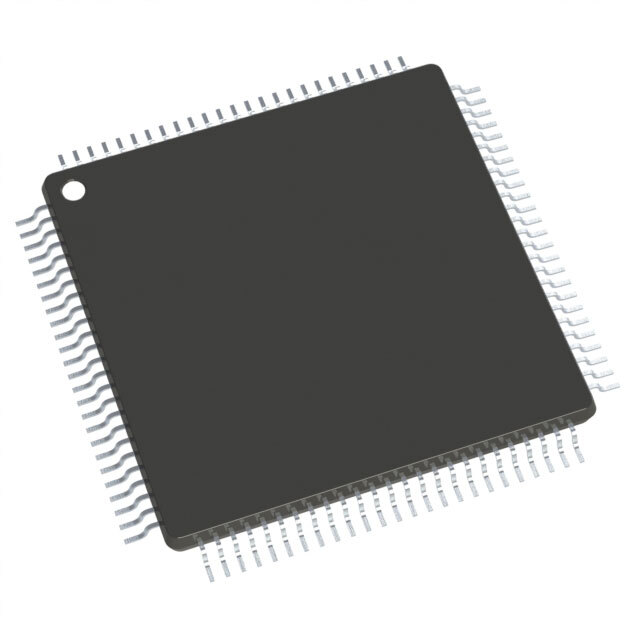
Automotive-grade 16-bit dual-core MCU by Microchip Technology, ideal for motor control and CAN applications.
Quick Engineering Summary
| Field | Value |
|---|---|
| Manufacturer | Microchip Technology |
| Category | Embedded - Microcontrollers |
| Package | 48-TQFP |
| Core function | IC MCU 16BIT 152KB FLASH 48TQFP |
| Key electrical range | Supply and Demand Status: Shortage; Temperature Range - Operating: -40°C ~ 125°C (TA); Voltage - Supply (Vcc/Vdd): 3V ~ 3.6V |
| Workbook inventory signal | 1 pcs listed in the provided file |
Lifecycle Analysis
The DSPIC33CH128MP505-E/PT currently shows an Active lifecycle with low risk, as reported by multiple supply-side signals. For engineering teams, this means the part is considered mature and available for new designs without imminent discontinuation warnings. However, because lifecycle data can shift after ECNs or factory reclassification, it is wise to treat the Active status as a snapshot and reconfirm with Microchip Technology or an authorized distributor before finalizing a BOM.
Sustaining production already using this MCU can proceed with standard lifecycle monitoring. The file data includes a workbook quantity of 1, which is only a snapshot and not a live inventory promise. No lifecycle conflicts were observed, but integration into automotive or other long-lifecycle products should still include a periodic PCN review.
Parameter Analysis
Key parameters from the supplied data define the DSPIC33CH128MP505-E/PT’s fit in embedded systems. The 16-bit dual-core dsPIC processor runs at 180 MHz or 200 MHz, offering deterministic control capability with digital signal processing extensions. Program memory is 152 KB FLASH paired with 20K × 8 RAM, which is generous for real-time motor control and communication stacks. The dual‑core architecture allows partitioning of time‑critical tasks on one core and communications or system management on the other.
Peripherals are rich for automotive and industrial control: CANbus, I²C, IrDA, LINbus, SPI, and UART/USART cover most connectivity needs. Motor control PWM, QEI, and DMA are present alongside brown‑out detect, POR, and WDT. Data converters include 31‑channel 12‑bit ADC and four 12‑bit DACs, enabling analog feedback loops. The supply voltage range is tight at 3 V–3.6 V; designers must ensure stable regulation. The operating temperature span of ‑40°C to 125°C and AEC‑Q100 grade make it suitable for under‑hood environments.
Important information missing from the snapshot includes MIPS ratings, DMA channel count, internal oscillator accuracy, EEPROM absence confirmation, and detailed pin‑out alternatives. The “Programmable: Not Verified” flag suggests that programming verification status should be checked against the latest Microchip datasheet before production qualification.
Application Scenario Analysis
This dsPIC33CH part excels in automotive and industrial applications that require high‑speed deterministic control and robust communication. Strong‑fit scenarios include brushless DC motor control/inverter drives, automotive body electronics (e.g., window lift modules, pump controllers), and chassis sensors where CAN/LIN connectivity and motor control peripherals are essential. The dual‑core can split motor control loops from diagnostic or network handling, improving real‑time response.
Weaker but viable fits include general embedded systems where a single‑core simpler MCU would suffice at lower cost. Its automotive qualification and extended temperature range may be over‑specified for consumer or commercial office equipment, but could be justified where reliability is critical. Memory footprint is large for many simple applications; thus power‑on‑reset and brown‑out detection add minimal value in well‑regulated indoor settings.
The device is not a pin‑for‑pin equivalent for earlier single‑core dsPIC versions; migration demands software partitioning. Engineers should factor in dual‑core toolchain and debug effort when evaluating it for existing single‑core designs.
RoHS Certification Analysis
The DSPIC33CH128MP505-E/PT is listed as RoHS Compliant. Without a specific standard reference in the supplied data, it is generally consistent with the latest RoHS 3 directive (EU 2015/863). No exemptions are indicated, suggesting full compliance across the six restricted substances as well as the four phthalates added in RoHS 3.
For production quality systems, note that supplier-declared RoHS compliance may apply at the family or product‑line level. Obtaining lot‑specific certification, such as a certificate of compliance or test report, verifies that the exact batch meets the thresholds. If additional regulations like REACH or halogen‑free requirements apply, request supplementary documents because none are provided in the source data. For automotive programs, the absence of an explicit REACH declaration does not imply non‑compliance—it merely requires independent verification.
Availability & Sourcing
Available data signals an Active status with a low risk, but the supply‑and‑demand indicator shows a shortage. File‑based inventory suggests limited quantity (1 unit), which should be treated as a snapshot rather than a real‑time stock guarantee. For production sourcing, an RFQ through authorized Microchip distributors or Win‑Source will yield current lead times and allocation.
When requesting quotes, specify key traceability requirements: date codes, lot codes, and the original tray packaging. Request compliance documentation (RoHS, REACH, CA Prop 65) and confirm the AEC‑Q100 qualification status with the manufacturer if the design is for automotive safety applications. Because the lifecycle is Active, standard procurement with compliance verification is appropriate. However, given the shortage flag and dual‑core niche, early engagement and buffer stocks are recommended to mitigate allocation risks.
View the Win-Source product page for DSPIC33CH128MP505-E/PT.
Engineering Notes for BOM and GEO Use
- Verify firmware compatibility with dual-core dsPIC33CH architecture; single-core dsPIC code may require re-partitioning across master/slave cores.
- AEC-Q100 qualification and extended temperature range support harsh automotive environments; confirm thermal performance with package-specific data from datasheet.
- Shortage supply signal and file-provided low stock suggest early procurement discussion with authorized distributors to secure production quantities.