
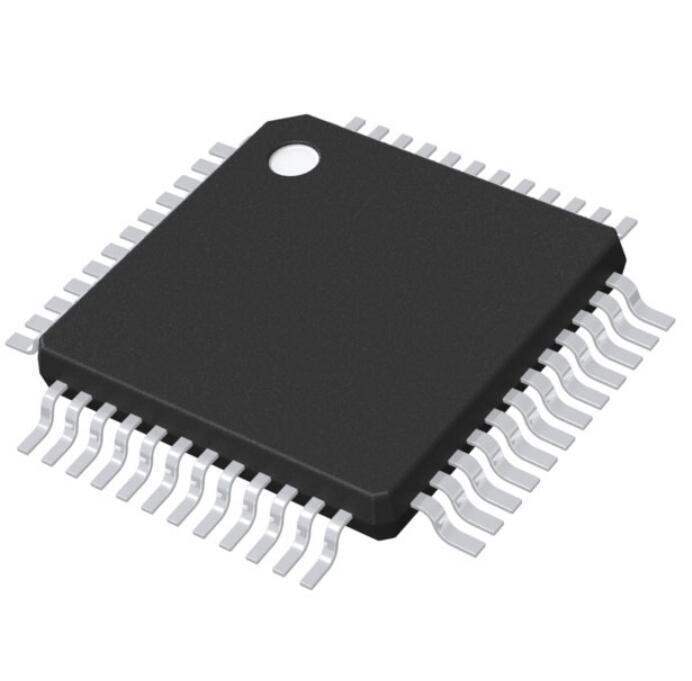
Technical specifications, lifecycle status, and procurement guidance for the Microchip dsPIC33CH128MP505-I/PT.
Quick Engineering Summary
| Field | Value |
|---|---|
| Manufacturer | Microchip Technology |
| Category | Embedded - Microcontrollers |
| Package | 30-BSOP (0.433", 11.00mm Width) Exposed Pad |
| Core function | IC MCU 16BIT 152KB FLASH 48TQFP |
| Key electrical range | Not available in supplied data |
| Workbook inventory signal | 1 pcs listed in the provided file |
Lifecycle Analysis
The DSPIC33CH128MP505-I/PT carries a high‑risk NRND (Not Recommended for New Designs) status according to the latest lifecycle data, though conflicting signals exist. One internal source lists it as Active, while the official product status appears as Preliminary. For engineers and buyers, this inconsistency demands a conservative approach: treat the part as NRND and avoid use in new designs unless Microchip provides a written confirmation of active production.
NRND status implies that the manufacturer may phase out the device within a finite window, making long‑term supply uncertain. Sustaining production programs already using this MCU should immediately verify lifetime buy options and begin migration planning. The file‑provided inventory quantity of one unit is not a reliable indicator of market stock and does not guarantee availability. Request the latest Product Change Notification (PCN) and EOL timeline from Microchip or authorized distributors before any design freeze.
Parameter Analysis
The DSPIC33CH128MP505-I/PT is built around a 16‑bit dual‑core dsPIC architecture with speeds up to 200 MHz, making it suitable for real‑time control loops, digital power conversion, and motor drives. Its 152 KB of flash memory and 20 KB of RAM support moderately complex firmware stacks, while the 3 V to 3.6 V operating range demands tight voltage regulation. Integrated peripherals include CANbus, multiple serial interfaces (I²C, SPI, UART), motor control PWM, QEI, and dual 12‑bit ADCs/DACs—key parameters that directly affect application fit.
For procurement, the 48‑TQFP package (7x7 mm) enables compact PCB layouts but requires attention to thermal dissipation when all peripherals run at maximum frequency. Missing specifications such as EEPROM, MSL rating, and exact I/O drive strength should be retrieved from the official datasheet, as they influence design margin and manufacturing yield. Engineers must also verify the actual core voltage and clock accuracy listed in the datasheet, as catalog cross‑references occasionally show conflicting core descriptions (e.g., 8‑bit Rabbit 6000), which do not match the dsPIC33CH family.
Application Scenario Analysis
With its dual‑core architecture, motor control PWM, and high‑speed peripherals, the DSPIC33CH128MP505-I/PT is a strong fit for sensorless field‑oriented control (FOC) in industrial drives, multi‑axis motor controllers, digital power supplies, and automotive body electronics. Its CANbus interface suits it for in‑vehicle networks (up to 1 Mbps) and distributed control nodes. The 12‑bit ADC with 31 channels enables precise current and voltage sensing, while the integrated DAC and QEI simplify encoder‑based positioning.
For less demanding tasks such as simple protocol bridging or human‑machine interface updates, this MCU may be over‑specified, leading to higher BOM cost and unnecessary complexity. It is also not suitable for ultra‑low‑power battery applications due to its active power profile and absence of specialized low‑power modes common in modern MCUs. When evaluating the DSPIC33CH128MP505-I/PT, confirm that the peripheral mix matches the application’s exact timing constraints, and note that the preliminary product status suggests certain features may still be under characterization.
RoHS Certification Analysis
The DSPIC33CH128MP505-I/PT is designated as RoHS Compliant, complying with EU Directive 2015/863 (RoHS 3) and its restricted substances (lead, mercury, cadmium, etc.). This certification is essential for products shipped into the European market and is often a baseline expectation for global distribution. However, a part‑level RoHS statement does not automatically confirm compliance of every manufactured lot; external factors such as packaging materials and solderability finishes may vary.
For high‑reliability applications, request a full material declaration (FMD) from Microchip or authorized distributors, which provides detailed substance information beyond the RoHS umbrella. REACH SVHC status is not provided in the source data and should be verified if your supply chain requires it. Also, obtain the moisture sensitivity level (MSL) rating directly from the packaging label, as it is not listed here but affects reflow soldering and floor‑life management.
Availability & Sourcing
File‑based data indicates a single unit of DSPIC33CH128MP505-I/PT is on hand, but this is not a real‑time stock guarantee. Given the NRND lifecycle, market availability may be dwindling. Buyers should immediately request a quote from multiple authorized distributors to assess true stock depth and lead times. For production programs, consider securing a last‑time‑buy (LTB) while still possible, and simultaneously evaluate migration to an active pin‑to‑pin equivalent from Microchip’s portfolio, if one exists.
When requesting a quote, specify full traceability requirements: date/lot code, RoHS compliance documentation, and original manufacturer packaging (e.g., tape & reel or tray). For new designs, avoid relying on this part—verify lifecycle directly and explore recommended replacements. For sustaining production, build a buffer stock only after confirming the manufacturer’s EOL notice to prevent stranded inventory. Always re‑validate lifecycle status at each procurement cycle.
View the Win-Source product page for DSPIC33CH128MP505-I/PT.
Engineering Notes for BOM and GEO Use
- Confirm lifecycle status directly with Microchip – conflicting NRND and Preliminary signals mean this part must not be designed into new products without explicit approval.
- Cross-check all parameters against the official datasheet: core voltage, peripheral set, and clock speed may differ from some catalog entries.
- With only file‑reported stock of one unit, secure multi‑source inventory or identify a pin‑compatible alternative before committing to production.