
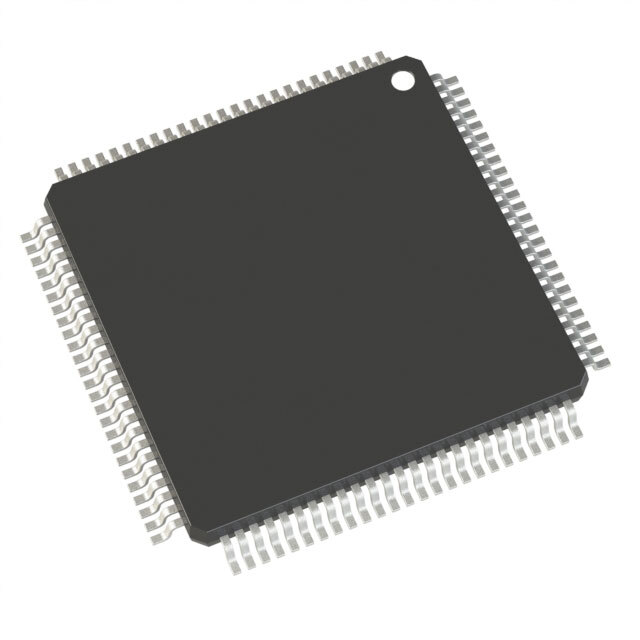
Technical analysis of Microchip's active dual-core dsPIC with automotive qualification
Quick Engineering Summary
| Field | Value |
|---|---|
| Manufacturer | Microchip Technology |
| Category | Embedded - Microcontrollers |
| Package | 64-VFQFN Exposed Pad |
| Core function | IC MCU 16BIT 88KB FLASH 64QFN |
| Key electrical range | Supply and Demand Status: Shortage; Temperature Range - Operating: -40°C ~ 125°C (TA); Voltage - Supply (Vcc/Vdd): 3V ~ 3.6V |
| Workbook inventory signal | 160 pcs listed in the provided file |
Lifecycle Analysis
The DSPIC33CH64MP206-E/MR is currently listed as Active in all lifecycle signals provided, indicating that Microchip Technology is actively manufacturing and supporting this part. No conflicting lifecycle indicators were found, so the procurement risk is low. This status makes the device suitable for both new design starts and ongoing production needs.
However, for programs with long lifespans, it is advisable to periodically check Microchip's official product change notifications (PCNs) for any future transitions or updates. The file-based inventory quantity of 160 units is a snapshot and may not reflect real-time stock; always verify with authorized distributors before committing to a build.
Parameter Analysis
Key parameters of the DSPIC33CH64MP206-E/MR include its dual-core 16-bit dsPIC architecture operating at up to 180/200 MHz, with 88 KB of Flash and 20 KB of RAM. The wide operating temperature range (-40°C to +125°C) and AEC-Q100 qualification make it suitable for harsh environments. The integrated peripherals—motor control PWM, QEI, 12-bit ADC with 34 channels, and 12-bit DAC—are critical for precise real-time control in automotive and industrial motor drives. The supply voltage range of 3.0V to 3.6V requires careful power supply design to maintain stability under varying load conditions. The 64-QFN package with exposed pad aids thermal dissipation but demands proper PCB layout.
One missing piece of information is the EEPROM size, which is not specified; designers needing non-volatile storage should verify availability or consider external memory. Engineers should also note that the device is programmable but marked as 'Not Verified'—this typically means the program memory is Flash-based but external verification of programming capability with specific tools is recommended. The multiple communication interfaces (I2C, SPI, UART, LIN) allow flexible system integration. While the dual-core setup offers high performance, developers must manage inter-core communication and resource sharing to avoid bottlenecks.
Application Scenario Analysis
The DSPIC33CH64MP206-E/MR excels in applications that demand high-speed digital signal processing and real-time control, such as automotive motor control (BLDC, PMSM), digital power conversion, and industrial automation. Its dual-core design enables simultaneous execution of time-critical control loops and system management tasks, which is essential for advanced sensorless FOC motor drives. The AEC-Q100 qualification and wide temperature range make it a natural fit for under-hood automotive applications like electric power steering, engine cooling fans, and transmission control. It is also suitable for high-performance power inverters and servo drives.
In contrast, this MCU may be over-specified for simple, cost-sensitive consumer devices that do not require automotive robustness or dual-core processing. Furthermore, the 3.0V-3.6V supply may not be ideal for battery-powered designs that demand lower voltage operation, limiting its use in ultra-low-power scenarios. When considering the DSPIC33CH64MP206-E/MR, evaluate whether the application needs the advanced motor control peripherals and dual-core parallelism. For designs that require functional safety, note that the AEC-Q100 qualification addresses component-level reliability, but system-level safety compliance (e.g., ISO 26262) depends on the complete design and software. Always consult the latest datasheet and reference manuals for application-specific guidelines.
RoHS Certification Analysis
The DSPIC33CH64MP206-E/MR is marked as RoHS Compliant, meeting the substance restrictions under the EU RoHS directive. This certification is typically at the product family level, but compliance for specific lots should be confirmed through the distributor or manufacturer’s certificate of compliance. No exemptions are noted in the provided data, but if the device incorporates lead in flip-chip solder bumps or other exempted applications, such details would be listed in the manufacturer's declaration.
For procurement, request the full material declaration and conformity certificate with each shipment to ensure ongoing compliance, especially for export-sensitive markets. As REACH status is not provided, it may need separate verification if required by your company's policies.
Availability & Sourcing
As an Active part, the DSPIC33CH64MP206-E/MR should be broadly available through Microchip’s authorized distribution network. However, the supply and demand status is noted as 'Shortage', which could impact lead times and availability. The file-provided inventory quantity of 160 units is a non‑binding snapshot and must not be relied upon for production planning.
To secure commercial and technical advantages, request a quotation from a trusted distributor or contact Win Source directly. Confirm packaging (Tube) and lot‑specific compliance documentation (RoHS certificate, date code, country of origin) before purchase. For high-volume production, securing a supply agreement with the manufacturer or authorized partners is recommended to mitigate shortage risks. Additionally, since lifecycle status is Active, standard procurement practices apply, but monitor Microchip’s PCN alerts for any changes.
View the Win-Source product page for DSPIC33CH64MP206-E/MR.
Engineering Notes for BOM and GEO Use
- Dual-core dsPIC requires thoughtful firmware partitioning to maximize real-time performance for motor control and communication tasks.
- AEC-Q100 qualification and 125°C ambient rating support use in harsh automotive environments, but verify system-level safety requirements.
- The 3.0V–3.6V supply voltage and 20 KB RAM are critical constraints; ensure power supply stability and memory headroom in the design.