
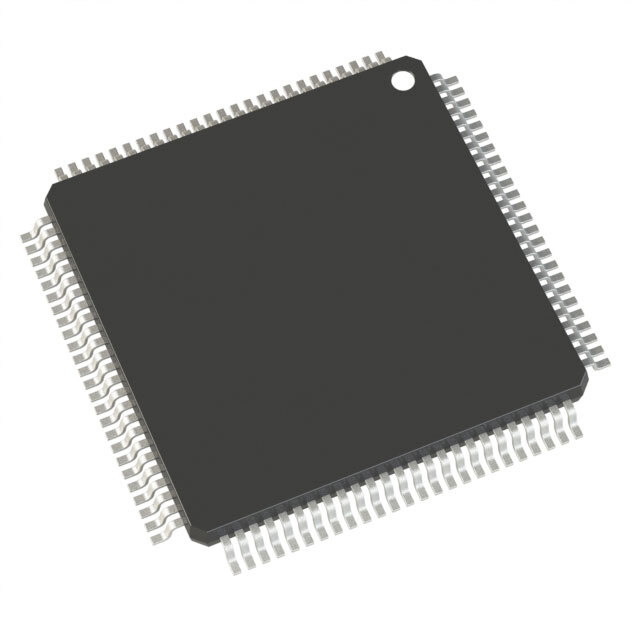
Automotive-qualified 16-bit dual-core MCU with CAN/LIN connectivity and advanced analog for real-time control.
Quick Engineering Summary
| Field | Value |
|---|---|
| Manufacturer | Microchip Technology |
| Category | Embedded - Microcontrollers |
| Package | 36-UFQFN Exposed Pad |
| Core function | IC MCU 16BIT 88KB FLASH 36UQFN |
| Key electrical range | Supply and Demand Status: Shortage; Temperature Range - Operating: -40°C ~ 125°C (TA); Voltage - Supply (Vcc/Vdd): 3V ~ 3.6V |
| Workbook inventory signal | 264 pcs listed in the provided file |
Lifecycle Analysis
The DSPIC33CH64MP503-E/M5 carries an Active lifecycle status from Microchip Technology, indicating full production support with no scheduled discontinuation. This makes it suitable for both new designs and sustaining production.
For high-volume automotive or industrial designs, verify latest product change notices (PCN) and errata documents directly from Microchip.
File-provided inventory shows 264 units, but actual availability must be confirmed via RFQ before committing to production quantities.
Parameter Analysis
The part’s standout parameters include a dual-core dsPIC processor running up to 200MHz, 88KB of FLASH with PRAM, and 20KB SRAM, enabling complex real-time control algorithms. Automotive AEC-Q100 qualification, an operating range of -40°C to +125°C, and a 36-UQFN exposed pad package support thermally demanding environments.
Peripherals like CANbus, LINbus, motor control PWM, and QEI make it well-suited for advanced motor drives and industrial communication. The presence of 32-channel 12-bit ADC and four 12-bit DACs simplifies analog signal chains.
Key missing datasheet details include precise current consumption, oscillator accuracy, and timing specifications. Engineers should verify these against application power budgets and timing constraints before finalizing PCB layout.
Application Scenario Analysis
This microcontroller strongly fits automotive motor control applications such as electric power steering, HVAC blower control, and pump drives, where its dual cores can separate safety-critical control from communications. It also suits CAN/LIN-based body electronics and sensor aggregation nodes.
In industrial automation, it can be deployed in multi-axis motor drives, PLCs, and distributed I/O modules that require deterministic real-time response and ruggedized temperature range.
It is less appropriate for applications requiring heavy graphical interfaces, extensive external memory, or Linux-capable processors. For those, a higher-performance MPU would be needed.
RoHS Certification Analysis
The part is listed as RoHS Compliant, meeting EU directive requirements for hazardous substance restrictions. No specific exemption details were provided, so the compliance is assumed at the family level.
Buyers should request a certificate of compliance for each production lot to confirm ongoing RoHS and REACH status, especially for automotive programs requiring full material declarations.
The absence of REACH data in the provided record means additional verification is recommended for SVHC compliance.
Availability & Sourcing
Current supply signals indicate a shortage, with a workbook quantity of 264 units noted in file data—this is not a guaranteed real-time figure. The device is shipped in tube packaging from the 36-UQFN (5x5) package.
Given the Active lifecycle but tight supply, a request for quote (RFQ) is essential to obtain binding lead-times and validate exact date/lot codes. Request traceability documentation and RoHS certificates with each order.
For production ramp-ups, explore authorized distribution channels or direct Microchip orders to secure allocation. Do not rely on single-point inventory without manufacturer confirmation.
View the Win-Source product page for DSPIC33CH64MP503-E/M5.
Engineering Notes for BOM and GEO Use
- Confirm EEPROM absence is acceptable; the device uses PRAM for emulation but verify write endurance if required.
- Leverage dual-core partitioning: assign one core to motor control (PWM, ADC) and the other to CAN/LIN communication to simplify software design.
- Validate that the internal oscillator accuracy meets your timing tolerance; external crystal may be needed for precision CAN baud rates.