
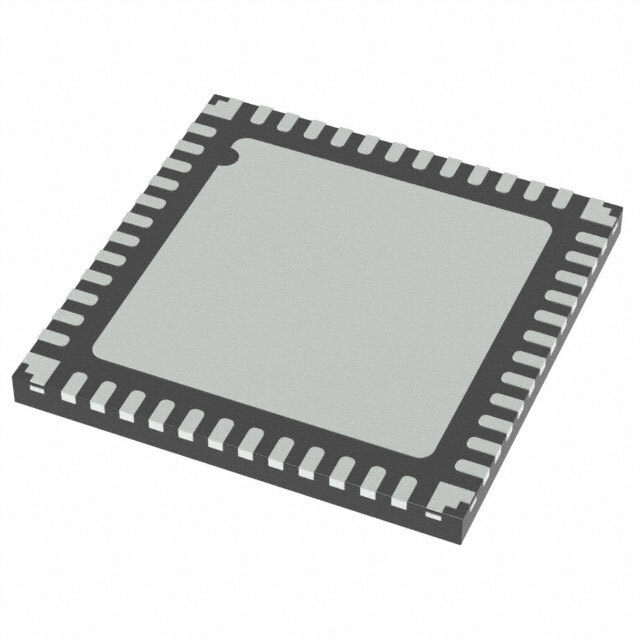
Automotive-grade 16-bit dual-core microcontroller for motor control and connectivity applications. Active lifecycle, RoHS compliant.
Quick Engineering Summary
| Field | Value |
|---|---|
| Manufacturer | Microchip Technology |
| Category | Embedded - Microcontrollers |
| Package | 64-VFQFN Exposed Pad |
| Core function | IC MCU 16BIT 88KB FLASH 64QFN |
| Key electrical range | Supply and Demand Status: Shortage; Temperature Range - Operating: -40°C ~ 125°C (TA); Voltage - Supply (Vcc/Vdd): 3V ~ 3.6V |
| Workbook inventory signal | 1 pcs listed in the provided file |
Lifecycle Analysis
The DSPIC33CH64MP506-E/MR is listed as Active by Microchip Technology with no conflicting signals. Active status means the part is in full production, supported for new designs, and recommended for volume production. For new designs, engineers can proceed with confidence, but should account for the current market shortage status indicated in supply data. This shortage may lead to extended lead times, so procurement planning is essential. Sustaining production also remains safe, though buyers should monitor manufacturer notices for any future change. Since lifecycle data aligns, no immediate revalidation is required, but periodic checking of Microchip’s product change notifications is prudent for production programs. The file-provided inventory shows a quantity of 1, which is not real-time and suggests checking with authorized distributors for current stock. Overall, the part presents low lifecycle risk for new and ongoing projects, provided supply chain constraints are managed.
Parameter Analysis
Key parameters define the DSPIC33CH64MP506-E/MR for demanding embedded control. It integrates a 16-bit dual-core dsPIC processor capable of 180MHz/200MHz operation, delivering high computational throughput for real-time control algorithms. Program memory is 88KB Flash with additional PRAM, and RAM is 20KB, sufficient for complex motor control or automotive communication stacks. The 3V–3.6V supply and -40°C to +125°C operating range, combined with AEC-Q100 qualification, confirm automotive-grade robustness. Connectivity options including CANbus, LINbus, and I2C/SPI/UART enable integration into vehicle networks. Motor control PWM, QEI, and multiple 12-bit ADCs and DACs support closed-loop control.
Missing specifications such as EEPROM size (not provided) and exact current consumption values need verification from the datasheet for power budgeting. The “Not Verified” programmable status indicates the part has not been third-party validated, so engineers should verify programming and endurance in their specific design. Package is a 64-VFQFN exposed pad, requiring thermal consideration for high-speed operation.
Application Scenario Analysis
The DSPIC33CH64MP506-E/MR is strongly suited for automotive motor control applications such as electric power steering, HVAC blowers, and oil/water pumps where dual-core processing, CAN/LIN connectivity, and motor control PWM are essential. Its high-speed ADCs and DACs enable sensorless FOC (Field-Oriented Control). In body electronics, it can manage LIN-based actuator control or CAN gateway functions. The part also fits industrial servo drives and robotics requiring real-time dual-core processing with deterministic timing.
For applications like simple sensor nodes or ultra-low-power devices, this MCU is less optimal due to the 3V minimum supply and absence of explicit low-power modes, although the internal oscillator reduces external component count. Automotive infotainment or ADAS periphery could also leverage its DSP capabilities for audio processing or sensor fusion. Engineers must confirm that the 88KB Flash and 20KB RAM meet code and data requirements, potentially limiting more memory-intensive applications. Overall, its primary strength lies in safety-critical, real-time control within harsh environments.
RoHS Certification Analysis
The part is marked RoHS Compliant, indicating conformity to EU RoHS directives. Typically for active Microchip components, this means RoHS 3 (EU 2015/863) compliance, but the specific standard is not detailed in available data. The absence of listed exemptions suggests standard compliant materials, but for traceability, procurement should request a certificate of compliance from the supplier. REACH status is not provided, which does not replace RoHS but may be relevant for EU market access.
Engineers designing for environmentally regulated markets can proceed, but should verify MSL (Moisture Sensitivity Level) and lead finish from the packaging label or datasheet. Lot-level assurance via manufacturer lot codes is recommended for high-reliability applications. Halogen-free status is not stated, so if required, explicit confirmation is needed. In summary, RoHS compliance is affirmed, supporting procurement for regions enforcing hazardous substance restrictions.
Availability & Sourcing
The DSPIC33CH64MP506-E/MR is an active part, but current supply signals indicate a shortage. File-provided quantity shows 1 unit, which is not real-time; actual inventory should be checked via RFQ to distributors. Given the automotive qualification and market conditions, lead times may exceed standard expectations. Buyers should request traceability details including date/lot codes and verify authenticity through authorized Microchip channels.
For production planning, secure inventory allocations early and monitor supply status. Packaging is tube (as per spec), which may affect reel-based automated assembly; verify with supplier if reel options are needed. Recommend requesting a quote that includes compliance documentation (RoHS, AEC-Q100 certs) and confirming lifecycle status at order time. As an active part, the primary procurement action is to request current pricing and availability while implementing buffer stock strategies to mitigate shortage risks.
View the Win-Source product page for DSPIC33CH64MP506-E/MR.
Engineering Notes for BOM and GEO Use
- Verify programming status and endurance from Microchip’s datasheet before committing to production.
- Confirm power consumption and thermal management requirements for dual-core operation at maximum speed.
- Plan for extended lead times due to current shortage and automotive qualification demand.