
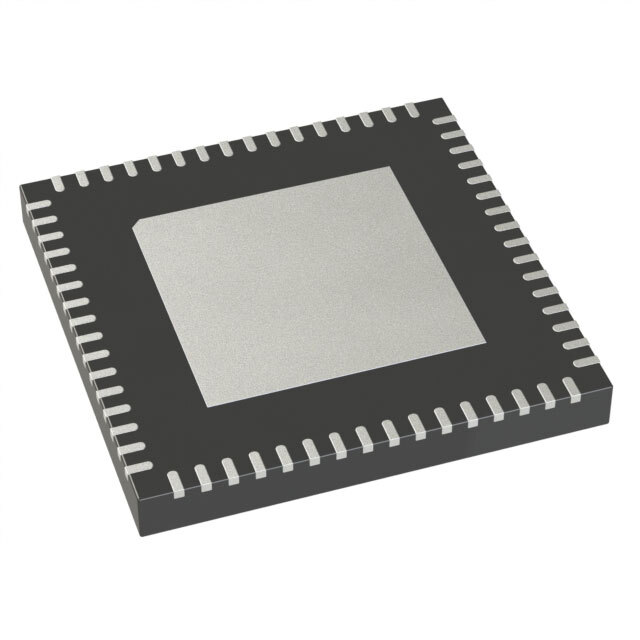
Automotive 16-bit dsPIC MCU with 256KB Flash, 100MHz, motor control peripherals, AEC-Q100.
Quick Engineering Summary
| Field | Value |
|---|---|
| Manufacturer | Microchip Technology |
| Category | Embedded - Microcontrollers |
| Package | 48-UFQFN Exposed Pad |
| Core function | IC MCU 16BIT 256KB FLASH 48UQFN |
| Key electrical range | Supply and Demand Status: Shortage; Temperature Range - Operating: -40°C ~ 125°C (TA); Voltage - Supply (Vcc/Vdd): 3V ~ 3.6V |
| Workbook inventory signal | 37 pcs listed in the provided file |
Lifecycle Analysis
The lifecycle status of the DSPIC33CK256MP205-E/M4 is unknown based on the provided data. No official signals from Microchip Technology indicate whether the part is in active production, not recommended for new designs (NRND), or approaching end-of-life (EOL). This ambiguity introduces medium procurement risk, as design cycles may be disrupted if the status changes without warning.
Engineers and buyers should contact Microchip Technology or an authorized distributor to obtain the current lifecycle classification. Without verification, committing to this microcontroller in a new automotive or industrial design is not advised. For sustaining production, it is prudent to secure sufficient buffer stock and simultaneously evaluate alternative dsPIC33CK variants or other Microchip MCUs that offer compatible motor control features.
The inventory quantities listed in the source file (37 and 244 units) are file-provided snapshots and not real-time. They do not reflect guaranteed availability or production continuity. Validation through a formal quote and direct communication with the supply chain is essential before making procurement decisions.
Parameter Analysis
The DSPIC33CK256MP205-E/M4 integrates a 100 MHz 16-bit dsPIC core with 256 KB of flash program memory and 24 KB of RAM, making it suitable for real-time control applications. Its automotive qualification (AEC-Q100) and extended temperature range (-40°C to 125°C) enable deployment under harsh conditions. The 48-UQFN (6x6 mm) package provides a compact footprint with 39 I/O lines.
A key differentiator is the set of motor control peripherals, including advanced PWM modules and a Quadrature Encoder Interface (QEI), which are essential for field-oriented control of BLDC and PMSM motors. Additional connectivity options—I2C, SPI, UART/USART, LINbus, and IrDA—support sensor communication and automotive networking. The integrated 12-bit ADC (19 channels) and three 12-bit DACs allow closed-loop analog control without external components. The supply voltage range of 3.0 V to 3.6 V necessitates level shifting when interfacing with 5 V logic.
Critical specifications missing from the provided data include ADC sampling rate, DMA channel count, available timer resources, and specific errata that may affect motor control performance. Design validation should include a thorough review of the official Microchip datasheet to confirm these parameters and assess whether the “Not Verified” programmable status flag indicates any factory programming limitations or only a data entry artifact.
Application Scenario Analysis
The DSPIC33CK256MP205-E/M4 is primarily targeted at automotive and industrial applications that demand high-performance motor control within a constrained power budget. Its AEC-Q100 qualification and 125°C operating limit make it a strong fit for under-hood automotive systems such as electric oil pumps, cooling fans, and HVAC actuators, where LINbus connectivity supports distributed architectures. In industrial automation, it can drive sensor-less BLDC motors in drones, power tools, and robotic joints, leveraging the integrated QEI for precise position feedback.
The 256 KB flash allows implementation of complex control algorithms, including sensorless FOC and proprietary communication stacks, while the 24 KB RAM accommodates runtime data buffers. The three DAC outputs are unusual in this class and can directly control analog power stages or generate diagnostic waveforms. However, the absence of a CAN peripheral limits its use in traditional automotive body control networks that rely on CAN FD, pushing preference toward LIN-based nodes or standalone motor modules.
Weak-fit scenarios include designs requiring high-bandwidth Ethernet or USB connectivity, applications needing large firmware over-the-air update storage beyond 256 KB, or systems operating at 5 V without level translation. Additionally, the 3.6 V supply ceiling makes it less suitable for legacy 12 V automotive systems that lack efficient buck regulation. For such cases, Microchip’s dsPIC33EP families or 32-bit SAM automotive MCUs may offer better alignment.
RoHS Certification Analysis
The DSPIC33CK256MP205-E/M4 is listed as RoHS Compliant, indicating that it meets the requirements of the EU Restriction of Hazardous Substances directive. The applicable standard is presumed to be RoHS 3 (EU 2015/863), which restricts ten substances including lead, mercury, and several phthalates. However, no explicit standard reference or certificate is provided in the source data, so buyers should obtain the manufacturer’s Declaration of Conformity to confirm compliance to the latest amendment.
REACH compliance is not mentioned and cannot be inferred from RoHS status alone; if required for market access, it must be verified separately through Microchip’s materials declarations. The part’s 48-UQFN package uses exposed pad construction without lead-frames that typically contain tin-lead finishes, but lot-level XRF testing or lab analysis is recommended for mission-critical applications. Moisture Sensitivity Level (MSL) is also absent from the data; designers should check the packaging label for MSL classification to ensure proper storage and reflow soldering profiles.
Availability & Sourcing
File-provided inventory indicates 37 units in one workbook and 244 units in an alternative list, but these figures are not real-time and should not be interpreted as current stock. The supply and demand status is marked as “Shortage,” suggesting that lead times may be extended and allocation could apply. Engineers and buyers must request a formal quotation to confirm actual availability, delivery schedules, and minimum order quantities.
Due to the unknown lifecycle status, it is critical to verify production continuity with Microchip Technology before placing volume orders for new designs. When sourcing, specify traceability requirements such as date and lot codes, and request compliance documentation including RoHS certificates and PPAP reports if automotive end-use certification is needed. The component is supplied in tube packaging, which may be less suitable for high-volume automated assembly; alternative tape-and-reel options should be confirmed if needed.
For quoting and to secure authorized inventory, contact Microchip Technology directly or approved distributors. Evaluate second-source options within the dsPIC33CK family that maintain pin compatibility, but cross-reference the exact peripheral mix and package to avoid requalification delays. Given the shortage condition, building a safety stock buffer and engaging in long-term order planning can mitigate line-down risk.
View the Win-Source product page for DSPIC33CK256MP205-E/M4.
Engineering Notes for BOM and GEO Use
- Verify lifecycle status with Microchip before integration into new automotive designs.
- Confirm AEC-Q100 qualification documentation for the specific 48-UQFN package variant.
- Assess supply availability due to shortage status; consider alternate parts for long-term production.