
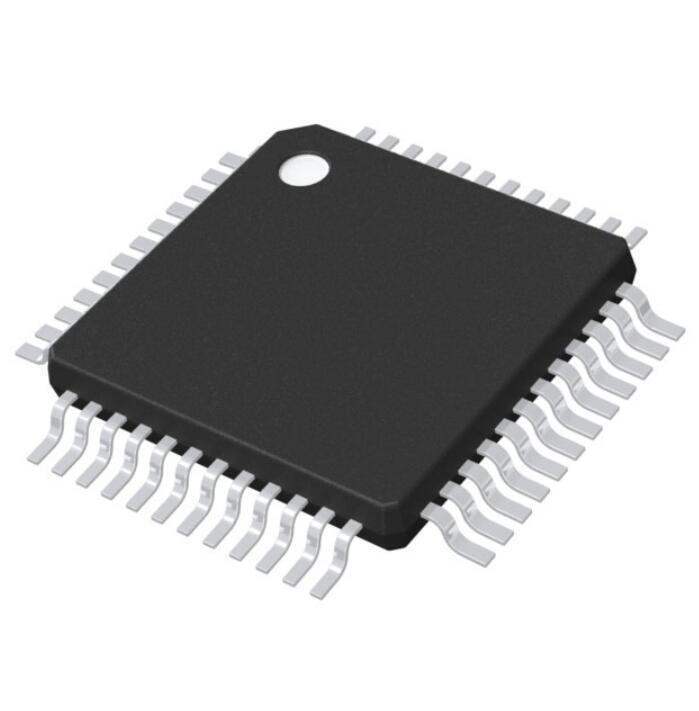
16-bit dsPIC33CK series MCU, 256KB flash, 200MHz, 48-TQFP package, now discontinued. Verify availability and alternatives.
Quick Engineering Summary
| Field | Value |
|---|---|
| Manufacturer | Microchip Technology |
| Category | Embedded - Microcontrollers |
| Package | 292-LBGA |
| Core function | IC MCU 16BIT 256KB FLASH 48TQFP |
| Key electrical range | Not available in supplied data |
| Workbook inventory signal | 12000 pcs listed in the provided file |
Lifecycle Analysis
The DSPIC33CK256MP205-I/PT from Microchip Technology is officially Discontinued, carrying a high procurement risk. This status means the part is no longer manufactured and is not recommended for new designs. Existing projects should immediately secure remaining inventory and initiate last-time buy (LTB) negotiations with the manufacturer to avoid future shortages.
While the supplied lifecycle signals are consistent, the dataset contains technical anomalies—such as a mismatched core processor and package—that underscore the need for direct verification with Microchip or authorized distributors. The reported workbook quantity of 12,000 units is file‑provided and does not reflect real‑time availability. Engineers and buyers should treat this number as provisional and re‑validate with Win Source at the time of inquiry.
For systems still dependent on this controller, consider a proactive migration to an active Microchip dsPIC33CK or alternative series with equivalent flash, speed, and peripheral sets. Without an official replacement path, requalification effort may be significant.
Parameter Analysis
Key advertised parameters for the DSPIC33CK256MP205-I/PT include a 200 MHz clock speed, 256 KB flash, and connectivity via I2C, SPI, and a 3‑wire interface. However, the supplied specifications show serious discrepancies: the core processor is listed as Rabbit 6000 (8‑bit), while the part number and description indicate a 16‑bit dsPIC33CK core in a 48‑TQFP package, not a 292‑LBGA. These mismatches must be resolved before integrating the part into any design or production line.
When verifying the official Microchip datasheet, focus on the CPU architecture (likely 16‑bit dsPIC33CK), package footprint (48‑pin TQFP), operating voltage range, temperature grade, and available memory map. The 200 MHz speed, if accurate, places this device in the high‑performance DSC segment, making real‑time control and digital power applications feasible. Confirm peripheral counts (timers, PWMs, ADCs) and whether the 3‑wire interface is a standard SPI or a different protocol.
Missing critical items from the supplied data include I/O count, RAM size, operating temperature, and exact voltage tolerance. Engineers should treat all listed specs as provisional and not rely on them for final design until confirmed against the manufacturer's original documentation.
Application Scenario Analysis
Based on its category as an embedded microcontroller and the stated connectivity options, the DSPIC33CK256MP205-I/PT is naturally suited to industrial control, motor drive, sensor aggregation, and digital power conversion systems. The presence of I2C and SPI suggests it can interface with a wide range of peripherals, while the 200 MHz speed and 256 KB flash allow for complex real-time algorithms.
However, these capabilities are speculative given the data quality issues. The part may have been designed for applications requiring high-speed signal processing, such as inverter control or power quality monitoring. With its discontinued status, it is a poor fit for new product introductions but remains viable for maintaining existing fielded equipment where a redesign is not immediately possible.
Engineers considering this part for legacy support should evaluate whether the actual core (likely a dsPIC33CK) meets the processing demands of the target system, and whether alternative active microcontrollers from Microchip’s portfolio can be drop‑in or near‑drop‑in substitutes. Without a confirmed package and pinout, replacement evaluations are risky.
RoHS Certification Analysis
The DSPIC33CK256MP205-I/PT is listed as RoHS Compliant, which implies conformity to the EU RoHS directive. No further compliance details—such as REACH, halogen‑free, or MSL ratings—are provided. For a discontinued part, it is especially important to obtain current certificates of compliance for the exact date/lot code being purchased, as older inventory may have been manufactured under different material declarations.
A simple RoHS label does not guarantee compliance with the latest RoHS 3 (EU 2015/863) amendment, which added four new phthalates. Buyers should request a full material declaration or RoHS test report from the supplier and, if necessary, from Microchip directly. While the risk of non‑compliance is low for a manufacturer of Microchip’s standing, the cost of a compliance failure in a final product can be substantial.
If the device will be used in safety‑critical or high‑reliability applications, additional inquiries about assembly site, die revision, and process change notices are advisable. The absence of lead‑free detail should also be verified: assuming the part is lead‑finished is not sufficient without supporting documentation.
Availability & Sourcing
As a discontinued component, the DSPIC33CK256MP205-I/PT presents significant sourcing challenges. Win Source indicates a workbook quantity of 12,000 units, but this is file‑provided and not a live inventory figure. Engineers and buyers must request a quote to check current availability, as stock can deplete rapidly once EOL is announced.
When sourcing, insist on an RFQ process that includes verification of life‑cycle status, manufacturing date codes, and original packaging. Request photographs of the physical device to confirm package marking matches the expected 48‑TQFP format and that it is not a re‑marked or counterfeit unit. For high‑stakes procurement, third‑party authentication may be warranted.
Given the high risk, parallel actions are recommended: secure a sufficient quantity for foreseeable production needs while simultaneously evaluating a migration to an actively supported microcontroller. Microchip’s dsPIC33CK family includes successors that may offer pin‑compatibility, but careful cross‑reference of electrical and firmware compatibility is essential. Direct engagement with Microchip’s EOL services can provide the most accurate migration path.
View the Win-Source product page for DSPIC33CK256MP205-I/PT.
Engineering Notes for BOM and GEO Use
- Verify core processor and package type with official Microchip datasheet; supplied data contains inconsistencies (e.g., Rabbit 6000 core, 292-LBGA package).
- Plan for end-of-life procurement: secure inventory now and evaluate migration to active part numbers to avoid production stoppage.
- Request RoHS compliance certificates and lot traceability documents before purchase; part is discontinued with limited supply and may require re-qualification.