
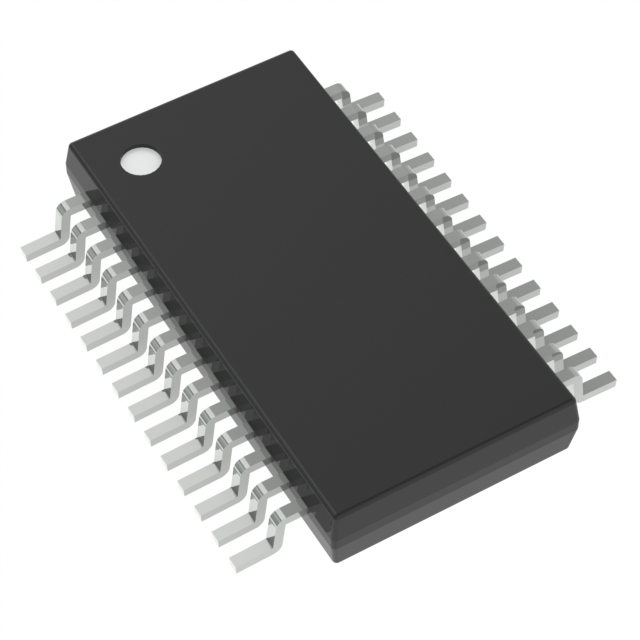
16-bit dsPIC microcontroller with 256KB Flash, automotive-grade, 100MHz, 80-TQFP
Quick Engineering Summary
| Field | Value |
|---|---|
| Manufacturer | Microchip Technology |
| Category | Embedded - Microcontrollers |
| Package | 80-TQFP |
| Core function | IC MCU 16BIT 256KB FLASH 80TQFP |
| Key electrical range | Supply and Demand Status: Shortage; Temperature Range - Operating: -40°C ~ 125°C (TA); Voltage - Supply (Vcc/Vdd): 3V ~ 3.6V |
| Workbook inventory signal | 1 pcs listed in the provided file |
Lifecycle Analysis
The DSPIC33CK256MP208-E/PT is in an Active lifecycle status with low risk, as indicated by both Microchip’s official lifecycle designations and the provided supply-chain data. This means the part is fully supported for new designs, volume production, and sustaining engineering. Engineers can confidently integrate the DSPIC33CK256MP208-E/PT into new projects without fear of near-term discontinuation.
However, the supply and demand status is flagged as Shortage, which suggests that availability may be constrained. While the part itself is not NRND or EOL, procurement teams should anticipate longer lead times or limited stock at distributors. The file-provided inventory quantity of 1 is a static snapshot and does not represent real‑time availability; it should not be used for planning. For critical production schedules, it is wise to verify current stock and lead times directly with Microchip or authorized channels. Additionally, because the DSPIC33CK256MP208-E/PT carries AEC‑Q100 automotive qualification, it typically benefits from long‑term supply commitments, but periodic revalidation of the lifecycle status is recommended.
Parameter Analysis
The DSPIC33CK256MP208-E/PT is built around a 16‑bit dsPIC core running at 100MHz, delivering the signal processing capability required for digital control loops. Its 256KB of Flash program memory and 24KB of RAM provide enough space for complex motor control algorithms, communication stacks, and real‑time tasks. The integrated peripherals—motor control PWM, quadrature encoder interface (QEI), and a rich set of analog-to‑digital (A/D) and digital‑to‑analog (D/A) converters—make it a strong candidate for drives and power conversion.
Connectivity options include I²C, SPI, UART/USART, LINbus, and IrDA, covering most automotive and industrial networking needs. The operating temperature range of -40°C to +125°C and AEC‑Q100 qualification ensure reliable operation in harsh environments. A supply voltage of 3V to 3.6V mandates a stable 3.3V rail, and the 80‑TQFP package enables manual soldering and inspection. Parameters not explicitly provided—such as EEPROM size, precise current consumption per MHz, and detailed I/O drive strengths—must be extracted from the latest datasheet during the design phase to guarantee correct termination and thermal margins.
Application Scenario Analysis
The DSPIC33CK256MP208-E/PT excels in automotive and industrial applications that demand real‑time control and robust communication. Its motor control PWM and QEI peripherals are ideal for brushless DC (BLDC) motor drives, permanent magnet synchronous motor (PMSM) control, and sensor‑oriented field‑oriented control (FOC) algorithms. The LINbus interface directly supports body electronics, lighting, and low‑speed networking, while the A/D and D/A converters suit sensor acquisition and actuation.
Industrial sectors—such as factory automation, servo drives, and digital power supplies—also benefit from the DSPIC33CK256MP208-E/PT’s deterministic performance and temperature range. The AEC‑Q100 qualification expands its use into under‑hood automotive modules. However, this MCU may be a weak fit for applications that require large external memory buses, Ethernet, CAN FD, or USB connectivity, as these are not featured in the peripheral set. It is also not optimized for ultra‑low‑power, coin‑cell operation; its strength lies in high‑performance control, not extreme power saving.
RoHS Certification Analysis
According to the supplied data, the DSPIC33CK256MP208-E/PT is RoHS Compliant. This indicates that the part meets the substance restrictions of the relevant RoHS directive, most likely RoHS 3 (EU 2015/863) given its active production status. Nevertheless, a blanket compliance statement should not replace lot‑level documentation. For high‑reliability or regulated markets, request a certificate of compliance from the supplier for each shipment.
No exemptions are explicitly listed, but some technical exemptions (e.g., lead in solderable finishes, lead‑frame lead) may still apply under RoHS; these would be noted in a full compliance declaration. Additionally, REACH, halogen‑free, and other environmental attributes are not mentioned—if required, they must be confirmed directly. The Moisture Sensitivity Level (MSL) is absent from the provided parameters; always check the tray or reel labeling to ensure proper handling and avoid moisture‑induced damage during reflow.
Availability & Sourcing
The DSPIC33CK256MP208-E/PT is an active component from Microchip Technology, but supply‑chain signals indicate a Shortage status. Engineers and buyers should request a quote for current availability and lead times, as the file‑listed quantity does not reflect live inventory. For production planning, secure allocation through authorized distributors or direct Microchip accounts to mitigate supply risks.
When sourcing, verify the lifecycle status with the manufacturer to rule out any unannounced changes. Insist on full traceability with date and lot codes, and request compliance certificates (RoHS, AEC‑Q100) with each order. The part is shipped in trays, suitable for automated pick‑and‑place. For prototype quantities, check sample programs or small‑order channels. Because this is an automotive‑qualified MCU, long‑term availability is typically assured, but the current shortage requires proactive procurement. Always confirm that the 80‑TQFP (12x12) package matches your assembly requirements before placing an order.
View the Win-Source product page for DSPIC33CK256MP208-E/PT.
Engineering Notes for BOM and GEO Use
- Verify AEC-Q100 qualification documentation and lot-specific RoHS compliance before production use.
- Assess motor control PWM peripheral filtering requirements for EMI reduction in PCB layout.
- Given the shortage flag, secure inventory early and confirm lead times with authorized sources.