
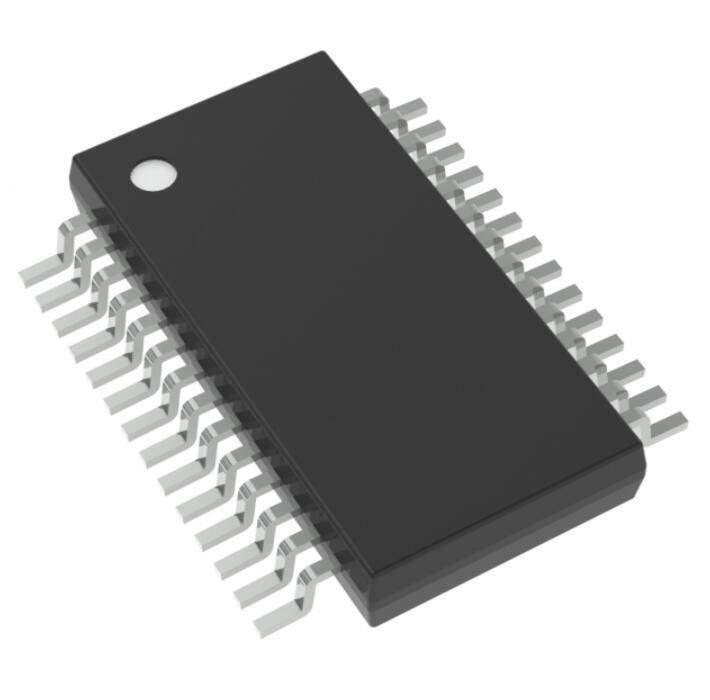
16-bit dsPIC® Microcontroller - 32KB Flash, 100MHz, AEC-Q100, 28-SSOP | NRND Lifecycle
Quick Engineering Summary
| Field | Value |
|---|---|
| Manufacturer | Microchip Technology |
| Category | Embedded - Microcontrollers |
| Package | 292-LBGA |
| Core function | IC MCU 16BIT 32KB FLASH 28SSOP |
| Key electrical range | Not available in supplied data |
| Workbook inventory signal | 32 pcs listed in the provided file |
Lifecycle Analysis
The DSPIC33CK32MP102-E/SS from Microchip Technology carries a conflicting lifecycle status. While one data source suggests an Active status, the primary lifecycle indicator is NRND (Not Recommended for New Designs), and the product status is listed as Preliminary. For procurement and engineering planning, the NRND designation must be taken as the governing status.
This high-risk classification means the part is not intended for new design projects. Engineers should immediately consult Microchip's official product page or authorized distributors to confirm the exact lifecycle position, potential last-time buy windows, and any available replacement or migration paths. For existing production lines that already use this microcontroller, sustaining procurement is possible but requires careful monitoring of stock depletion and lead times.
A file-provided inventory suggests 32 units, but this is a point-in-time snapshot and does not guarantee real-time availability. Relying on this part without a verified supplier commitment is ill-advised for any new production ramp.
Parameter Analysis
Key parameters for the DSPIC33CK32MP102-E/SS indicate a 16-bit dsPIC core running at 100 MHz, with 32 KB Flash program memory and 8 KB RAM. The supply voltage ranges from 3 V to 3.6 V, and the device is rated for operation from -40°C to +125°C, backed by AEC-Q100 automotive qualification. It offers 21 general-purpose I/O lines and a rich set of connectivity options including I2C, SPI, UART/USART, LIN bus, and IrDA. Integrated analog features consist of a 12-bit ADC with 12 channels and three 12-bit DAC outputs.
These characteristics make the part well-suited for real-time control applications that demand deterministic performance and robust communication interfaces. However, engineering teams should verify several missing or inconsistent data points. The source data includes erroneous listings such as an 8-bit Rabbit 6000 core and a 292-LBGA package, which do not match the documented 16-bit dsPIC architecture and 28-SSOP housing. Critical missing specifications include the exact number of PWM channels, timer/module counts, oscillator configurations, and debug/programming interface details. All parameters should be cross-checked against the latest official Microchip datasheet before design finalization.
Additionally, EEPROM is not present (indicated by a dash in the supplier parameters), so any application requiring non-volatile data storage beyond Flash must consider external solutions. The tube packaging type (from supplier data) should be confirmed for inline manufacturing compatibility.
Application Scenario Analysis
The DSPIC33CK32MP102-E/SS is engineered for embedded control scenarios where a mix of DSP functionality and peripheral integration is required. Its strong fit includes automotive subsystems such as sensor interfaces, LIN bus nodes, body control modules, and small motor control units. The wide temperature range and AEC-Q100 qualification support under-hood and chassis applications. In industrial settings, the microcontroller can handle closed-loop control, data acquisition, and communication bridges, leveraging its multiple serial interfaces.
Weaker applications involve high-speed networking (e.g., Ethernet, CAN FD), intensive graphical processing, or large memory footprints—areas where the 32 KB Flash and 8 KB RAM limit scalability. The preliminary product status and NRND lifecycle further discourage use in new safety-critical or long-life designs, where long-term availability and documentation maturity are essential. For prototyping or legacy product maintenance, it may still serve if exact pin-compatible replacements are unavailable.
Before selection, align the available peripheral mix (I2C, SPI, UART, LIN) with the system’s communication requirements. The presence of LIN bus specifically targets automotive body electronics, making this a candidate for cost-optimized nodes that need basic networking and analog sensing.
RoHS Certification Analysis
The DSPIC33CK32MP102-E/SS is listed as RoHS Compliant, indicating it is manufactured in conformance with the European Union’s Restriction of Hazardous Substances directive. This status generally covers lead-free termination finishes and restricted materials, but the specific directive version (e.g., RoHS 3 per EU 2015/863) has not been explicitly confirmed in the available data.
Buyers should request a full RoHS certificate of compliance along with each lot purchase to verify that no exemptions apply, particularly for lead in glass or ceramics if used in the package. The data does not include REACH or halogen-free declarations; for organizations requiring these additional environmental certifications, direct confirmation with Microchip Technology or distribution partners is necessary. Lot-level documentation is the safest practice, as family-level or reference-only compliance pledges may not cover all date codes or production lines.
Availability & Sourcing
Given the NRND lifecycle status of the DSPIC33CK32MP102-E/SS, sourcing requires a proactive and cautious approach. A file-provided quantity of 32 units exists, but this does not represent guaranteed real-time stock. Engineers and buyers should submit a Request for Quote (RFQ) through authorized channels to obtain current availability, lead time, and pricing.
When sourcing, verify the exact date and lot codes to ensure freshness, as Preliminary status may indicate earlier production lots without full datasheet finalization. Request compliance documentation (RoHS, full material disclosure) and confirm packaging—supplier data suggests tube packaging, which must align with your assembly process requirements. For production lasting beyond a few quarters, evaluate migration to an active-sourced dsPIC33CK family variant recommended by Microchip. Do not base new designs on this component; secure enough inventory only for existing product maintenance and plan a transition to a pin-compatible or functional equivalent replacement.
Note that any “Cross” reference listed in the part number data is likely a system placeholder and not a valid substitute identifier. Always obtain a written PCN (Product Change Notification) or manufacturer guidance before approving this part for any non-prototype build.
View the Win-Source product page for DSPIC33CK32MP102-E/SS.
Engineering Notes for BOM and GEO Use
- Verify exact NRND lifecycle status, last-time buy notices, and migration path directly with Microchip before committing to new production designs.
- Cross-reference official datasheet for accurate peripheral listing, pin functions, and electrical characteristics; some aggregated specs show conflicting core and package data.
- AEC-Q100 qualification and -40 to +125°C range support automotive, but confirm revision-specific test reports for your target application.