
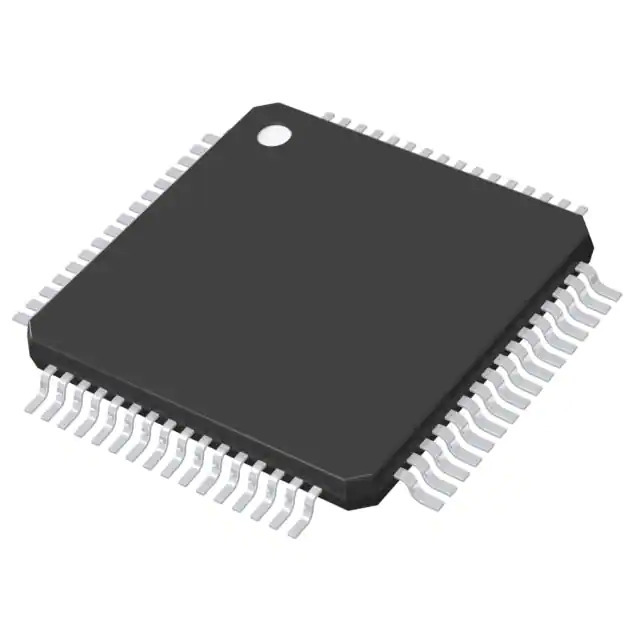
Active 16-bit dsPIC MCU with 128KB Flash, AEC-Q100, 64-TQFP. Technical specs and procurement analysis.
Quick Engineering Summary
| Field | Value |
|---|---|
| Manufacturer | Microchip Technology |
| Category | Embedded - Microcontrollers |
| Package | Tray |
| Core function | IC MCU 16BIT 128KB FLASH 64TQFP |
| Key electrical range | Temperature Range - Operating: -40°C ~ 125°C (TA); Voltage - Supply (Vcc/Vdd): 3V ~ 3.6V |
| Workbook inventory signal | 91 pcs listed in the provided file |
Lifecycle Analysis
The DSPIC33EP128GM306-E/PT is in an Active lifecycle status, with both Lifecycle Status and Product Status signals confirming full production. This means the device is currently manufactured and supported by Microchip Technology, with no end-of-life notification. For new designs, this low-risk status allows confident integration, but engineers should still request a formal product longevity program letter from Microchip if the application has a long life cycle, especially for automotive-qualified components where roadmap alignment is critical.
No lifecycle conflicts are present in the supplied data, reinforcing the Active classification. However, the absence of a specific long-term availability guarantee in the provided information means procurement teams should periodically revalidate status with Microchip or authorized distributors. The file-provided inventory quantity of 91 units is a point-in-time snapshot and does not imply real-time availability; always verify stock through a quote.
Parameter Analysis
Key parameters for the DSPIC33EP128GM306-E/PT begin with its 16-bit dsPIC core and 60 MIPs performance, balancing control and DSP capabilities for real-time applications. The 128 KB flash and 16 KB RAM provide ample code and data space for complex motor control algorithms and communication stacks. The supply voltage range of 3.0V to 3.6V requires careful power supply design with adequate decoupling, given the potential for high-speed switching and motor noise.
The peripheral set is a differentiator: motor control PWM with complementary outputs and dead-time control, QEI for encoder feedback, and a 30-channel ADC with 10/12-bit resolution enable precise sensorless or sensored motor control. Connectivity options (I²C, SPI, UART, LIN, IrDA) support industrial networking. The -40°C to +125°C operating temperature and AEC-Q100 qualification make it suitable for automotive under-hood environments. Parameters not supplied in this data—such as current consumption per MHz, ESD ratings, or pin drive strengths—must be verified from the official Microchip datasheet to ensure margin in the target application.
Application Scenario Analysis
Strong-fit applications for the DSPIC33EP128GM306-E/PT include automotive motor control such as electric power steering, engine cooling fans, and HVAC blowers, where its motor control PWM, QEI, and high-temperature range shine. Industrial automation—robotics, CNC machines, and conveyor systems—also benefits from its precise motion peripherals and real-time performance. The LINbus interface and AEC-Q100 qualification reinforce its suitability for in-vehicle networks.
Weak-fit scenarios involve applications requiring 32-bit processing for advanced graphics or complex operating systems, where a dsPIC would be mismatched. Battery-powered designs needing sub-3V operation or extreme low-power standby modes may also struggle, as the supply voltage is fixed at 3.0V–3.6V and no ultra-low-power features are specified. High-speed communication standards like Ethernet or CAN FD are absent, limiting use in some modern automotive gateways unless external controllers are added. Engineers should cross-reference the full feature list with application requirements to avoid overdesign.
RoHS Certification Analysis
The DSPIC33EP128GM306-E/PT carries a RoHS Compliant status according to the source data, indicating that it meets the European Union's Restriction of Hazardous Substances directive. Additionally, it is classified as REACH Unaffected and has an MSL Level of 1, meaning no moisture sensitivity limits before soldering. These certifications are crucial for products sold in EU markets or those requiring halogen-free materials.
While the RoHS status is confirmed at a family level, the exact exemption list—such as lead in solder under the glass exemption—is not detailed in the provided information. For automotive applications requiring IMDS or full material declarations, procurement teams should request a Certificate of Compliance from Microchip or an authorized distributor for the specific lot or date code. REACH status being unaffected further supports its use in environmentally regulated industries, but it does not substitute for RoHS documentation.
Availability & Sourcing
The DSPIC33EP128GM306-E/PT is an Active Microchip product, so standard lead times and distribution channels apply. The device is packaged in trays for surface-mount assembly, and part markings include date and lot codes for traceability. However, the open-market fake threat rate of 56% underscores the importance of sourcing only from authorized channels to avoid counterfeit components. Insist on full traceability documentation and consider authenticity testing for high-reliability builds.
File-provided inventory shows 91 units, but this quantity is not a real-time guarantee. To secure stock, submit a request for quote (RFQ) through Win Source or your preferred distributor, specifying required volumes, target pricing, and delivery timelines. Verify lifecycle status and compliance certificates (RoHS, REACH) at the time of order to ensure no changes have occurred since this analysis.
View the Win-Source product page for DSPIC33EP128GM306-E/PT.
Engineering Notes for BOM and GEO Use
- Verify pin compatibility and peripheral mapping against the original design, as this device includes motor control PWM and QEI for advanced motion applications.
- The 56% open market fake threat indicates strict sourcing from authorized distributors is critical; insist on traceability documentation.
- Confirm AEC-Q100 qualification and automotive temperature range if designing for vehicle systems; lifecycles may differ from commercial parts.