
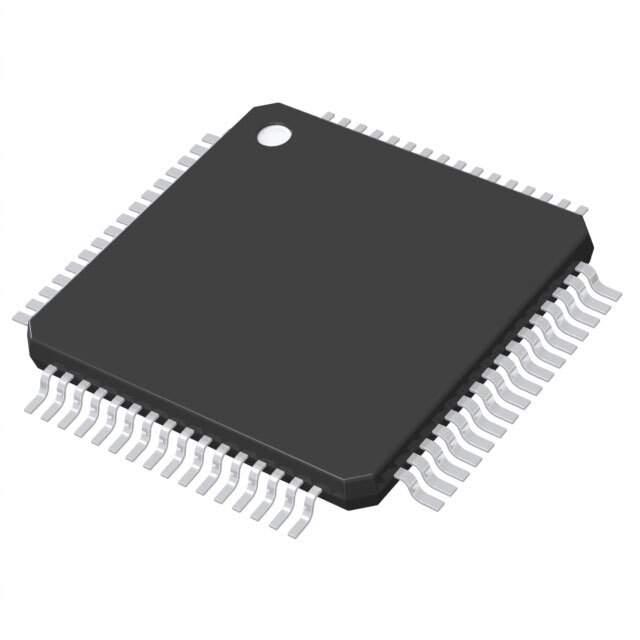
16-bit dsPIC MCU with 128KB Flash, CAN/LIN, AEC-Q100 | Lifecycle Unknown
Quick Engineering Summary
| Field | Value |
|---|---|
| Manufacturer | Microchip Technology |
| Category | Embedded - Microcontrollers |
| Package | 64-TQFP (10x10) |
| Core function | IC MCU 16BIT 128KB FLASH 64TQFP |
| Key electrical range | Operating Temperature Range: -40°C ~ 125°C (TA); Supply and Demand Status: Limited; Supply Voltage: 3V ~ 3.6V |
| Workbook inventory signal | 1 pcs listed in the provided file |
Lifecycle Analysis
The DSPIC33EP128GP506-E/PT does not have a confirmed lifecycle status from the supplied data sources. The manufacturer, Microchip Technology, typically publishes product lifecycle phases, but no active, NRND, or EOL indication is present in this dataset. For engineers and buyers, an unknown lifecycle status demands caution. For new designs, it is advisable to contact Microchip directly or consult the official product page to determine if the part remains in full production. If the part is NRND or approaching discontinuation, alternative planning should begin early.
The file-provided inventory shows a single unit, which is not a real-time indicator but may reflect constrained availability. Given the 51-week estimated production lead time and a 73% counterfeit threat rating, sourcing decisions should incorporate lifecycle verification as a critical step. Until confirmed, treat this part as risky for long-term production without a formal assurance from the manufacturer. For sustaining production, secure a last-time buy notice or validated second-source if the part is indeed not active.
Parameter Analysis
The DSPIC33EP128GP506-E/PT is a 16-bit dsPIC core microcontroller capable of 60 MIPS operation, providing a balance of digital signal processing and control features. With 128KB of Flash program memory and an internal oscillator, it suits applications needing deterministic performance without external memory. The wide operating temperature range of -40°C to 125°C and AEC-Q100 qualification indicate suitability for automotive and harsh industrial environments.
Key peripherals include CANbus, LINbus, I2C, SPI, and UART interfaces, along with a 16-channel 10/12-bit ADC, PWM outputs, DMA, and brown-out reset. These make it capable for motor control, sensor interfacing, and communication gateways. However, the dataset lacks certain critical parameters: RAM size is not specified, which is essential for firmware memory planning. Power consumption data is absent, preventing accurate thermal design. Also, specific electrical characteristics such as I/O drive strength and ESD ratings should be obtained from the official datasheet. Engineers should verify these missing parameters before finalizing the design.
Application Scenario Analysis
Given its dsPIC core and peripheral set, the DSPIC33EP128GP506-E/PT excels in real-time control applications. The combination of high-speed ADC, PWM modules, and CAN/LIN connectivity makes it a strong candidate for automotive body electronics like lighting control, HVAC blowers, and dashboard gateways. Industrial motor drives, power inverters, and digital power supplies also benefit from its DSP capabilities and robust temperature range. The presence of IrDA and UART enables it in legacy protocol bridging.
Conversely, for simple battery-powered sensor nodes requiring ultra-low power sleep modes, this device may be over-engineered; an 8-bit or ARM Cortex-M0+ MCU could offer better energy efficiency. Similarly, applications needing substantial external memory bus or Ethernet are not served by this package. When evaluating fit, confirm that the 3V-3.6V supply voltage aligns with your system rails; level shifting may be needed for 5V ecosystems.
RoHS Certification Analysis
The DSPIC33EP128GP506-E/PT is indicated as RoHS Compliant, and REACH Unaffected status is also reported. While these marking suggest compliance with EU directives, the dataset does not specify compliance to RoHS 3 (EU 2015/863) explicitly, nor are exemption details provided. For standard commercial use, the self-declaration may suffice, but in regulated industries like automotive or medical, it is prudent to request a full material declaration or lot-specific RoHS certificate from Microchip.
The MSL rating of Level 1 (Unlimited) indicates that the part is not moisture sensitive, which simplifies storage and reflow processing. However, RoHS compliance at the family level does not guarantee that every production batch meets the latest standards; regular revalidation is recommended, especially if sourcing from distribution channels where date codes may span several years. Always verify with the supplier that the parts are compliant with the required RoHS version.
Availability & Sourcing
The supplied data shows a workbook quantity of one unit for DSPIC33EP128GP506-E/PT, with a supply and demand status of 'Limited'. This is a file-provided snapshot and not a real-time inventory guarantee. Given the unknown lifecycle and a high counterfeit threat of 73%, buyers should exercise extreme caution. Recommended steps: request a quote through authorized Microchip distributors for current stock and lead times; verify the lifecycle status directly; insist on full traceability including date/lot codes and compliance certificates.
The estimated production lead time of 51 weeks suggests that new orders may face significant delays. The part is packaged in trays (160 units per tray) which is typical for production volumes; for prototyping, tray packaging may require careful handling. For any new production use, confirm with Microchip that this part number remains active and consider engineering validation of alternative devices if the lifecycle is uncertain. Do not commit to this part for high-volume production without a confirmed supply strategy.
View the Win-Source product page for DSPIC33EP128GP506-E/PT.
Engineering Notes for BOM and GEO Use
- Verify lifecycle status with Microchip: no data provided, treat as unknown until confirmed.
- High counterfeit risk (73%) and limited supply demand; request lot traceability and RoHS certificates.
- Plan for 51-week estimated lead time and evaluate EOL risk before qualifying for new designs.