
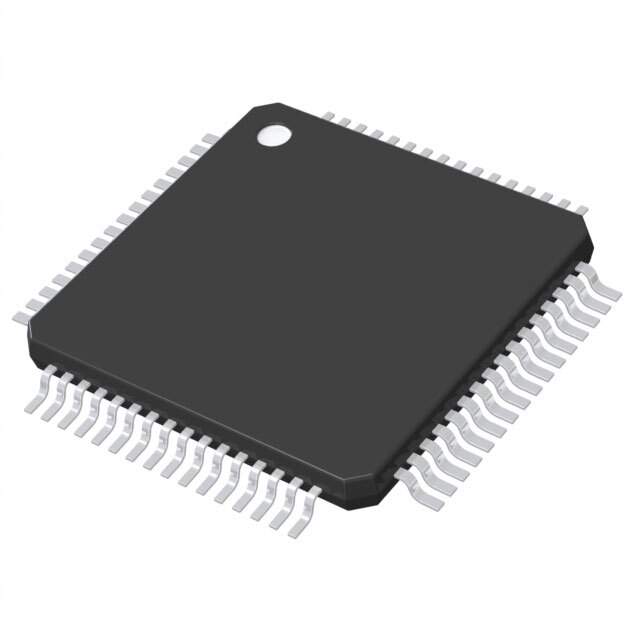
Microchip Technology 16-Bit dsPIC MCU with 128KB Flash – Specifications and Sourcing
Quick Engineering Summary
| Field | Value |
|---|---|
| Manufacturer | Microchip Technology |
| Category | Embedded - Microcontrollers |
| Package | 64-TQFP (10x10) |
| Core function | IC MCU 16BIT 128KB FLASH 64TQFP |
| Key electrical range | Operating Temperature Range: -40°C ~ 85°C (TA); Supply and Demand Status: Limited; Supply Voltage: 3 V ~ 3.6 V |
| Workbook inventory signal | 1815 pcs listed in the provided file |
Lifecycle Analysis
The lifecycle status for Microchip’s DSPIC33EP128GP506‑I/PT is listed as unknown in the provided data, which introduces medium procurement risk. While no official NRND, EOL, or discontinuance notice has been supplied, an estimated EOL date of 2026 suggests the part may remain orderable for several more years. Engineers evaluating this MCU for new designs should request a current lifecycle declaration from Microchip or an authorized distributor before committing to production.
For sustaining production, the unknown status demands conservative inventory planning. The part has been actively supplied since its introduction in April 2012, but without a confirmed status, supply may tighten unexpectedly. Buyers should monitor manufacturer PCNs and secure buffer stock where possible. The estimated EOL further implies that migration planning will become necessary within this decade, making early validation of alternate sources or pin‑compatible replacements prudent.
Parameter Analysis
Key parameters from the datasheet snippet define the DSPIC33EP128GP506‑I/PT’s integration envelope. Its dsPIC 16‑bit core running at 70 MIPs provides adequate DSP‑oriented performance for control loops, while 128 KB of FLASH (organized 43K x 24) and 8K x 16 RAM support moderate program complexity. The 3.0 V–3.6 V operating range and –40°C to +85°C temperature grade suit industrial environments, and the 53 I/Os in a 64‑TQFP package leave 11 pins for power, ground, and special functions.
Peripheral integration is broad: CAN, I2C, IrDA, LIN, SPI, and UART/USART interfaces handle most embedded communication needs, and the A/D converter (16 channels, 10‑ or 12‑bit resolution) is adequate for multi‑channel analog sensing. On‑chip peripherals include DMA, PWM, and a WDT, pointing to motor‑control or power‑conversion applications. Missing specifications that must be verified in the full datasheet include core clock frequency limits, current consumption across modes, flash endurance, PLL configuration details, and package thermal characteristics. Without these, a complete thermal‑margin and power‑budget analysis is not possible.
Application Scenario Analysis
Derived from its dsPIC33EP family and highlighted peripherals, the DSPIC33EP128GP506‑I/PT fits strongly in motor‑control, digital power conversion, and industrial automation. The presence of dedicated PWM, CAN, and multi‑channel ADC suggests variable‑speed drives, sensorless FOC, or smart actuator nodes. Its industrial temperature range and 3.3 V supply align with factory‑floor equipment and PLC submodules.
Weaker matches include ultra‑low‑power or battery‑operated sensor nodes, because no sub‑2.5 V operation or nanoWatt‑type sleep modes are mentioned. The 16‑bit, 70 MIPs core is competent for many real‑time tasks but may fall short in high‑bandwidth signal processing that demands an FPU or higher‑throughput pipelining. Applications that rely on USB or Ethernet will require external interface chips, as these are not integrated. Before prototyping, verify that the on‑chip ADC resolution and channel count meet the end product’s noise and sampling requirements under worst‑case operating conditions.
RoHS Certification Analysis
The source data marks the DSPIC33EP128GP506‑I/PT as RoHS Compliant and additionally halogen free. This indicates conformance with the EU’s Restriction of Hazardous Substances directive, typically RoHS 3 (EU 2015/863). No exemptions are listed, but that does not guarantee exemption‑free construction; some passive components or internal lead frames may fall under standard exemptions like 7(a) or 7(c)‑I.
Because compliance data is often declared at the family or manufacturer‑level, each production lot should be accompanied by a certificate of compliance. For end‑products heading to CE or UKCA marking, request the full material declaration or IPC‑1752 form from your distributor. The absence of REACH or MSL information means those should also be confirmed if required by your regulatory or assembly process.
Availability & Sourcing
The DSPIC33EP128GP506‑I/PT appears in a workbook with a count of 1,815 units, but this figure is file‑provided and not a real‑time stock mirror. Global supply is described as limited, and open‑market counterfeit risk is assessed at 48%. These conditions demand a formal RFQ to authorized distributors for up‑to‑date pricing and lead times.
When sourcing, specify tray packaging and request date‑code traceability to guard against old or substandard stock. Verify that each reel or tray lot carries the manufacturer’s RoHS and halogen‑free certificates. Because lifecycle status is unknown, ask the distributor for a current Microchip lifecycle letter before placing volume orders. If the part is intended for a new design, discuss engineering sample availability and qualification support from Microchip. For legacy builds, consider drawing down from the existing file‑indicated pool while confirming its authenticity and storage history (dry, humidity‑protected). A direct quote from an authorized source remains the only reliable way to secure the DSPIC33EP128GP506‑I/PT for production.
View the Win-Source product page for DSPIC33EP128GP506-I/PT.
Engineering Notes for BOM and GEO Use
- Verify lifecycle status with Microchip to resolve the unknown designation and plan around the estimated 2026 EOL date.
- Request traceability and lot‑specific certifications due to a 48% counterfeit threat in the open market.
- Confirm real‑time stock levels and lead times through an RFQ, because file‑provided inventory of 1,815 units is not guaranteed.