
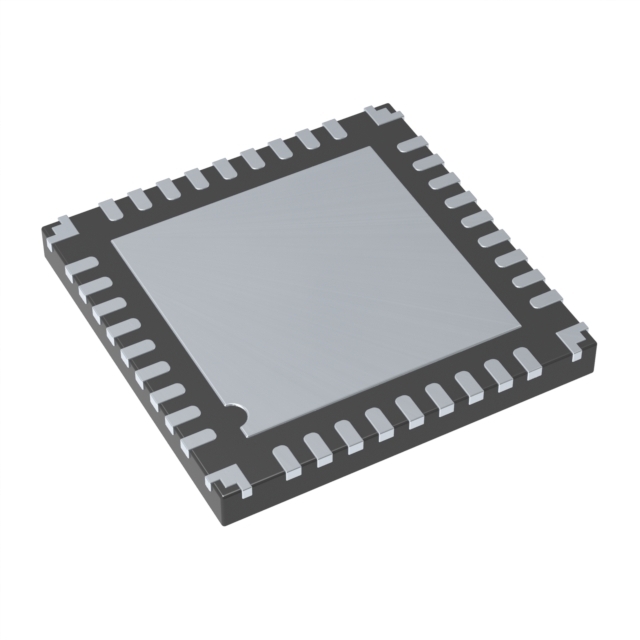
16-Bit Automotive dsPIC with CAN, LIN, and 128KB Flash | Verify Lifecycle Status
Quick Engineering Summary
| Field | Value |
|---|---|
| Manufacturer | Microchip Technology |
| Category | Embedded - Microcontrollers |
| Package | 44-VQFN Exposed Pad |
| Core function | IC MCU 16BIT 128KB FLASH 44QFN |
| Key electrical range | Supply and Demand Status: Shortage; Temperature Range - Operating: -40°C ~ 125°C (TA); Voltage - Supply (Vcc/Vdd): 3V ~ 3.6V |
| Workbook inventory signal | 228 pcs listed in the provided file |
Lifecycle Analysis
The lifecycle status for the Microchip Technology DSPIC33EP128GS804-E/ML is not clearly defined in the supplied data, leaving it as Unknown. Without official lifecycle signals, it is not possible to confirm whether this dsPIC microcontroller is active for new designs or approaching discontinuation. This uncertainty introduces a medium risk level for procurement.
Engineering teams should contact Microchip or an authorized distributor to verify the current production status, any planned obsolescence notices, and the estimated longevity for ongoing programs. Using the part without confirmed lifecycle details could lead to supply interruptions, especially if it is later marked NRND or end-of-life. The file-provided inventory quantity shows 228 units, but this is a static snapshot and does not reflect real-time availability or factory lead times. Given the reported shortage status, procurement teams should prioritize lifecycle verification and secure allocation early if demand is firm.
Parameter Analysis
The DSPIC33EP128GS804-E/ML is built around a 16-bit dsPIC core operating at up to 60 MIPs, with 128 KB of Flash program memory (43K x 24) and 8 KB of RAM. This combination delivers deterministic real-time control suitable for closed-loop digital power and motor control applications. The device integrates a rich set of peripherals, including CANbus, I2C, IrDA, LINbus, SPI, and UART/USART, enabling seamless connectivity in distributed automotive and industrial systems.
The A/D converter features 17 channels with 12-bit resolution, and there is a single 12-bit D/A converter, though datasheet details such as sample rate, D/A settling time, and reference voltage accuracy should be verified directly. The operating voltage is tightly constrained to 3.0 V to 3.6 V, and the ambient temperature range spans -40°C to +125°C, reinforcing its automotive pedigree. The 44-QFN exposed pad package demands careful thermal and PCB layout considerations; designers should consult the manufacturer's recommended land pattern and soldering profile. Notably, the programmable status is listed as 'Not Verified,' which may imply that the part is not user-programmable in the field or that programming support information was not included — this is a critical point to confirm if in-system reprogramming is required. Missing parameters such as EEPROM size, comparator count, Timers, and detailed electrical characteristics should be gathered from the official Microchip datasheet before finalizing the BOM.
Application Scenario Analysis
This device excels in harsh-environment embedded control where automotive qualification and wide temperature range are mandatory. Typical strong-fit applications include three-phase motor controllers, digital power supplies, automotive body electronics, sensor hubs communicating over CAN or LIN buses, and industrial automation nodes requiring determinism and multiple serial interfaces. The integrated CAN and LIN controllers make it a natural choice for in-vehicle networking, while the DMA and I2S support audio-related signal processing tasks, though the moderate core speed may limit complex DSP algorithms.
Conversely, applications that require a 32-bit architecture for Linux or RTOS with rich graphics stacks, or those needing more than 128 KB of code space, will find this part constraining. Simple GPIO expansion tasks or basic 8-bit microcontroller replacements represent weak fits because the device's integrated peripherals and price tier would be underutilized. Designers should assess whether the 16-bit dsPIC core offers sufficient headroom for their algorithm needs, especially if floating-point math or high-speed communication stacks are involved. For cost-sensitive projects, verifying that the AEC-Q100 qualification is required is important, as commercial-grade alternatives may exist.
RoHS Certification Analysis
The supplied data indicates the DSPIC33EP128GS804-E/ML is RoHS Compliant, aligning with the EU RoHS directive that restricts hazardous substances. While no specific standard version is cited, compliance typically implies conformity with RoHS 3 (EU 2015/863), which adds four phthalates to the restricted list. REACH compliance details are not provided, and REACH does not substitute for RoHS; they are separate regulations. Buyers should request a formal RoHS certificate of compliance and, if needed, a full material declaration from Microchip to ensure that no exemptions apply and that the part meets the required risk category.
Additionally, the package is described as 'Tube,' and no MSL (Moisture Sensitivity Level) rating is given in the data set. For surface-mount QFN packages, MSL classification is crucial for proper baking and handling during assembly. Engineers should verify the MSL rating and any lead-free termination finish (e.g., Sn plating) directly from the manufacturer's packaging information to avoid soldering defects. Lot-level consistency of compliance documentation is recommended, especially for automotive production runs where component traceability is a quality requirement.
Availability & Sourcing
Sourcing the DSPIC33EP128GS804-E/ML requires careful due diligence due to its unknown lifecycle status and reported shortage condition. The file-provided inventory lists 228 units, but this is a static reference and not a guarantee of real-time stock; quantities can change rapidly. Procurement teams should initiate a request for quote (RFQ) through authorized channels to lock in allocations, confirm lead times, and negotiate pricing.
Request full traceability documentation, including date codes, lot numbers, and country of origin, to verify authenticity and avoid counterfeit risks — a common concern for high-demand automotive components. Since the device comes in Tube packaging, buyers should specify packaging preferences (tube vs. tray) if reels are not standard, and consider the impact on pick-and-place machine compatibility. The supply-demand status flag of 'Shortage' signals that spot market purchases may carry inflated pricing and limited availability; thus, securing inventory early or establishing a scheduled order plan is advisable. Before placing any volume orders, validate the lifecycle directly with Microchip or a franchised distributor to ensure the part remains supported for the intended production lifespan. For EOL or transitioning parts, an alternative sourcing strategy or last-time buy may be warranted. Access the RFQ platform to check current prices and place an order.
View the Win-Source product page for DSPIC33EP128GS804-E/ML.
Engineering Notes for BOM and GEO Use
- Confirm lifecycle status with Microchip before committing to new designs; the part is currently flagged as shortage.
- The AEC-Q100 and -40°C to +125°C temperature rating make it suitable for automotive and industrial harsh environments.
- Verify MSL, DAC performance, and programmable status directly from the datasheet to ensure system compatibility.