
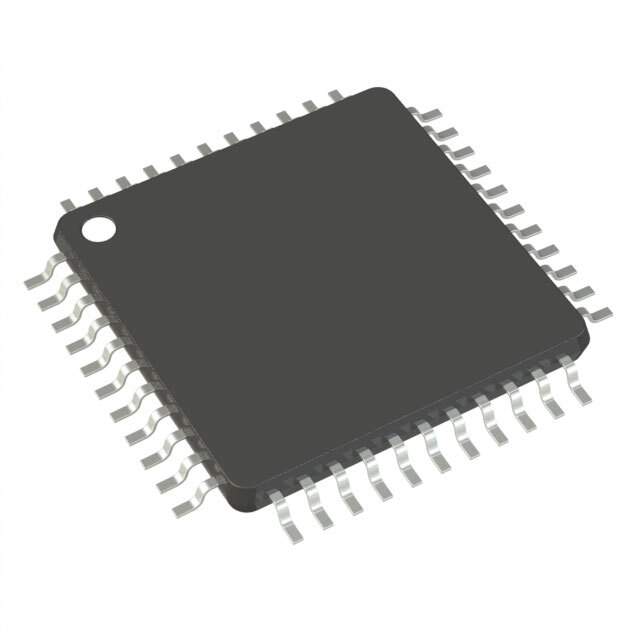
16-bit dsPIC MCU with 128KB Flash, automotive qualified, 44-TQFP. Verify lifecycle and source with caution against counterfeits.
Quick Engineering Summary
| Field | Value |
|---|---|
| Manufacturer | Microchip Technology |
| Category | Embedded - Microcontrollers |
| Package | Tray |
| Core function | IC MCU 16BIT 128KB FLASH 44TQFP |
| Key electrical range | Supply Voltage - Operating: 3V ~ 3.6V; Temperature Range - Operating: -40°C ~ 125°C (TA) |
| Workbook inventory signal | 7 pcs listed in the provided file |
Lifecycle Analysis
The lifecycle status of the DSPIC33EP128GS804-E/PT is Unknown based on the provided data, as no manufacturer signal is available. This absence creates medium risk for new designs, as the device may be active, NRND, or even discontinued without clear visibility.
Engineers should treat this uncertainty conservatively. While the dsPIC33EP series includes automotive-qualified devices that often enjoy extended product lifetimes, this specific part number requires direct confirmation from Microchip. Without it, production planning is exposed to sudden obsolescence or allocation issues.
The file-provided inventory shows only 7 units, which is insufficient for production scale and is not a real-time stock guarantee. To mitigate risk, secure a reliable supply chain only after verifying lifecycle status and considering alternative sourcing options if the part is no longer recommended for new designs.
Parameter Analysis
The DSPIC33EP128GS804-E/PT integrates a 16-bit dsPIC core operating at 60 MIPS, with 128KB Flash (43K x 24) and 8KB RAM. Its comprehensive peripheral set includes CANbus, I2C, SPI, UART, PWM, and DMA, along with 17-channel 12-bit ADC and a single 12-bit DAC, making it well-suited for closed-loop control and sensor aggregation.
The 3V to 3.6V supply and -40°C to +125°C temperature range support harsh environments. The 44-TQFP package with 33 I/O pins balances signal density and routing. Key parameters like oscillator type (internal), MSL 1, and mounting style (SMD) are confirmed, aiding DFM and assembly.
However, several datasheet details are absent from the supplied data: full electrical characteristics, timing diagrams, ESD ratings, and expanded memory map. Engineers should consult the official Microchip datasheet for these missing items, especially when designing safety-critical or power-sensitive systems. Verify that the 60 MIPS throughput and memory sizes match performance headroom required for your firmware.
Application Scenario Analysis
This microcontroller targets automotive and industrial applications requiring high reliability and functional safety. With AEC-Q100 qualification and FuSa support, it is a strong fit for motor drives, digital power converters, battery management systems, and CAN-enabled vehicle networks. Its DSP acceleration and analog peripherals simplify sensorless motor control and digital filtering.
In industrial contexts, the combination of connectivity (I2C, SPI, UART) and robustness makes the DSPIC33EP128GS804-E/PT suitable for programmable logic controllers, process automation, and smart sensors. However, for cost-sensitive, high-volume consumer products that do not need automotive rigor, a simpler MCU may be more appropriate.
A notable caution is the 81% open-market counterfeit threat. For any safety-critical system, especially automotive, traceability is essential. Designs should include validation steps for authenticity, and procurement should prioritize authorized channels to avoid substandard or relabeled parts that could compromise system integrity.
RoHS Certification Analysis
The DSPIC33EP128GS804-E/PT is listed as RoHS Compliant. While the specific directive version (e.g., RoHS 3 / 2015/EU) is not explicitly cited in the data, the positive compliance status indicates conformity with EU environmental requirements for hazardous substances.
Additionally, REACH status is noted as Unaffected, confirming no SVHC concerns per the current candidate list. However, REACH does not replace RoHS — both regulations must be met independently. No exemptions are flagged in the supplied information, but for military or aerospace derivatives, users should confirm whether lead-free finishes are maintained or if exemptions apply.
Moisture sensitivity level MSL 1 means unlimited floor life, easing factory logistics. Despite the certification, given the high counterfeit risk, it is wise to request full lot-level compliance documentation (RoHS, REACH, and conflict minerals) with each shipment to ensure chain of custody and avoid fraudulent parts that may be non-compliant.
Availability & Sourcing
The file-provided workbook quantity for the DSPIC33EP128GS804-E/PT is 7 units, but this is not a real-time stock indication. Because lifecycle status is Unknown, buyers should take immediate steps to confirm current manufacturer production status before relying on this part for new production.
Given an 81% counterfeit threat in the open market, sourcing strictly through authorized Microchip distributors or the manufacturer directly is critical. Request full traceability documentation, including date and lot codes, and verify the supply chain against known high risk regions. The standard package is Tray with 160 units per tray, though real availability may differ.
To proceed, request a quote for current availability and lead time from your preferred distributor. For high-reliability applications, insist on compliance certificates (RoHS, REACH, AEC-Q100 test reports) and consider sample testing or third-party inspection if sourcing from non-authorized channels cannot be avoided. Secure your supply chain before finalizing design-in decisions.
View the Win-Source product page for DSPIC33EP128GS804-E/PT.
Engineering Notes for BOM and GEO Use
- Verify lifecycle directly with Microchip before committing to production designs; Unknown status poses obsolescence risk.
- High open-market counterfeit threat (81%) demands sourcing from authorized distributors with full traceability documentation.
- Automotive AEC-Q100 and FuSa qualifications require lot-level compliance evidence, especially for critical safety systems.