
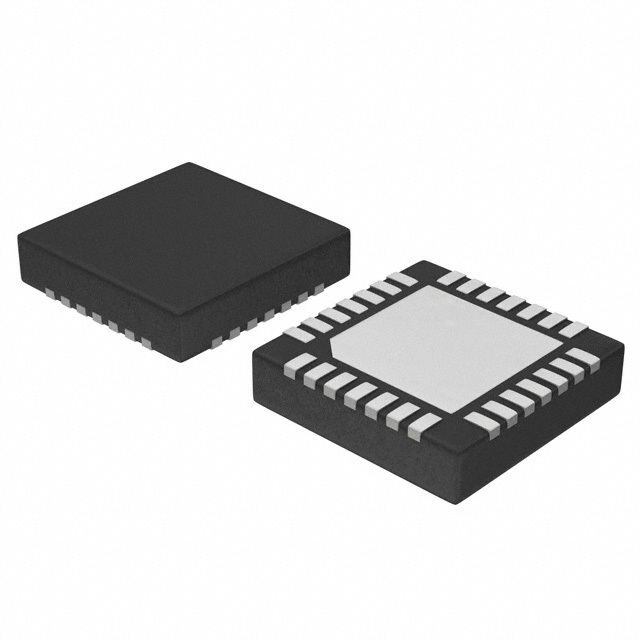
16-bit dsPIC MCU with 256KB Flash, 28-SPDIP – Sourcing and Engineering Guide
Quick Engineering Summary
| Field | Value |
|---|---|
| Manufacturer | Microchip Technology |
| Category | Embedded - Microcontrollers |
| Package | 28-DIP (0.300\ |
| Core function | IC MCU 16BIT 256KB FLASH 28SPDIP |
| Key electrical range | Supply and Demand Status: Shortage; Temperature Range - Operating: -40°C ~ 85°C (TA); Voltage - Supply (Vcc/Vdd): 3V ~ 3.6V |
| Workbook inventory signal | 1 pcs listed in the provided file |
Lifecycle Analysis
The lifecycle status of the DSPIC33EP256MC502-I/SP is not provided in the supplied data, resulting in an Unknown designation with a medium risk level. This lack of clarity means the part may be Active, NRND, or even discontinued without official confirmation. Engineers should approach new designs with caution and obtain a formal lifecycle statement from Microchip Technology before committing to production.
File-based inventory indicates a single unit on hand, but this snapshot does not guarantee real-time availability or reflect current market conditions. Procurement teams should treat this as a prompt to verify actual stock levels, lead times, and continuity of supply with authorized distributors or the manufacturer.
Given the medium risk, securing a second source or alternative part is prudent until Microchip clarifies the product's future. Relying on unverified lifecycle data for high-volume or long-lifecycle projects could lead to supply disruptions.
Parameter Analysis
The DSPIC33EP256MC502-I/SP is built on a 16-bit dsPIC core delivering 70 MIPs, with 256 KB Flash and 16K x 16 RAM. This balance of program memory and processing speed suits digitally intensive real-time tasks. The 28-pin SPDIP through-hole package simplifies prototyping and allows manual rework, but it limits board density compared to surface-mount alternatives.
Key peripherals include CANbus, I2C, SPI, and UART/USART for flexible communication, along with motor control PWM and DMA, making it a strong candidate for industrial drives and automation. The supply voltage of 3V to 3.6V and -40°C to 85°C operating range cover typical commercial and industrial environments.
Several critical parameters are absent from the provided specs: typical operating current, EEPROM size, timer counts, and ESD ratings. Verify these values in the official datasheet to assess power budgets, non-volatile storage needs, and robustness before finalizing a design. The "Not Verified" programmable flag also suggests programming support should be confirmed with your toolchain vendor.
Application Scenario Analysis
The DSPIC33EP256MC502-I/SP excels in real-time embedded control applications where motor control, communication, and deterministic timing are needed. Strong fit scenarios include brushless DC motor drives, industrial sensor hubs using CAN networks, and automotive subsystems requiring LIN or CAN connectivity. The internal oscillator and multiple serial interfaces reduce external component count, while the DIP package suits prototyping, educational kits, and low-volume industrial equipment.
Weak fit scenarios involve battery-powered portable devices—low-power modes are not detailed in available data, and the 3V minimum supply may limit single-cell operation. High-density PCB designs also conflict with the through-hole package; a surface-mount variant would be more appropriate. Additionally, applications requiring hardware floating-point or large RAM buffers may be better served by a 32-bit MCU.
Designers should validate noise immunity and thermal performance for their specific enclosure, especially since no temperature derating curves are provided. The A/D converter with 6 channels of 10/12-bit resolution is sufficient for many sensing tasks but may need external amplification for low-level signals.
RoHS Certification Analysis
The part is listed as RoHS Compliant in the provided data, indicating it conforms to the substance restrictions of the EU RoHS directive. However, the specific directive version and any applicable exemptions are not specified. This classification typically represents a family-level or datasheet-level declaration and may not be valid for every production lot.
Additional compliance documents such as REACH, halogen-free, and MSL ratings are not provided. REACH is not a substitute for RoHS and addresses different regulatory requirements. For full assurance, procurement should request a Certificate of Compliance (CoC) covering the exact batch and date code.
When integrating the DSPIC33EP256MC502-I/SP into products destined for the EU market, verify that the manufacturer’s RoHS status covers all homogeneous materials and any exempted substances like lead in high-reliability solder. This is particularly important for long-lifecycle industrial goods that may face evolving environmental regulations.
Availability & Sourcing
File-based inventory shows a quantity of 1 for the DSPIC33EP256MC502-I/SP, with a supply status of Shortage. This single-unit snapshot is not a real-time guarantee and underscores the need to engage directly with authorized distributors or Microchip representatives for current lead times and stock levels. The part is packaged in tubes, compatible with automated through-hole assembly or manual placement.
Because the lifecycle is Unknown, buyers should approach procurement with a risk-mitigation mindset. Request a formal quote that includes compliance documentation, date/lot code traceability, and confirmation of RoHS status. If the part is found to be NRND or discontinued, secure enough inventory to cover production ramp-down while evaluating alternative microcontrollers.
For production, verify that your contract manufacturer can handle through-hole insertion, or plan for a redesign using a surface-mount equivalent if volumes increase. Always validate lifecycle and authenticity before committing to mid- to high-volume orders.
View the Win-Source product page for DSPIC33EP256MC502-I/SP.
Engineering Notes for BOM and GEO Use
- Verify lifecycle status directly with Microchip before using in new designs, as no status is confirmed in supplied data.
- The dsPIC core with motor control PWM and CAN connectivity is well-suited for real-time embedded control, but confirm peripheral set matches your application needs.
- Check availability and lead times with authorized distributors; file-based stock quantities may not reflect current inventory.