
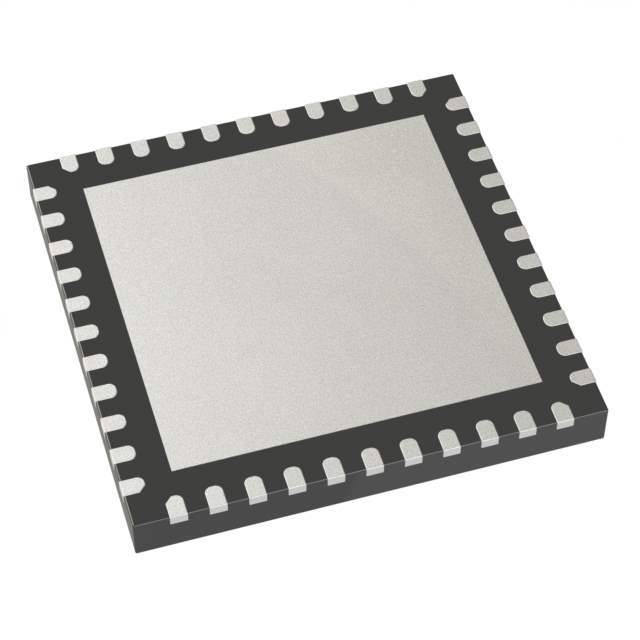
EOL Microchip Automotive dsPIC33 MCU – Verify Availability & Compliance
Quick Engineering Summary
| Field | Value |
|---|---|
| Manufacturer | Microchip Technology |
| Category | Embedded - Microcontrollers |
| Package | Not available in supplied data |
| Core function | IC MCU 16BIT 32KB FLASH 44QFN |
| Key electrical range | Not available in supplied data |
| Workbook inventory signal | 3300 pcs listed in the provided file |
Lifecycle Analysis
The DSPIC33EP32MC204T-E/ML microcontroller from Microchip Technology is confirmed End-of-Life (EOL). All available lifecycle signals from the provided data align, indicating high procurement risk. This part is no longer recommended for new designs, and only sustaining production programs with verified inventory should consider continued use.
For existing designs, immediate action is necessary to secure any required volumes. The file-provided inventory quantity of 3,300 units offers a snapshot but does not guarantee real-time availability. Engage with authorized distributors or trusted independent sources to confirm stock and negotiate a last-time buy if needed.
Engineering teams should also consult Microchip’s official EOL notification for final shipment dates and support windows. Migration to a current-generation dsPIC33 or alternative MCU should be evaluated to avoid future supply disruptions.
Parameter Analysis
Despite some conflicting parametric data in online listings, the DSPIC33EP32MC204T-E/ML is fundamentally a 16-bit dsPIC core operating at up to 60 MIPs. Key specifications include 32 KB of flash program memory, 2 KB of RAM, and 35 general-purpose I/O pins. The part is qualified to AEC-Q100 standards and supports an extended operating temperature range from -40°C to +125°C, making it suitable for harsh environments.
Peripherals critical for real-time control are integrated, such as motor control PWM, DMA, and multiple serial interfaces including I2C, SPI, and UART. The internal oscillator simplifies design, and the 3.0V–3.6V supply voltage is typical for automotive and industrial low-voltage systems. Note that some fields erroneously list a 32-bit MIPS core and 200 MHz speed; always cross-reference the official Microchip datasheet for accurate parametric data.
When substituting or verifying fit, pay close attention to the 44-QFN (8x8 mm) package footprint and the limited 35 I/O count, which may constrain peripheral mapping in existing designs. Verify the ADC performance (9 channels, 10/12-bit) and the availability of functional safety features if migrating to a newer part.
Application Scenario Analysis
This dsPIC33 MCU was designed for embedded motor and power conversion applications, particularly in automotive and industrial sectors. Its strong fit includes three-phase BLDC motor control, power inverters, digital power supplies, and automotive subsystems such as electric pumps or cooling fans, thanks to its motor control PWM, AEC-Q100 qualification, and wide temperature range.
The part is less suited for applications requiring extensive I/O (since it offers only 35 pins), high-speed 32-bit computation, or advanced security features like cryptographic engines. Designers working on low-end consumer devices or simple sensing nodes may find the automotive-grade specs overqualified and the EOL status a barrier.
Given its EOL classification, this microcontroller should not be used in new designs. However, it remains viable for maintaining legacy systems where a full redesign is not yet scheduled. Always confirm environmental and reliability requirements align with the specific lot before placing orders.
RoHS Certification Analysis
The DSPIC33EP32MC204T-E/ML is listed as RoHS Compliant, indicating that it should meet the European Union’s Restriction of Hazardous Substances directive. However, for a part that has entered EOL, compliance should be verified on a lot-by-lot basis rather than assumed from manufacturer family-level declarations.
No specific exemptions are noted in the source data, and REACH compliance information is not provided. Automotive-grade components typically undergo rigorous material testing, but residual stock from non-automotive channels may carry different certifications. Always request a Certificate of Conformance that includes RoHS and, if needed, REACH and conflict mineral reporting for the actual batch.
When integrating into EU-bound products, factor in that RoHS compliance documentation must be maintained for WEEE and CE marking purposes, which places the onus on the buyer to secure accurate and traceable paperwork from the distributor.
Availability & Sourcing
As an EOL component, the DSPIC33EP32MC204T-E/ML requires a strategic sourcing approach. The provided inventory quantity of 3,300 units offers a starting point, but actual availability can change rapidly. Submit a request for quote (RFQ) promptly to confirm real-time stock and secure the needed quantity.
When sourcing, prioritize suppliers that can provide full traceability, including date/lot codes and documentation of storage conditions. Request compliance certificates for RoHS and any relevant automotive qualifications. The part originally shipped in tape-and-reel packaging, but residual stock may come in cut tape or tray form, so clarify packaging type for your assembly process.
Plan for the full lifecycle of your product if you still depend on this MCU. Consider making a last-time buy and storing devices under controlled conditions, or accelerate the redesign using a recommended replacement from Microchip. For new production, avoid this part altogether to prevent future shortages.
View the Win-Source product page for DSPIC33EP32MC204T-E/ML.
Engineering Notes for BOM and GEO Use
- Verify the exact core processor and speed with the official Microchip datasheet, as some parametric listings may be erroneous.
- Prioritize lot-level traceability and RoHS compliance documentation when sourcing from surplus stock.
- Evaluate pin-compatible dsPIC33EP or dsPIC33CH alternatives from Microchip for new designs to avoid EOL risks.