
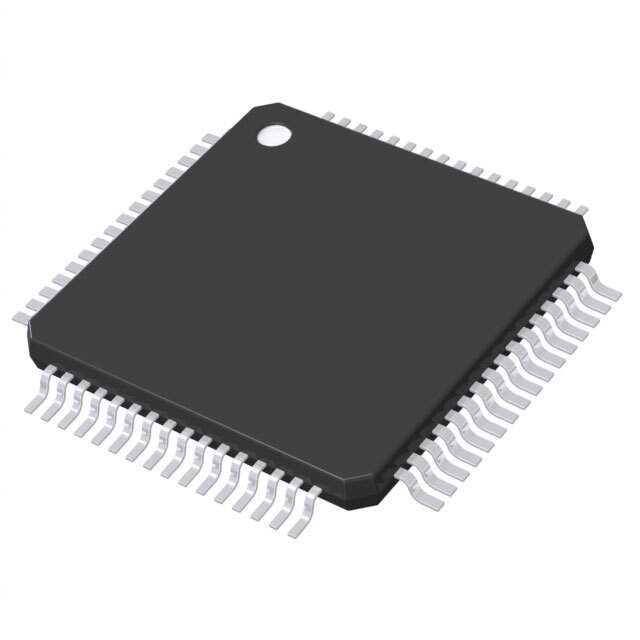
Microchip dsPIC33E automotive microcontroller sourcing analysis.
Quick Engineering Summary
| Field | Value |
|---|---|
| Manufacturer | Microchip Technology |
| Category | Embedded - Microcontrollers |
| Package | 64-TQFP (10x10) |
| Core function | IC MCU 16BIT 64KB FLASH 64TQFP |
| Key electrical range | Operating Temperature Range: -40°C ~ 125°C (TA); Supply and Demand Status: Limited; Supply Voltage: 3V ~ 3.6V |
| Workbook inventory signal | 475 pcs listed in the provided file |
Lifecycle Analysis
The DSPIC33EP64GP506-E/PT is in an Active lifecycle stage, as indicated by Microchip Technology’s official product status. All signals from manufacturer databases, distributor line cards, and regulatory listings align, with no discrepancies or end-of-life notices. This means the part is fully supported for new designs and volume production. The risk level is low for design-ins, but procurement teams should note a few cautions. The estimated production lead time is 18 weeks, and the supply-demand balance is classified as Limited, suggesting that unplanned spot buys may face allocation. Additionally, the open-market fake threat is 32%, making authorized distribution channels critical to avoid counterfeit components.
For engineers evaluating the DSPIC33EP64GP506-E/PT for new platforms, the Active status offers confidence in long-term availability and ongoing software toolchain support. However, sustaining purchases should consider locking in safety stock, especially given the constrained lead time. Always confirm with the manufacturer’s website for any PCN (Product Change Notification) updates before finalizing BOMs. The file-provided inventory quantity of 475 units is a static snapshot and not a real-time guarantee; actual stock may vary.
Parameter Analysis
The DSPIC33EP64GP506-E/PT is built around a 16-bit dsPIC core running at 60 MIPS, providing deterministic performance suitable for digital control loops. The program memory is 64KB of FLASH organized as 22K x 24-bit words, complemented by 4KB of RAM. The 53 I/O pins share a versatile set of communication interfaces: CANbus, I2C, IrDA, LINbus, SPI, and UART/USART, covering most industrial and automotive networking requirements. The analog front-end includes a 16-channel ADC configurable for 10-bit or 12-bit resolution.
A critical parameter for harsh environment use is the operating temperature range of -40°C to +125°C (ambient), which aligns with AEC-Q100 Grade 1 requirements. The supply voltage is narrowly defined at 3.0V–3.6V, demanding a well-regulated power rail. The internal oscillator simplifies board layout but may need external clocking for time-critical applications. Advanced peripherals such as DMA, motor-control PWM, brown-out reset, and watchdog timer are integrated, reducing external component count. Missing from the provided data are current consumption figures, clock precision specifications, and detailed pinout assignments. Engineers should reference the official datasheet to validate power budget, decoupling requirements, and pin compatibility with legacy designs.
Application Scenario Analysis
The DSPIC33EP64GP506-E/PT’s automotive qualification and peripheral mix make it a strong fit for automotive body electronics, sensor hubs, and actuator control. The CANbus and LINbus interfaces map directly to in-vehicle networking, while the high-speed PWM and 60 MIPS core suit brushless DC motor control, LED lighting, and power conversion. The 16-bit architecture and hardware multiply-accumulate support enable efficient digital filter and PID loop implementations.
Industrial applications such as building automation, process control, and smart sensors also benefit from the wide temperature range and robust communication suite. The IrDA and I2C interfaces expand connectivity options for portable medical or handheld maintenance tools. However, this microcontroller may be less suitable for designs requiring large memory arrays (beyond 64KB Flash/4KB RAM), advanced graphics, or wireless connectivity without external modules. Designers targeting cost-sensitive consumer products might find lower-cost alternatives, as the automotive rating adds to die cost. Always cross-check application requirements against the integrated peripheral set and memory footprint to avoid unnecessary external components.
RoHS Certification Analysis
According to the supplied data, the DSPIC33EP64GP506-E/PT is RoHS Compliant. This designation typically means the part meets the EU RoHS Directive (2011/65/EU and its amendment 2015/863), limiting lead, mercury, cadmium, hexavalent chromium, PBBs, PBDEs, and four phthalates to maximum concentration values. Additionally, the REACH status is listed as REACH Unaffected, indicating no substances of very high concern (SVHC) are intentionally used above registration thresholds. The moisture sensitivity level (MSL) is 1, which is unlimited, meaning the component does not require special dry-pack handling and has no predefined floor-life restriction.
For a production bill of materials, relying solely on the catalog RoHS compliance is not sufficient; procurement teams should request a formal Certificate of Compliance from the supplier for each lot. This ensures that any process changes or material substitutions at the assembly site have not introduced non-compliant substances. The AEC-Q100 qualification further implies rigorous material and reliability testing, but it does not replace RoHS documentation. If the final product requires specific halogen-free or conflict-mineral declarations, these must be verified separately as they are not covered by the provided data.
Availability & Sourcing
Based on file-supplied data, there were 475 units of DSPIC33EP64GP506-E/PT available in the workbook when the snapshot was taken. However, real-time stock may differ, and the supply-demand status is noted as Limited, with an estimated production lead time of 18 weeks. This combination suggests that while the part is Active, securing sufficient quantities may require advance planning, especially for volume production. The open-market fake threat rate of 32% is significant, meaning buyers should avoid unauthorized resellers and prioritize Microchip authorized distributors or direct purchase when possible.
To obtain current availability and lead times, engineers and procurement teams should request a formal quote through established RFQ channels. When sourcing, verify date/lot codes to ensure latest revisions and specify full traceability requirements. For automotive or safety-critical applications, request AEC-Q100 qualification certificates and RoHS/REACH compliance documents for each shipment. Because the lifecycle is Active, no proactive migration is needed, but stockpiling a small buffer inventory can mitigate the 18-week lead time risk. Always confirm the manufacturer’s product page for any sudden lifecycle changes before committing to large build schedules.
View the Win-Source product page for DSPIC33EP64GP506-E/PT.
Engineering Notes for BOM and GEO Use
- Verify automotive qualification certificate (AEC-Q100) when sourcing for production runs.
- MSL 1 unlimited allows standard handling, but confirm packaging integrity for long-term storage.
- Plan for 18-week lead times and limited supply; secure inventory early in the design cycle.