
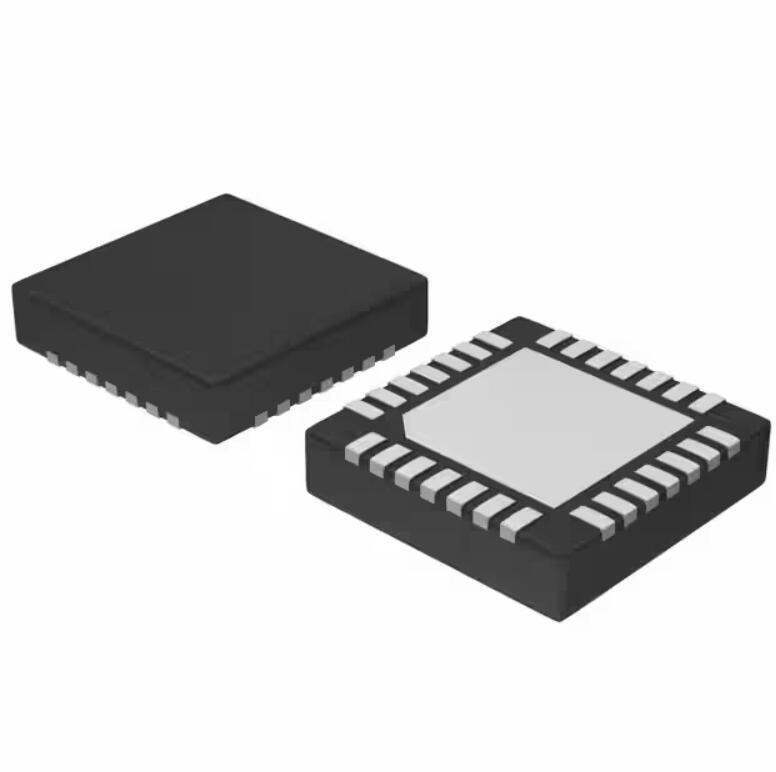
A technical procurement guide for engineers sourcing the Discontinued Microchip 16-bit MCU with 64KB Flash in 28-QFN.
Quick Engineering Summary
| Field | Value |
|---|---|
| Manufacturer | Microchip Technology |
| Category | Embedded - Microcontrollers |
| Package | 292-LBGA |
| Core function | IC MCU 16BIT 64KB FLASH 28QFN |
| Key electrical range | Not available in supplied data |
| Workbook inventory signal | 1300 pcs listed in the provided file |
Lifecycle Analysis
The DSPIC33EP64MC502T-E/MM is marked Discontinued in Microchip Technology’s lifecycle records, with multiple signals—EOL parameter and Product Status—reinforcing this classification. For procurement teams, this means the part is not available for new design starts and should be sourced only for ongoing production maintenance, repair, or legacy system support.
Conflicting terminology between EOL and Discontinued does not soften the end-of-life reality. The high risk level indicates that supply is finite, and no further wafer starts are planned. Engineers considering new designs must migrate to alternative Microchip MCUs, such as newer dsPIC33E or dsPIC33C series devices.
A file-provided inventory of 1300 units exists in the channel, but this is a static snapshot and does not reflect real-time availability. Always confirm actual stock, date codes, and packaging directly with the distributor before committing to a production build.
Parameter Analysis
The prime parameters for the DSPIC33EP64MC502T-E/MM, as indicated by its description and supplier technical notes, are a 16-bit dsPIC core, 64 KB of Flash program memory, and a 28-QFN (6x6 mm) package. Additional reported capabilities include 60 MIPS performance, 4 KB of RAM, CANbus, I2C, IrDA, LINbus, SPI, UART/USART connectivity, motor control PWM, and an industrial-grade temperature range of -40°C to +125°C.
Discrepancies in the raw catalog data, such as a listed Rabbit 6000 core, 8-bit size, and 292-LBGA package, are likely due to database cross-listing errors and should not be used for design decisions. Engineers must verify the actual dsPIC core, memory map, and peripherals against the official Microchip datasheet before schematic or layout work.
The automotive-grade AEC-Q100 qualification and wide temperature range make electrical parameter verification critical for derating, especially in under-hood applications. Missing datasheet details, like precise I/O drive strength, ADC performance, and EEPROM availability, should be checked directly with Microchip.
Application Scenario Analysis
The DSPIC33EP64MC502T-E/MM is tailored for embedded control applications that require deterministic real-time performance and automotive reliability. Its CANbus and LINbus interfaces, combined with motor control PWM, point strongly to automotive body electronics, sensor clusters, actuator control, and small motor drives in such systems as HVAC dampers, power windows, and electric pumps.
Industrial automation is another strong-fit domain, where the MCU’s connectivity and PWM peripherals enable networked motor controllers, smart sensors, and distributed I/O nodes in factories. The extended temperature range and automotive qualification also make it viable for harsh-environment instrumentation.
Weak-fit scenarios include applications demanding large memory, Ethernet, or advanced graphics—this device lacks Ethernet MAC, has limited RAM, and operates at modest speed. General-purpose consumer designs may also be a poor architectural fit due to the part’s automotive focus and end-of-life status, which complicates long-term consumer product lifecycles.
RoHS Certification Analysis
The DSPIC33EP64MC502T-E/MM carries a RoHS Compliant status in the supplied data, indicating conformity to European Union hazardous substance restrictions. This classification typically covers the original RoHS directive and may extend to RoHS 3 (EU 2015/863), but the specific revision is not documented in the provided source.
No exemption details are listed, so if your design requires an exemption for lead in solderable finishes or other materials, you must obtain a formal declaration from Microchip. Similarly, REACH and halogen-free compliance are not noted here and should be verified if needed for corporate sustainability reporting.
For high-reliability sectors, lot-level compliance documentation is recommended. Because the part is discontinued, older inventory may predate recent EU amendments; always request current certification and material composition data from the supplier to avoid regulatory risk during import.
Availability & Sourcing
Sourcing the Discontinued DSPIC33EP64MC502T-E/MM requires careful due diligence. A file-provided quantity of 1300 units suggests some channel inventory remains, but this is not a real-time guarantee. Engineers should request a quote (RFQ) for current stock, date codes, and packaging (the part is supplied in Tape & Reel format) before relying on availability.
Counterfeit mitigation is critical for end-of-life parts: insist on full traceability, authorized distribution path verification, and in-house incoming inspection for marking consistency and electrical acceptance. Request compliance certificates (RoHS, AEC-Q100) to ensure the lot matches the original Microchip specifications.
Due to discontinued status, the recommended CTA is to secure existing inventory while evaluating migration paths. For production consumption, lock in supply and validate alternate Microchip devices, such as the dsPIC33CK family, for new designs. Avoid committing to new production that depends solely on this part unless a lifetime buy is executed with confirmed manufacturer notice.
View the Win-Source product page for DSPIC33EP64MC502T-E/MM.
Engineering Notes for BOM and GEO Use
- Verify core processor and memory configuration against the official DSPIC33EP64MC502 datasheet; some supplier catalog fields contain mismatched generic data (e.g., Rabbit 6000 core, 292-LBGA package).
- AEC-Q100 qualification and an operating range of -40°C to +125°C make this part suitable for automotive and rugged industrial designs—confirm that your sourcing lot retains these certifications.
- Discontinued status demands careful supplier vetting and counterfeit detection, including date code verification, authorized distribution traceability, and compliance documentation.