
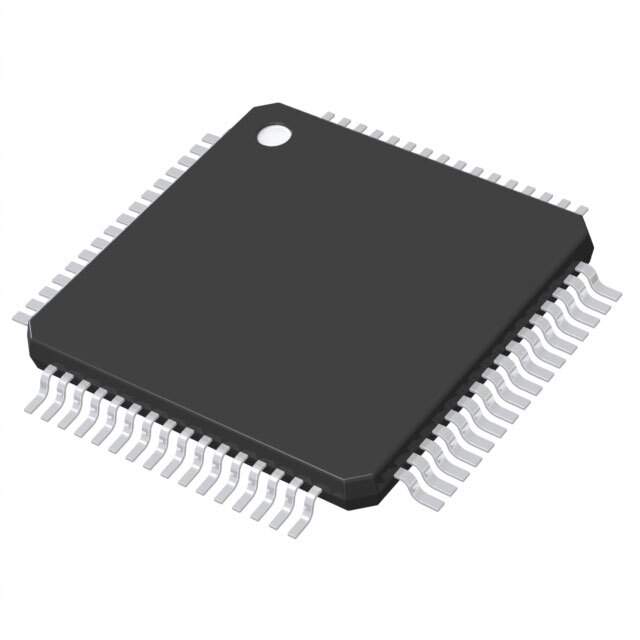
16-bit dsPIC MCU with motor control, CAN, and 64 KB Flash in 64‑TQFP
Quick Engineering Summary
| Field | Value |
|---|---|
| Manufacturer | Microchip Technology |
| Category | Embedded - Microcontrollers |
| Package | 64-TQFP |
| Core function | IC MCU 16BIT 64KB FLASH 64TQFP |
| Key electrical range | Supply and Demand Status: Balance; Temperature Range - Operating: -40°C ~ 85°C; Voltage - Supply (Vcc/Vdd): 3V ~ 3.6V |
| Workbook inventory signal | 3740 pcs listed in the provided file |
Lifecycle Analysis
The Microchip DSPIC33EP64MC506-I/PT is listed as Active with low risk. All supplied lifecycle signals agree, confirming that the part is currently in volume production and not approaching discontinuation. For new designs, this status allows confident adoption, but it is still wise to monitor Microchip’s product change notifications (PCNs) for any future fab or material shifts.
No lifecycle conflicts or mixed signals appear in the provided data. The Active designation means the dsPIC33EP64MC506-I/PT can be ordered through normal channels, with manufacturer lead times typical for a mature 16‑bit MCU. Engineers should note that sustaining production schedules depend on die‑ and assembly‑site capacity, so collaborative forecasting with suppliers is recommended for mid‑volume commitments.
The file indicates an inventory quantity of 3740, but this is a snapshot and not a live stock commitment. Buyers should validate real‑time availability when preparing a bill of materials. For prototype and pre‑production builds, the Active lifecycle supports standard sampling and small‑batch purchases without special lifetime buys.
Parameter Analysis
Core performance: the dsPIC 16‑bit processor runs at 70 MIPS, which is ample for closed‑loop motor control and digital power algorithms. The presence of dedicated motor control PWM (with complementary outputs, dead‑time insertion) makes the DSPIC33EP64MC506-I/PT a strong candidate for driving BLDC, PMSM, or ACIM motors. Connectivity is comprehensive: CAN (2.0B) for industrial networking, plus I²C, SPI, and UART/LIN for sensor and actuator interfaces.
Memory and integration: 64 KB of Flash (22K x 24‑bit words) and 4K x 16‑bit RAM provide headroom for moderate–complexity control firmware. The 16‑channel ADC offers both 10‑bit and 12‑bit modes, allowing a trade‑off between speed and resolution. All 53 I/Os are brought out on a 64‑TQFP (10 mm × 10 mm) package, which eases PCB layout with 0.5 mm pitch. The part operates from 3 V to 3.6 V, so a clean 3.3 V rail is mandatory; brown‑out detect/reset is built in but should be tested with the intended supply.
Missing datasheet values that must be verified include EEPROM emulation endurance (on‑chip Flash), exact current consumption per MHz at different clock sources, and the maximum ambient temperature with worst‑case I/O loading. The oscillator type is internal, but external crystal support details are absent. Also, confirm the MSL 3/168‑hour floor life to avoid moisture‑related reflow defects.
Application Scenario Analysis
Strong‑fit scenarios for the DSPIC33EP64MC506-I/PT center on real‑time control tasks that need the dsPIC engine’s math acceleration. Typical examples include sensorless field‑oriented control (FOC) of PMSM motors in drones or e‑bikes, digital power supplies where the high‑speed ADC and PWM synchronize for peak‑current mode control, and industrial drives that communicate over CANopen. The wide operating temperature (-40 °C to 85 °C) covers most commercial and light‑industrial environments.
Moderate‑fit scenarios arise where the part’s advanced peripherals are underutilized but the processing headroom justifies its use, such as CAN‑to‑Ethernet gateways that require a 16‑bit MCU with dual CAN and SPI. The integrated IrDA and LINbus make it suitable for automotive body electronics, provided the 85 °C upper limit is acceptable. For cost‑sensitive consumer white goods, a simpler 8‑bit MCU may be a better fit unless the algorithm demands dsPIC‑level performance.
Weak‑fit scenarios include ultra‑low‑power, battery‑operated devices that idle at microampere levels; the datasheet’s sleep‑mode consumption must be checked, and the part lacks an explicit low‑leakage “deep sleep” found in some low‑power families. High‑temperature applications above 85 °C (e.g., under‑hood automotive) would require an extended‑range variant or a different MCU family.
RoHS Certification Analysis
The DSPIC33EP64MC506-I/PT is flagged as RoHS Compliant in the provided data, but no specific directive revision is cited. For EU market entry, it is prudent to confirm that the part meets RoHS 3 (EU 2015/863) requirements, which add four phthalates to the restricted substance list. Request a full material declaration from Microchip or authorized distributors to prove exemption‑free compliance, especially for high‑reliability sectors.
REACH compliance is not included in the source data. REACH is a separate EU regulation covering substances of very high concern (SVHC). Buyers exporting to Europe should independently verify the REACH status of the DSPIC33EP64MC506-I/PT, as a RoHS mark does not automatically imply REACH conformity.
The moisture sensitivity level is MSL 3 (168 hours). This classification demands that reels or trays be stored in a dry environment and, if the floor‑life window is exceeded, baked before soldering. Process engineers should note that 64‑TQFP packages are generally robust, but MSL 3 still requires standard handling to prevent popcorning. Lot‑by‑lot compliance certificates covering RoHS and MSL are recommended for traceability.
Availability & Sourcing
The Microchip DSPIC33EP64MC506-I/PT is an Active microcontroller, so procurement follows standard RFQ workflows. The file lists a stock quantity of 3740 units, but this figure is a static catalog snapshot; true availability varies hour by hour. Designers and buyers should request a live quote to confirm inventory, lead time, and the specific date/lot code of the offered parts.
The manufacturer packaging is tray, with a pack quantity of 160 units per tray. This format is well‑suited for medium‑volume production but may need repackaging for pick‑and‑place machines if tape‑and‑reel is required. The open‑market fake‑threat percentage is reported as 64%, indicating a non‑trivial risk of counterfeit components. To mitigate this, always source from Microchip‑authorized distributors or request full lot traceability and visual inspection reports.
For this Active part, the primary call to action is to request a quote and verify the lifecycle status directly through Microchip’s client‑accessible tools. Along with the quote, ask for a compliance package that includes RoHS, REACH (if needed), and the MSL certificate. If the DSPIC33EP64MC506-I/PT shows extended lead times, initiate supplier collaboration early to avoid production delays.
View the Win-Source product page for DSPIC33EP64MC506-I/PT.
Engineering Notes for BOM and GEO Use
- Verify power consumption and low‑power modes from the datasheet before using in battery‑operated designs.
- The narrow supply voltage (3 V – 3.6 V) demands a stable regulator; test brown‑out thresholds with your power tree.
- The open‑market counterfeit risk is 64% – always source through authorized distribution and request traceability documentation.