
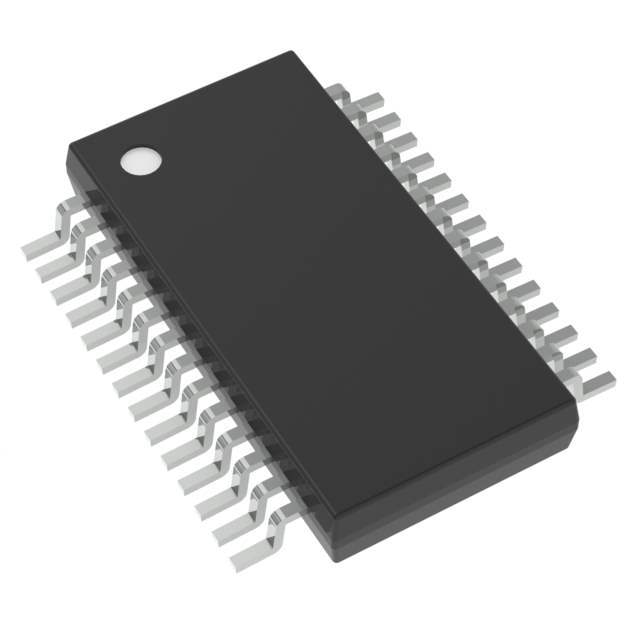
NRND 16-bit MCU from Microchip Technology — Verify lifecycle and parameters before procurement.
Quick Engineering Summary
| Field | Value |
|---|---|
| Manufacturer | Microchip Technology |
| Category | Embedded - Microcontrollers |
| Package | 54-SOIC (0.295", 7.50mm Width) Exposed Pad |
| Core function | IC MCU 16BIT 256KB FLASH 28SOIC |
| Key electrical range | Not available in supplied data |
| Workbook inventory signal | 2120 pcs listed in the provided file |
Lifecycle Analysis
Microchip Technology has assigned the DSPIC33EV256GM102-I/SO microcontroller an NRND (Not Recommended for New Design) lifecycle status, signaling that the manufacturer is potentially preparing for discontinuation. Engineers and buyers should treat this as a high‑risk part for any new project development, as future availability is not guaranteed. The coexistence of a Preliminary product status further complicates the life‑cycle picture, possibly indicating the part never transitioned to full production before being designated NRND. This contradiction mandates extra caution—refer to the latest Microchip PCN (Product Change Notification) and factory documentation before making procurement decisions.
For sustaining production, the NRND label suggests that while stock may still be available, it is finite. The provided inventory figure of 2,120 units is file‑based and not a real‑time guarantee. Immediate verification with authorized distributors or Win‑Source is essential to establish true on‑hand quantities. Without confirming supplier stock and dating, there is a tangible risk of sudden shortages.
Given the combined NRND/Preliminary signals, no new design‑ins should proceed. For existing applications, secure buffer inventory and concurrently evaluate pin‑compatible alternatives from Microchip’s dsPIC33E family or other equivalent platforms to ensure long‑term supply continuity.
Parameter Analysis
Specification data for the DSPIC33EV256GM102-I/SO raises immediate concerns due to internal inconsistencies. The part description identifies it as a 16‑bit MCU with 256 KB of on‑chip flash, yet the extracted parameters list a Rabbit 6000 8‑bit core, external NVSRAM program memory, and a 54‑SOIC exposed pad package. Such contradictions suggest that the supplier’s database may have merged attributes from different components, making it unreliable for engineering review. The stated connectivity set—3‑Wire, I2C, and SPI—is typical for low‑level peripheral communication, but its relevance depends on the actual core and memory architecture.
When selecting this device for a design, the core processor and memory type are absolute decision drivers. An 8‑bit Rabbit 6000 with external NVSRAM implies a very different application space (e.g., legacy industrial control, data logging with power‑fail resilience) compared to a 16‑bit dsPIC33E with flash, which targets digital power conversion or motor control. Peripherals like Power‑Fail Reset and WDT further support the battery‑backed RAM use case.
Engineers must retrieve the official Microchip datasheet to confirm whether this part is indeed the 16‑bit dsPIC33EV256GM102. Missing critical specs—operating voltage, temperature range, speed grade, and I/O count—must be validated before schematic entry. Until the true configuration is verified, no PCB footprint, firmware toolchain, or qualification plan should be finalized.
Application Scenario Analysis
Assuming the DSPIC33EV256GM102-I/SO is an 8‑bit microcontroller with external NVSRAM and connectivity options, it aligns well with applications that demand non‑volatile data retention across power cycles and simple communication interfaces. One strong‑fit scenario is an industrial sensor node that logs periodic readings to battery‑backed SRAM, using I2C/SPI to interface with analog‑to‑digital converters and transmitting aggregated data over a 3‑wire serial link. The power‑fail reset and watchdog timer enhance reliability in Class‑C embedded systems.
Another suitable use is in legacy equipment upgrade or maintenance, where an existing Rabbit‑based MCU with external memory must be replicated. The 54‑SOIC exposed pad package allows moderate heat dissipation, making it feasible for enclosed environments with natural convection cooling.
Conversely, if the device turns out to be a 16‑bit dsPIC33E, typical applications would include brushless DC motor control, digital power supplies, and automotive LIN/CAN nodes. In its current contested identity, neither set of use cases can be trusted without resolved specifications. Engineers are strongly cautioned not to base board bring‑up on this description alone. The weak fit would be any scenario requiring high‑speed processing or on‑chip flash, as the supplied parameters point to an architecture incapable of such demands.
RoHS Certification Analysis
Supplier records mark the DSPIC33EV256GM102-I/SO as RoHS Compliant, suggesting conformance with European Union hazardous substance regulations. The most current standard is RoHS 3 (Directive 2015/863), which restricts lead, mercury, cadmium, hexavalent chromium, and certain phthalates. However, the data does not specify whether compliance is self‑declared, family‑based, or backed by third‑party testing, so procurement teams must manage this gap.
RoHS status alone does not cover REACH SVHC obligations, even though many manufacturers bundle them. Buyers should request a formal Certificate of Compliance (CoC) that references the exact part number, date code, and RoHS standard version. A family‑level declaration, while common, may mask exceptions in specific batches or factory transfers. For critical applications, insist on lot‑level documentation.
The absence of an explicit RoHS exemption note in the data suggests that no exemption is claimed, but this should be verified. If the device indeed uses an 8‑bit Rabbit core with NVSRAM, certain legacy passive components might introduce non‑compliance risks. Until a recent CoC is obtained, treat the RoHS status as provisional and do not rely on it for regulatory filings.
Availability & Sourcing
With an NRND lifecycle and conflicting product statuses, sourcing the DSPIC33EV256GM102-I/SO requires a conservative approach. The file‑provided quantity of 2,120 units is a snapshot that does not reflect real‑time inventory. Interested buyers must submit an RFQ to verify current stock levels, packaging (tape‑and‑reel vs. tube), and date/lot codes. Since the part is from Microchip Technology, authorized distribution channels may still hold limited inventory, but independent distributors like Win‑Source should be cross‑checked for second‑source availability.
Supply chain risk is elevated due to the NRND classification. Engineers should not count on spot‑buy availability for ongoing production without securing a Last Time Buy (LTB) agreement, if still possible, or stockpiling critical quantities. When requesting quotes, explicitly ask for traceability documentation—certificates of conformance and origin—and validate the RoHS compliance at the lot level.
For new designs, avoid this part entirely and migrate to active alternatives. For existing designs, immediately engage with Microchip to understand the NRND timeline and consider whether a pin‑compatible dsPIC33EV‑series variant (if confirmed) or an entirely new MCU platform offers a safer long‑term path. The hybrid mid‑lifecycle signal warrants extra due diligence to prevent production line stoppages.
View the Win-Source product page for DSPIC33EV256GM102-I/SO.
Engineering Notes for BOM and GEO Use
- Verify core processor and memory specifications against the official Microchip datasheet; supplier data shows 8-bit Rabbit 6000 and external NVSRAM, conflicting with the 16-bit 256KB flash description.
- NRND lifecycle status demands securing current inventory and initiating migration for sustained production.
- Request RoHS compliance certificate from the supplier for lot-level traceability, as family-level declarations may not cover specific batches.