
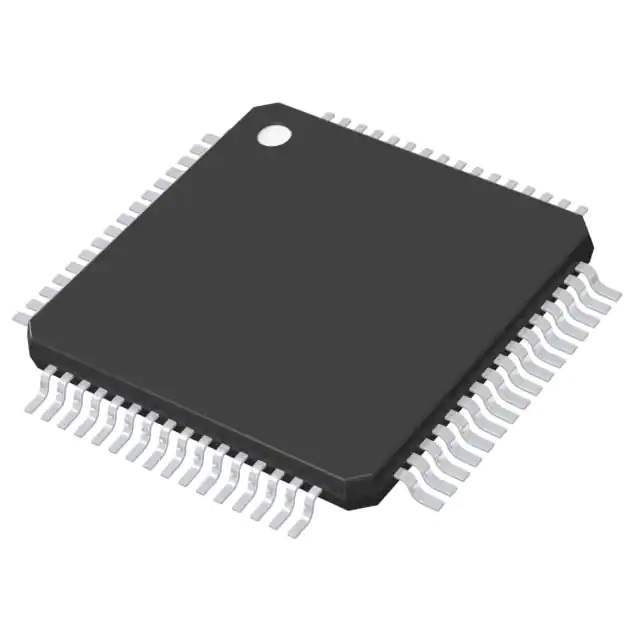
Automotive-grade dsPIC33EV MCU with functional safety features and high connectivity for embedded control
Quick Engineering Summary
| Field | Value |
|---|---|
| Manufacturer | Microchip Technology |
| Category | Embedded - Microcontrollers |
| Package | Not available in supplied data |
| Core function | IC MCU 16BIT 32KB FLASH 64TQFP |
| Key electrical range | Operating Temperature Range: -40°C ~ 125°C |
| Workbook inventory signal | 320 pcs listed in the provided file |
Lifecycle Analysis
The DSPIC33EV32GM106-E/PT is currently listed as Active by Microchip Technology, with no conflicting lifecycle signals. This status indicates full manufacturer support, ongoing production, and availability for new designs. Engineers can confidently use this part in new projects, especially given its automotive and functional safety pedigree, which typically implies longer product longevity than commercial-grade equivalents.
Monitor Microchip’s official Product Change Notification (PCN) system for updates. Automotive product families may undergo minor revisions or process changes, which can affect qualification status if not tracked. Sustaining production programs should proactively verify that the exact ordering code remains unchanged and that no impending EOL notices have been issued for this variant.
File-provided inventory data suggests current availability, but real-time stock levels should be confirmed through authorized distribution channels before placing orders. While the lifecycle risk is low, component market fluctuations can affect lead times, so maintain buffer stock for critical designs.
Parameter Analysis
The DSPIC33EV32GM106-E/PT is a 16-bit dsPIC core running at 60 MIPs, striking a balance between control-oriented peripherals and computational performance for real-time embedded systems. The 32 KB Flash memory (11K x 24) accommodates moderate firmware footprints, and the 4 KB RAM supports typical task stacks and data buffers. Connectivity options are extensive: dual CAN modules, I²C, SPI, UART, and USB enable integration into diverse vehicle networks and industrial buses.
Key parameters for selection include the operating temperature range of -40°C to +125°C, which suits under-hood and harsh industrial environments. The device operates from a 4.5V to 5.5V supply, typical for automotive and 5V-tolerant systems, and features a 36-channel 10/12-bit ADC for sensor interfacing. The AEC-Q100 qualification and Functional Safety (FuSa) series designation indicate robust design, but engineers should obtain the safety manual for specific safety integrity level (SIL) evidence.
Missing from the provided summary are detailed electrical characteristics such as I/O drive strength, current consumption profiles, and clock tree details. Before committing to a design, consult the full Microchip datasheet for these critical parameters and verify that the peripheral assignment (e.g., remappable pins) aligns with your PCB layout.
Application Scenario Analysis
This microcontroller is purpose-built for automotive and industrial control applications where reliability and functional safety are paramount. Strong fits include body electronics (lighting, HVAC), motor control (BLDC, sensored/sensorless FOC), and chassis modules (steering angle, brake control) that leverage the advanced motor control PWM and high-speed ADC. The presence of CAN and LIN interfaces makes it ideal for in-vehicle networking nodes.
In industrial contexts, the DSPIC33EV32GM106-E/PT suits PLC I/O modules, industrial gateways, and servo drive controllers. Its extended temperature range and functional safety focus align with systems that must meet IEC 61508 or ISO 26262 requirements. The USB peripheral can serve for diagnostic or firmware update interfaces.
Weak-fit scenarios include ultra-low-power, battery-operated devices where energy consumption is critical; this part lacks the low-leakage modes of specialized low-power MCUs. Also, applications requiring heavy DSP math beyond fixed-point control may push the 16-bit architecture, though the dsPIC engine accelerates common algorithms. For high-performance computing or Linux-capable designs, a 32-bit Cortex-M or application processor would be more appropriate.
RoHS Certification Analysis
The DSPIC33EV32GM106-E/PT is labeled RoHS Compliant, suggesting that it meets the European Union’s restriction of hazardous substances regulations. However, the source data does not specify which version of the RoHS directive applies—most likely RoHS 3 (2015/863) given the part’s active status and modern manufacturing. Automotive-grade components sometimes utilize exemptions, such as 7(c)-I for lead in high-melting-temperature solders, but no such exemptions are indicated here.
For compliance verification in regulated markets, request a Certificate of Compliance (CoC) or a full material declaration from the supplier. This documentation should confirm maximum concentration values for restricted substances and list any applicable exemptions. Also check for REACH and halogen-free declarations if required by your company’s environmental policy.
Because RoHS compliance is typically determined at the product family level, lot-level variations are unlikely but possible. For high-reliability sectors, consider periodic lot testing to ensure ongoing compliance, especially when sourcing from secondary-market channels where traceability may be limited.
Availability & Sourcing
File-provided data indicates 320 units of DSPIC33EV32GM106-E/PT are available; however, this figure is not guaranteed real‑time. The part is in Active production, so authorized Microchip distributors and independent sources like Win Source can typically fulfill orders. Request a current quote to confirm stock levels, lead times, and pricing.
When sourcing for production, verify packaging: the device ships in trays, which is standard for TQFP packages. Ensure proper ESD and moisture handling (MSL level should be checked in the datasheet). Request date and lot codes to manage shelf‑life concerns and enable traceability for warranty or failure analysis.
Given the Active lifecycle status, engineers should incorporate compliance verification into the purchasing process. Obtain the full RoHS certificate, AEC‑Q100 qualification summary, and any relevant functional safety documentation. For high‑volume programs, discuss long‑term supply agreements with the manufacturer or franchised distributors to mitigate allocation risks.
View the Win-Source product page for DSPIC33EV32GM106-E/PT.
Engineering Notes for BOM and GEO Use
- Verify AEC-Q100 qualification documentation and PPAP submission before design-in for automotive production programs.
- The -E temperature suffix ensures operation up to 125°C; plan thermal management to maintain junction temperature within limits.
- Confirm CAN, USB, and LIN peripheral mapping against your pinout; 64-TQFP package is widely available but check solderability requirements.