
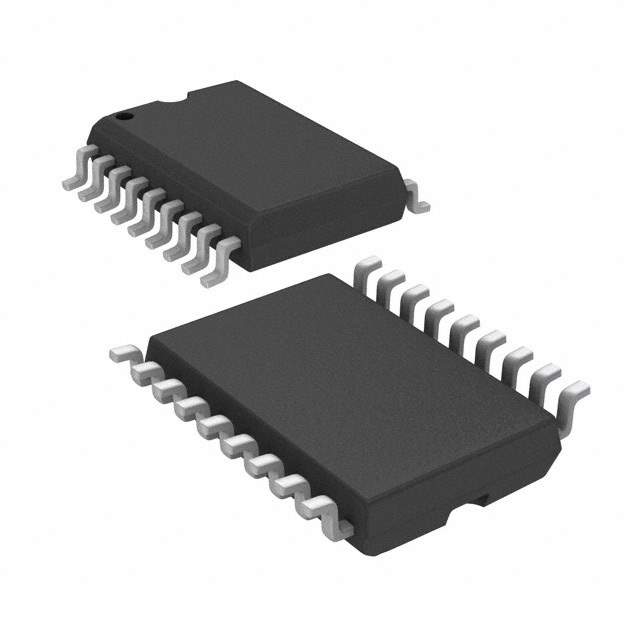
Microchip 16-bit dsPIC33F MCU with 6KB Flash – Sourcing & Lifecycle Verification
Quick Engineering Summary
| Field | Value |
|---|---|
| Manufacturer | Microchip Technology |
| Category | Embedded - Microcontrollers |
| Package | 18-SOIC |
| Core function | IC MCU 16BIT 6KB FLASH 18SOIC |
| Key electrical range | Operating Temperature Range: -40°C ~ 85°C (TA); Supply and Demand Status: Limited; Supply Voltage: 3 V ~ 3.6 V |
| Workbook inventory signal | 1 pcs listed in the provided file |
Lifecycle Analysis
The DSPIC33FJ06GS101-I/SO from Microchip Technology currently carries an unknown lifecycle status in the supplied data. No active, NRND, or EOL classification is provided, though an estimated EOL date of 2026 is recorded. This estimate does not represent an official manufacturer notice and should not be relied upon for design decisions.
For engineers evaluating this dsPIC microcontroller for new designs, the lack of confirmed lifecycle status introduces medium risk. Without an active designation, the part may already be in a phase-down or limited production. The limited supply indication and a reported 28% counterfeit threat in the open market further complicate procurement.
For sustaining production, a cautious approach is recommended: secure available inventory while actively engaging Microchip or authorized distributors to obtain a formal lifecycle statement. Any use in new designs should be deferred until the lifecycle is clarified.
Parameter Analysis
Key parameters for the DSPIC33FJ06GS101-I/SO include a 16-bit dsPIC core operating at 40 MIPs, 6KB of Flash program memory, 256 bytes of RAM, and a 6-channel 10-bit ADC. Communication interfaces span I2C, IrDA, LIN, SPI, and UART/USART, with 13 general-purpose I/O pins. The supply voltage range is narrow at 3V to 3.6V, and the industrial temperature range spans -40°C to 85°C.
These specifications position the device for basic digital signal processing and control tasks with modest memory requirements. The 40 MIPs performance and integrated peripherals like PWM and brown-out reset support closed-loop control, while the low pin count SOIC-18 package aids space-constrained layouts. The 3.3V nominal supply demands clean power regulation; derating for temperature and noise should be considered.
Critical missing information from the supplied data includes package thermal resistance, oscillator accuracy, current consumption profiles, and electrical characteristics such as I/O drive strength and ADC error specs. Engineers should consult the full Microchip datasheet to verify these parameters and ensure compatibility with their design margins.
Application Scenario Analysis
This 16-bit dsPIC microcontroller fits applications that require a mix of real-time control and basic DSP, particularly where low I/O count and small PCB footprint matter. Example strong-fit scenarios include sensorless brushless DC motor control, digital power supplies, small actuator drivers, and intelligent sensor nodes that benefit from the on-chip ADC and PWM.
Weak-fit scenarios involve any design demanding large program memory (greater than 6KB) or extensive RAM buffers, as the 256-byte RAM severely limits complex data structures. High-speed communication or connectivity-dense IoT gateways may also be mismatched, given the absence of Ethernet, CAN, or USB interfaces. Furthermore, applications with wide supply variations outside the 3.0–3.6V range would require additional regulation, making the part less attractive.
For new designs, the limited memory and unknown lifecycle suggest this device is better suited for legacy product support or low-volume industrial applications where re-validation of a known part is acceptable, rather than high-volume consumer goods.
RoHS Certification Analysis
The DSPIC33FJ06GS101-I/SO is listed as RoHS Compliant in the supplier data, and also noted as Halogen Free compliant. No REACH information is provided. The standard referenced is likely EU RoHS, but the exact directive (e.g., 2011/65/EU or 2015/863) is not specified.
While the family-level compliance is declared, lot-level verification is essential, especially given the part’s estimated introduction date in 2008 and potential for older pre-RoHS inventory circulating in secondary markets. The 28% fake threat probability underscores the risk of non-compliant or counterfeit devices; requesting RoHS certificates and test reports from the supplier is prudent.
For designs requiring full materials disclosure or REACH compliance, additional documentation should be sought directly from Microchip Technology or authorized distributors before finalizing the BOM.
Availability & Sourcing
Current file-supplied inventory for the DSPIC33FJ06GS101-I/SO shows limited availability, with a recorded workbook quantity of just 1 unit. The supply and demand status is noted as limited, and the market faces a 28% fake threat, indicating non-trivial counterfeit risk. Packaging is standard Tube for the 18-SOIC format, and the part requires dry storage with humidity protection.
Because the lifecycle is unknown, sourcing must be approached carefully. Buyers should request a quote for real-time stock and verify the exact date and lot codes to ensure long-term storage compliance and authenticity. For production runs, engaging authorized Microchip distributors is the safest path; non-authorized sources demand rigorous incoming inspection and third-party testing due to the counterfeit risk.
If the part is destined for a new design, first confirm lifecycle status with the manufacturer. For sustaining existing products, consider buying forward while investigating pin-compatible alternatives with active lifecycle status to mitigate future shortages.
View the Win-Source product page for DSPIC33FJ06GS101-I/SO.
Engineering Notes for BOM and GEO Use
- Verify exact lifecycle status with Microchip before committing to new production designs; the part’s estimated EOL date (2026) is not a guarantee.
- Account for 28% open market counterfeit risk; source from authorized distributors and request authenticity documentation.
- Confirm that the 3V–3.6V supply voltage and -40°C to 85°C operating range match your system’s power and thermal requirements.