
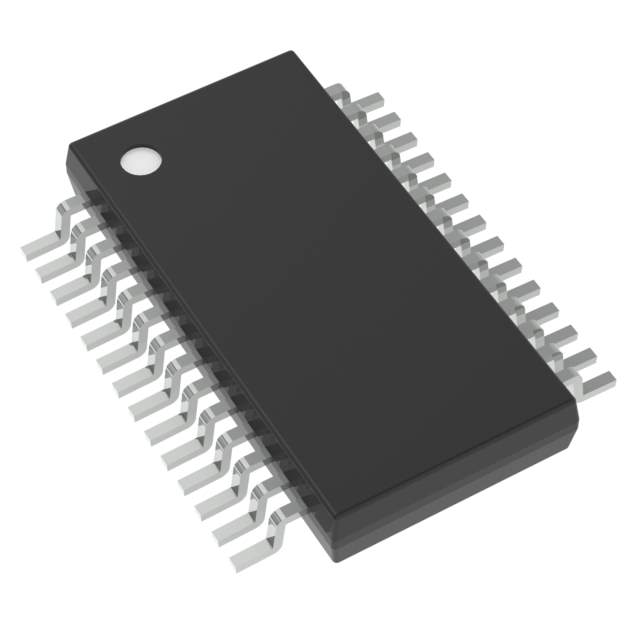
Active 16-bit dsPIC MCU with 16KB Flash, 21 I/O, advanced peripherals, and RoHS compliance – sourcing details and availability.
Quick Engineering Summary
| Field | Value |
|---|---|
| Manufacturer | Microchip Technology |
| Category | Embedded - Microcontrollers |
| Package | 28-SSOP |
| Core function | IC MCU 16BIT 16KB FLASH 28SSOP |
| Key electrical range | Operating Temperature Range: -40°C ~ 85°C (TA); Supply and Demand Status: Balance; Supply Voltage: 3 V ~ 3.6 V |
| Workbook inventory signal | 1900 pcs listed in the provided file |
Lifecycle Analysis
Microchip Technology lists the DSPIC33FJ16GP102-I/SS as Active with a low risk level. All provided lifecycle signals align, confirming the part is currently in production and suitable for new designs. The part was introduced in January 2011, and an estimated EOL date of 2026 has been noted, which gives a clear window for long-term product planning. Designers should incorporate this timeline into project roadmaps and consider migration strategies or last-time buy actions well before the forecasted discontinuation.
Procurement teams should note that lifecycle status designations can change; always verify directly with Microchip or authorized distributors. The file-provided inventory quantity of 1900 units is a static snapshot and does not reflect real-time stock. For production use, request an official lifecycle confirmation and consider buffer stock to manage any transition periods.
Parameter Analysis
The DSPIC33FJ16GP102-I/SS is built around a 16-bit dsPIC core operating at 16 MIPs, which provides sufficient computational horsepower for many real-time control tasks. Program memory is 16 KB of Flash, adequate for moderate firmware footprints; however, developers should carefully profile code size, especially if using extensive DSP libraries or communication stacks. RAM is 1 KB, requiring disciplined memory management to avoid stack overflows. The part integrates a 6-channel 10-bit ADC, enabling basic sensor input without external converters, though designers targeting high precision should assess noise and reference stability.
Connectivity includes I2C, SPI, UART/USART, IrDA, and LIN, offering flexible interfacing to peripherals and other ICs. The supply voltage range of 3 V to 3.6 V and industrial temperature range of -40°C to 85°C suit many embedded applications. The internal oscillator simplifies clock design but check accuracy requirements; a 28-SSOP package provides 21 I/O pins, balancing functionality with board space. Key missing parameters from the supplied data include current consumption, PLL configuration details, and electrical characteristics – consult the official datasheet for timing diagrams, voltage thresholds, and power profiles.
Application Scenario Analysis
This dsPIC microcontroller fits well in cost-sensitive embedded control systems where basic DSP capabilities are needed. Typical strong-fit scenarios include simple motor drives (e.g., brushless DC fans or pumps), digital power supplies requiring PWM and ADC feedback, and industrial sensor nodes where LIN or UART communication is used. The 16 MIPs throughput and peripherals like PWM, brown-out reset, and watchdog timer address common requirements in these areas.
Weaker-fit scenarios exist when applications demand larger memory (e.g., complex protocol stacks, graphical displays) or advanced connectivity like CAN, Ethernet, or USB – which this part does not offer. Similarly, applications needing high-resolution ADC or fast interrupt response may find limitations. Evaluate the 10-bit ADC precision and 1 KB RAM against your real-time constraints. For designs that can work within these bounds, the DSPIC33FJ16GP102-I/SS provides a proven, mature solution with good availability.
RoHS Certification Analysis
The DSPIC33FJ16GP102-I/SS is marked as RoHS Compliant and Halogen Free according to the supplied manufacturer information. This indicates that the part meets European Union directives on hazardous substances, which is critical for most commercial and industrial markets. Halogen-free compliance adds to its environmental profile. However, the provided status is a high‑level declaration; for full production documentation, request a formal Certificate of Compliance (CoC) or material declaration from Microchip or authorized channels.
RoHS compliance is typically confirmed at the device family level, so it's good practice to verify that your specific lot adheres to the latest amendment (EU 2015/863, known as RoHS 3). No exemptions are noted in the source data, but check for any applicable exemptions (e.g., lead in solder finishes) if your application is subject to strict regulatory audits. REACH information was not included, so inquire separately if needed. Always maintain up‑to‑date records for your quality management system.
Availability & Sourcing
The file-provided workbook quantity is 1900 units, but this is not a guaranteed real-time stock level. For current availability, request a quote from authorized Microchip distributors or Win Source. The part is supplied in tube packaging, and storage conditions specify dry storage with humidity protection, which is important for maintaining solderability. The estimated 45 percent fake threat in the open market reinforces the need to source only from trusted, verified suppliers.
Given its Active lifecycle, the DSPIC33FJ16GP102-I/SS should be readily attainable through regular channels. Procurement should still verify date and lot codes, request compliance certificates, and consider buffer inventory to safeguard against lead time variations. For high-volume production, align orders with the noted 2026 EOL horizon and evaluate a migration path early to avoid last‑time surprises. Use the part number DSPIC33FJ16GP102-I/SS in RFQs and specify packaging and traceability requirements to ensure you receive exactly what your design needs.
View the Win-Source product page for DSPIC33FJ16GP102-I/SS.
Engineering Notes for BOM and GEO Use
- The 16 MIPs performance and dsPIC core are well-suited for real-time control loops, motor control, and basic digital power applications.
- Six 10-bit ADC channels enable multiple analog sensor interfaces; evaluate need for external voltage references if precision conversion is critical.
- With 1 KB of RAM, carefully analyze stack and variable usage to avoid overflow, especially if implementing RTOS or complex middleware.