
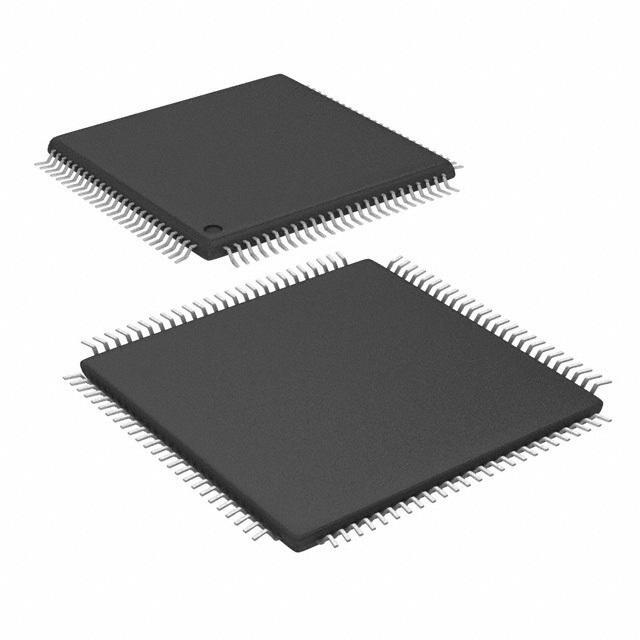
Microchip Technology 16-bit dsPIC microcontroller with 256KB Flash, CAN/LIN, 100-TQFP
Quick Engineering Summary
| Field | Value |
|---|---|
| Manufacturer | Microchip Technology |
| Category | Embedded - Microcontrollers |
| Package | 100-TQFP (12x12) |
| Core function | IC MCU 16BIT 256KB FLASH 100TQFP |
| Key electrical range | Speed(Frequency): 40 MIPs; Supply and Demand Status: Limited; Supply Voltage - Operating: 3 V to 3.6 V; Temperature Range - Operating: -40°C to 85°C (TA) |
| Workbook inventory signal | 5000 pcs listed in the provided file |
Lifecycle Analysis
Microchip Technology lists the DSPIC33FJ256GP710-I/PT as Active in some records, but the detailed status field explicitly states Not For New Designs. This poses a critical contradiction that engineers and buyers must resolve before committing to production. The part's introduction date in 2007 and an estimated end-of-life year of 2022 further support that it is not intended for new projects. We categorize the lifecycle as NRND (Not Recommended for New Designs) with medium risk.
For applications already in production, sustaining procurement is possible but inventory is limited and demand status is constrained. Any new design activity should be directed toward Microchip's recommended migration paths. The file-provided quantity of 5000 units should be verified in real-time, as stock levels may change rapidly. Given the high counterfeit risk (72%), authentication and traceability from authorized channels are essential.
Parameter Analysis
The DSPIC33FJ256GP710-I/PT is a 16-bit dsPIC microcontroller with a 40 MIPs core, 256KB Flash program memory, and 30KB RAM. Operating voltage is narrow at 3.0–3.6 V, requiring careful power supply design. The 100-TQFP package (12x12 mm) offers 85 I/O lines and integrates a 32-channel 10/12-bit ADC, making it suitable for sensor-heavy applications. Communication peripherals include CANbus, LINbus, I2C, SPI, and UART, which are critical for industrial and automotive networking.
However, several important datasheet parameters are missing from the provided data: EEPROM size (indicated as '-' so likely none), specific oscillator type details, packaging moisture sensitivity level (MSL), and reflow profile. The absence of MSL means baking and handling guidelines must be checked in the manufacturer's datasheet before assembly. Additionally, the high counterfeit threat in the open market means physical dimensions and markings should be validated against Microchip's package specifications.
Application Scenario Analysis
This dsPIC33FJ256GP710-I/PT microcontroller excels in embedded control applications requiring deterministic DSP performance and robust communication. It is a strong fit for motor control, digital power conversion, and automotive body electronics, thanks to its high-speed PWM, DMA, and CAN/LIN support. The 85 I/O lines and integrated analog-to-digital converters suit complex sensor interfaces in industrial automation.
In contrast, it is a weaker fit for low-power or battery-operated designs due to the 3.0 V minimum supply and industrial-temperature range (–40°C to 85°C). Absence of integrated EEPROM may require external non-volatile memory for parameter storage. For applications needing Ethernet, USB, or graphics, this MCU is not suitable. Projects that require long-term availability should avoid this NRND part and instead consider Microchip's newer dsPIC33E or dsPIC33C families.
RoHS Certification Analysis
Microchip documents the DSPIC33FJ256GP710-I/PT as RoHS Compliant and Halogen Free Compliant. This indicates conformance to the EU Restriction of Hazardous Substances directive; however, the specific revision (e.g., RoHS 2 or RoHS 3) is not provided. Typically, components marked RoHS Compliant meet the current standard at the time of manufacture, but it is prudent to request full material declarations for compliance verification in highly regulated markets.
The halogen-free compliance is an additional environmental specification that may be relevant for reducing halogen-based flame retardants. No REACH statement is supplied in the data, so for EU-based procurement, a REACH SVHC declaration should be requested. Note that compliance status is typically tested at the production lot level, and re‑certification may be needed for older inventory batches.
Availability & Sourcing
The DSPIC33FJ256GP710-I/PT is in limited supply with a 'not for new designs' status. File-provided inventory shows 5,000 units, but real‑time availability should be confirmed via RFQ. Given the part's age and an estimated EOL date of 2022, authorized distributor stock may be depleted, forcing reliance on independent brokers. However, the open‑market counterfeit risk is measured at 72%, demanding rigorous inspection and authenticated sourcing.
For current production needs, buyers should request lot codes, date codes, and compliance certificates (RoHS, Halogen‑Free, and preferably a full Certificate of Conformance). Storage conditions specified as dry cabinet and humidity-protected packaging suggest sensitivity to moisture, so verifiable dry-pack handling is advised. Because this is not recommended for new designs, engineering teams should evaluate Microchip’s migration options for any new programs. To secure inventory for existing builds, request a quote today with traceability terms to mitigate counterfeit risks.
View the Win-Source product page for DSPIC33FJ256GP710-I/PT.
Engineering Notes for BOM and GEO Use
- Confirm the lifecycle status directly with Microchip; the part appears NRND despite some databases listing Active, and EOL was estimated for 2022.
- Insist on authorized or traceable supply chains to combat the 72% counterfeit threat; request lot and date code verification.
- Derate the 3.0–3.6V supply and –40 to 85°C temperature range in safety-critical designs, and confirm missing datasheet parameters like MSL before production.