
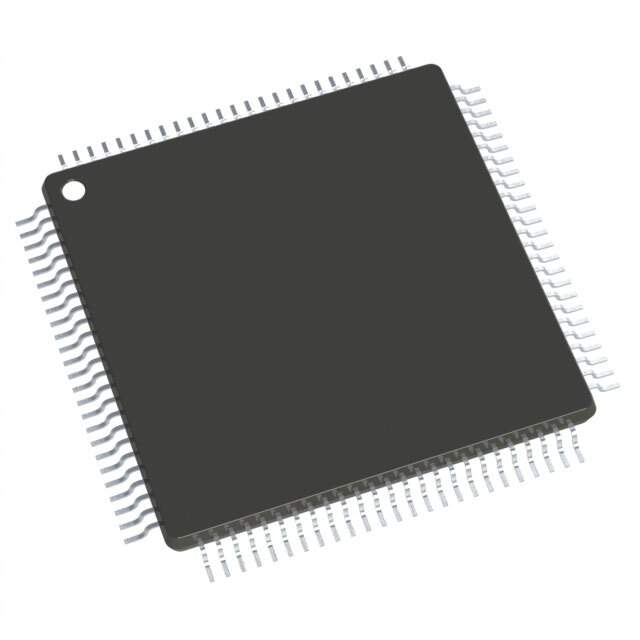
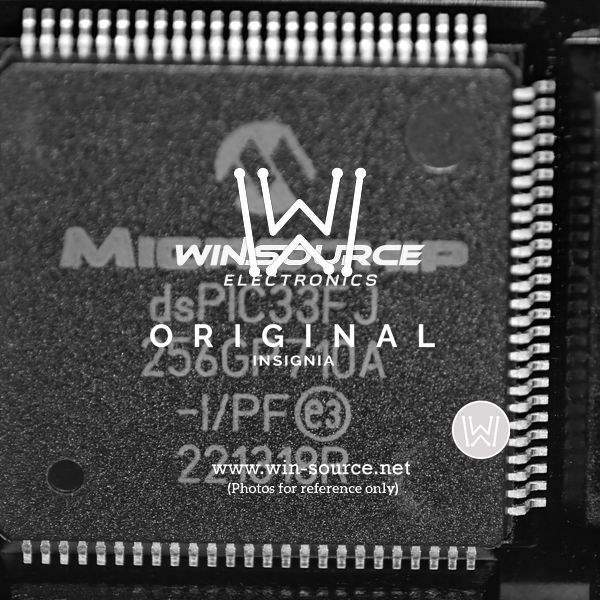
A technical procurement reference for the Microchip dsPIC33F series 16-bit microcontroller
Quick Engineering Summary
| Field | Value |
|---|---|
| Manufacturer | Microchip Technology |
| Category | Embedded - Microcontrollers |
| Package | 100-TQFP (14x14) |
| Core function | IC MCU 16BIT 256KB FLASH 100TQFP |
| Key electrical range | Operating Temperature Range: -40°C ~ 85°C (TA); Supply and Demand Status: Limited; Supply Voltage: 3 V ~ 3.6 V |
| Workbook inventory signal | 6390 pcs listed in the provided file |
Lifecycle Analysis
Microchip Technology lists the DSPIC33FJ256GP710A-I/PF as Active, with a low-risk lifecycle classification per available signals. However, the specification record also includes an Estimated EOL Date of 2023. This creates a notable conflict that demands conservative procurement planning. While the manufacturer's official status is Active, the 2023 EOL estimate suggests the part may already be in a Not Recommended for New Design (NRND) phase or approaching obsolescence. Designers committing this dsPIC33F series microcontroller to new platforms should obtain a formal Product Change Notification (PCN) or Product Discontinuance Notification (PDN) directly from Microchip. For sustaining production, existing users should review last-time-buy (LTB) windows and secure inventory accordingly.
Risk is assessed as medium due to the conflicting lifecycle indicators. The provided workbook quantity (6390 units) is a file‑based snapshot and not a guarantee of real‑time availability. Given the part's 2009 introduction date and its 16‑bit architecture, migration to a newer dsPIC33E or dsPIC33C variant may be advisable for future‑proofing. In all cases, lifecycle verification should be performed with the manufacturer before committing to high‑volume procurement.
Parameter Analysis
The DSPIC33FJ256GP710A-I/PF is a high‑integration 16‑bit dsPIC microcontroller operating at up to 40 MIPs, built around a dsPIC® core with DSP engine. Its 256 KB of FLASH program memory and 30 KB of RAM suit complex control algorithms, while the 100‑TQFP (14x14 mm) package provides 85 general‑purpose I/O pins. A wide suite of connectivity peripherals—CAN, I2C, IrDA, LIN, SPI, and UART/USART—enables connectivity in industrial networking and automotive body electronics. The integrated 32‑channel 10/12‑bit ADC supports simultaneous sampling, critical for motor control and sensor aggregation.
The voltage supply range is tightly specified at 3.0–3.6 V, requiring a regulated 3.3 V rail with adequate decoupling. The operating temperature range of –40°C to +85°C (TA) is standard industrial; extended‑temperature applications would need a different suffix. Key parameters missing from the provided data include EEPROM size (listed as “‑”), packaging moisture sensitivity level (MSL), and detailed electrical characteristics such as I/O drive strength, static current consumption, and PLL/VCO stability. Engineers should consult the full Microchip dsPIC33FJ256GP710A data sheet for timing diagrams, peripheral mapping, and qualification reports. Also, note that the estimated EOL date of 2023 may impact qualification efforts; evaluate the newer dsPIC33EP series for pin‑compatible upgrades if long‑term availability is critical.
Application Scenario Analysis
This dsPIC33FJ256GP710A‑I/PF targets applications that require a balance of digital signal processing and microcontroller control. Strong‑fit scenarios include motor drives (BLDC, PMSM) with field‑oriented control, digital power supplies, and automotive body control modules where the CAN interface, 32‑channel ADC, and PWM peripherals are fully utilized. Industrial automation and process control systems benefit from the LIN, SPI, and I2C interfaces for sensor and actuator networking. The 40‑MIPS performance and hardware‑accelerated DSP instructions allow execution of moderate filter and control loops without external DSP co‑processors.
Weak‑fit scenarios include battery‑operated ultra‑low‑power devices, as the device lacks specific low‑power modes or a wide Vdd range suitable for direct battery operation. High‑temperature environments above 85°C ambient also exceed the specified industrial range. For cost‑sensitive applications where DSP capability is unnecessary, a standard 16‑bit PIC24F series part may offer a more economical solution. No wireless connectivity (BLE, Wi‑Fi) is integrated, so wireless IoT endpoints would require an external module. Always confirm pin‑out and peripheral mapping against the latest data sheet, especially when migrating from similar dsPIC33F series devices.
RoHS Certification Analysis
The DSPIC33FJ256GP710A‑I/PF is classified as RoHS Compliant per the supplier’s declaration. This status typically indicates conformity with EU Directive 2011/65/EU and its amendments (RoHS 3, EU 2015/863). Additionally, the component is flagged as Halogen Free Compliant, which suggests bromine and chlorine levels meet IEC 61249‑2‑21 thresholds. However, no specific REACH statement or SVHC certification is provided in the source data, so if full REACH Article 33 documentation is needed, it must be requested separately.
For procurement, lot‑level compliance documentation (CE, CoC) should be obtained to confirm that the shipped units match the supplier’s RoHS classification, especially given the part’s age (introduced 2009) and potential for grey‑market stock. The storage condition note—dry storage cabinet and humidity protection—implies the part is moisture‑sensitive; verify the MSL rating from the tray label and bake if necessary before reflow soldering. Sourcing from authorized distributors or directly from Microchip ensures traceability and valid environmental compliance records.
Availability & Sourcing
The DSPIC33FJ256GP710A‑I/PF is shown with a file‑provided inventory quantity of 6,390 units (workbook count), indicating a moderate stock buffer. However, because the lifetime status may be ambiguous—Active per one signal but with a 2023 estimated EOL date—buyers should treat availability as dynamic and verify real‑time stock when requesting a quote. The part is supplied in tray packaging (100‑TQFP) and stored under dry cabinet conditions, which is essential for MSL‑controlled components.
Given the potential lifecycle transition, we recommend the following sourcing strategy: (1) Request a formal quote and lead‑time confirmation along with the manufacturer’s PCN/PDN history for this specific suffix. (2) For new design starts, evaluate the next‑generation dsPIC33EP or dsPIC33C families to ensure production continuity beyond the published EOL estimate. (3) If this part is already in production, secure a safety stock and negotiate a Last‑Time Buy agreement with Microchip or authorized channels. RFQ responses should include date/lot code traceability, RoHS/REACH compliance certificates, and packaging condition reports. Never accept inventory without verified dry‑pack integrity, as moisture ingress can compromise solderability. Contact our team to request a current quote and lifecycle‑verified availability for the DSPIC33FJ256GP710A‑I/PF.
View the Win-Source product page for DSPIC33FJ256GP710A-I/PF.
Engineering Notes for BOM and GEO Use
- Verify lifecycle status directly with Microchip; conflicting signals between Active status and 2023 EOL estimate.
- Ensure 3.3V supply rail stability; device operates at 3.0-3.6V.
- For new designs, evaluate the dsPIC33EP or dsPIC33CH series as potential alternatives if this part transitions to NRND.