
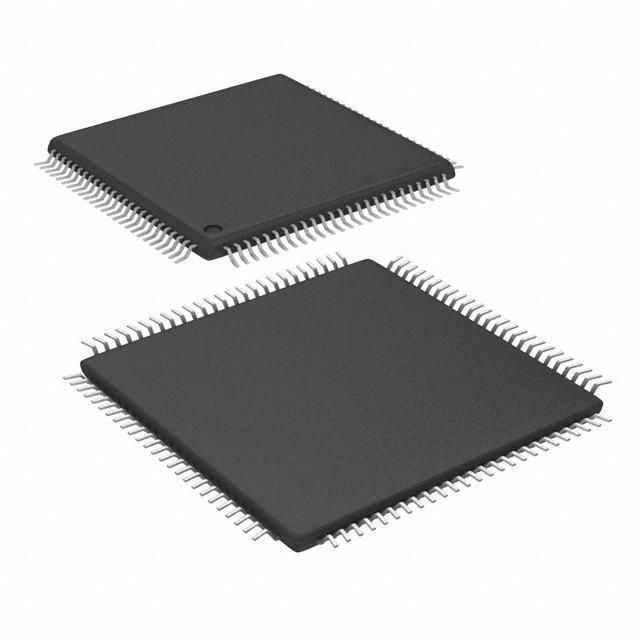
16-bit 256KB Flash MCU with dsPIC core in 100-TQFP — Specs, Lifecycle & Sourcing
Quick Engineering Summary
| Field | Value |
|---|---|
| Manufacturer | Microchip Technology |
| Category | Embedded - Microcontrollers |
| Package | 100-TQFP (12x12) |
| Core function | IC MCU 16BIT 256KB FLASH 100TQFP |
| Key electrical range | Operating Temperature Range: -40°C ~ 85°C (TA); Supply and Demand Status: Limited; Supply Voltage: 3 V ~ 3.6 V |
| Workbook inventory signal | 551 pcs listed in the provided file |
Lifecycle Analysis
The DSPIC33FJ256MC710-I/PT is currently listed as Active by Microchip Technology, which typically means the part is in full production and suitable for new designs. However, an Estimated EOL Date of 2019 appears in the supplied data, creating a significant conflict. This estimate, if accurate, suggests that the manufacturer may have issued an end-of-life notification in the past, possibly transitioning the part to NRND (Not Recommended for New Designs) even if lifecycle databases haven't been updated. Engineers and procurement teams should treat this part with caution. Direct verification with Microchip through their official product page or local sales office is essential before committing to new production. The presence of an EOL estimate raises the strategic importance of second-source alternatives and inventory planning.
Given the high counterfeit threat (60%) on the open market, lifecycle ambiguity increases risk. If the part is indeed approaching obsolescence, unauthorized sources may exploit demand. For sustaining production, stock availability should be assessed, and a migration plan should be considered if the customer product lifecycle extends beyond the component's projected availability. In summary, while the status says Active, the conflicting EOL date suggests a medium risk; proactive lifecycle verification is required.
Parameter Analysis
The DSPIC33FJ256MC710-I/PT is a 16-bit dsPIC core microcontroller delivering 40 MIPs with 256KB of FLASH program memory and 30KB of RAM. This performance level suits applications requiring digital signal processing alongside standard MCU control. The on-chip peripherals include motor control PWM, QEI (Quadrature Encoder Interface), and a rich set of communication interfaces: CAN, I2C, IrDA, LIN, SPI, and UART/USART. These features point strongly toward motor control, industrial automation, and distributed embedded systems. The 24-channel analog-to-digital converter with 10/12-bit resolution provides flexibility for sensor conditioning, and the 85 general-purpose I/Os in a 100-pin TQFP package offer generous interfacing.
Key electrical specifications include a supply voltage range of 3.0 V to 3.6 V and an operating temperature range of -40°C to +85°C, which meets industrial-grade requirements but stops short of full automotive AEC-Q100 qualification. The internal oscillator simplifies board design by reducing external clock components. Parameters absent from the available data include current consumption on various power modes, EEPROM size (likely none, as the field is marked '-'), and peripheral pin select availability—all of which must be validated in the full datasheet before design-in. The 40 MIPs speed and DSP engine make this part suitable for closed-loop control algorithms, while the combination of CAN and LIN ensures connectivity in vehicle and industrial networks. Designers should confirm exact peripheral mapping and pin compatibility with their layout, especially if migrating from an older variant.
Application Scenario Analysis
Given its dsPIC core, motor control peripherals, and industrial temperature range, the DSPIC33FJ256MC710-I/PT is a strong fit for brushless DC (BLDC) motor drives, permanent magnet synchronous motor (PMSM) control, and other field-oriented control applications. The integrated motor control PWM and QEI modules reduce external logic and simplify firmware development for precision motion systems. Industrial automation equipment such as PLCs, distributed I/O modules, and sensor hubs benefit from the CAN bus interface and DSP capability for real-time data processing.
General-purpose embedded applications that require extensive user interface or large external memory may find this MCU less suitable, as it lacks an LCD controller and has no external memory bus support indicated. Consumer devices needing low power consumption might also be a weaker match, since the dsPIC architecture is optimized for performance rather than ultra-low-power operation. In summary, the device is best targeted at motor drives, power inverters, and real-time industrial control nodes where its specialized peripherals and DSP performance can be fully utilized. Any new design should also consider the lifecycle uncertainty; if the project has a long life, confirming continued availability is critical.
RoHS Certification Analysis
The RoHS status for DSPIC33FJ256MC710-I/PT is listed as 'Request Verification,' which means that compliance documentation is not currently confirmed by the supplier. This does not necessarily indicate non-compliance; many Microchip products are RoHS compliant, but without a direct manufacturer declaration or a lab certificate, the part cannot be presumed to meet EU RoHS directive 2015/863 or other regional standards. The available data notes that the part is Halogen Free compliant, which is a positive indicator but does not cover all restricted substances such as lead, cadmium, or mercury.
For formal compliance verification, procurement teams should contact Microchip or an authorized distributor to request a current RoHS certificate of compliance, preferably at the lot or date code level. This is especially important for shipments to the EU, China, or other jurisdictions with mandatory RoHS enforcement. During incoming inspection, verifying the RoHS marking on the physical package can provide additional assurance, but a full materials declaration from the manufacturer remains the gold standard. Until the documentation is confirmed, the part should be considered as 'RoHS compliance not verified,' which may affect importation or customer acceptance.
Availability & Sourcing
File-provided inventory shows a quantity of 551 units for the DSPIC33FJ256MC710-I/PT. This volume may support initial prototyping or small production runs, but real-time availability must be confirmed through a quote request. The supply-and-demand status is noted as 'Limited,' and with a high counterfeit threat (60%), buyers should adhere to strict sourcing discipline. Only authorized Microchip distributors or verified sources with traceability should be used. The part is packaged in trays for the 100-TQFP package and requires dry storage conditions per the handling specifications.
Given the conflicting lifecycle signals—Active status but an Estimated EOL Date of 2019—sustaining customers should secure inventory while simultaneously evaluating a migration or second-source strategy. New designs should not proceed without a confirmed lifecycle and long-term availability plan from Microchip. We recommend requesting a quote through Win Source to verify current stock, date/lot codes, and packaging integrity. Full compliance documentation, including RoHS and country-of-origin certificates, should be requested alongside the order. For high-volume or long-life programs, direct engagement with Microchip for a product roadmap update is advisable.
View the Win-Source product page for DSPIC33FJ256MC710-I/PT.
Engineering Notes for BOM and GEO Use
- Verify lifecycle status with Microchip; estimated EOL date 2019 conflicts with active status, indicating possible transition.
- RoHS compliance requires manufacturer confirmation; request documentation before procurement.
- High counterfeit risk (60%) in open market; source only from authorized distributors and verify traceability.