
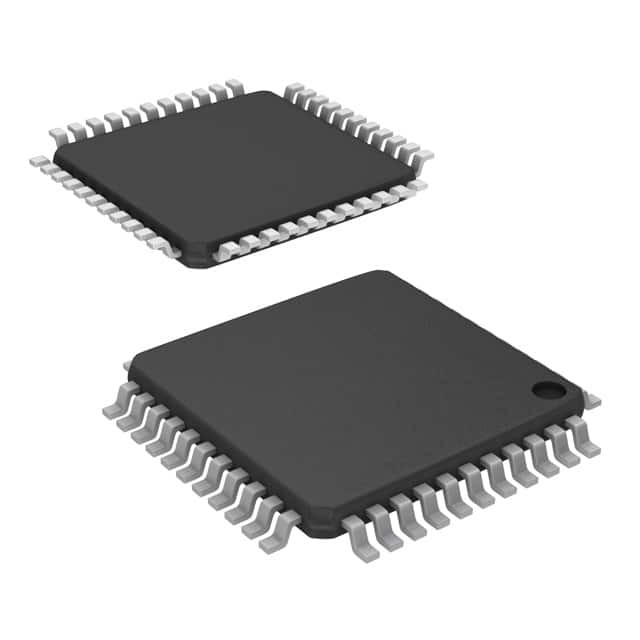
Active dsPIC33F series 16-bit MCU with motor control PWM, 32KB Flash, and industrial temp range.
Quick Engineering Summary
| Field | Value |
|---|---|
| Manufacturer | Microchip Technology |
| Category | Embedded - Microcontrollers |
| Package | 44-TQFP (10x10) |
| Core function | IC MCU 16BIT 32KB FLASH 44TQFP |
| Key electrical range | Operating Temperature Range: -40°C ~ 85°C (TA); Supply and Demand Status: Limited; Supply Voltage: 3V ~ 3.6V |
| Workbook inventory signal | 3410 pcs listed in the provided file |
Lifecycle Analysis
DSPIC33FJ32MC104-I/PT from Microchip Technology is confirmed Active based on multiple lifecycle signals including manufacturer data and Excel lifecycle parameters. This status indicates the microcontroller remains in full production with no planned discontinuation, making it suitable for both new designs and existing production runs. Engineers should factor in a typical estimated production lead time of 20 weeks for planning purposes.
All supplied lifecycle signals are consistent, showing no conflicts. However, for mission-critical applications, we recommend subscribing to Microchip’s PCN alerts to stay informed of any future changes. The inventory quantity of 3410 units noted in the source workbook is a static file value; actual on-hand stock may differ. Always re‑confirm availability with your distributor when placing orders.
For new designs, DSPIC33FJ32MC104-I/PT presents a reliable, active choice with broad supply chain support. Sustaining production can proceed with confidence, but periodic re‑validation of the active status is advised.
Parameter Analysis
Key parameters of DSPIC33FJ32MC104-I/PT define its fit in embedded control systems. The 16‑bit dsPIC core delivers up to 16 MIPS, providing sufficient processing power for closed‑loop motor control algorithms. Program memory is 32KB Flash organized as 11K x 24, suitable for moderate firmware loads, with internal oscillator simplifying board layout. The 3.0–3.6V supply range aligns with common 3.3V rail designs.
Particularly useful for motion control are the Motor Control PWM peripherals, which generate complementary outputs with dead‑time insertion for bridge circuits. The part also offers 35 I/O lines, 14 channels of 10‑bit ADC, and connectivity including I²C, SPI, UART, LINbus, and IrDA. These enable a range of sensor and communication tasks. The 44‑TQFP (10x10) surface‑mount package allows compact designs.
Potential missing details that should be verified in the official datasheet include the exact RAM size (listed elsewhere as 1K x 16), internal regulator requirements, and precise timing for PWM resolution at maximum MIPS. Also confirm that the internal oscillator accuracy meets your communication baud rate needs; an external crystal may be required for LIN or UART applications.
Application Scenario Analysis
DSPIC33FJ32MC104-I/PT is a strong candidate for applications requiring digital motor control, thanks to its dedicated Motor Control PWM peripheral. Typical strong‑fit scenarios include sensorless BLDC drives, PMSM field‑oriented control, and switched reluctance motor drivers. The LINbus interface makes it well suited for automotive actuator nodes such as window lift or seat motor controllers, where reliable low‑speed networking is needed.
Industrial applications also benefit: the part can serve as a compact controller for sensor hubs, valve actuators, or power tools, leveraging the internal oscillator and 10‑bit ADC for cost‑sensitive designs. The –40°C to +85°C operating range covers most industrial environments.
Weak‑fit scenarios include battery‑operated devices that demand ultra‑low sleep currents, as no low‑power specs are highlighted. Also, applications requiring a large communication stack (e.g., CAN or Ethernet) or more than 32KB code space should consider higher‑end dsPIC models. For simple logic replacement, a lower‑cost 8‑bit MCU may suffice.
RoHS Certification Analysis
Microchip Technology lists DSPIC33FJ32MC104-I/PT as RoHS Compliant, indicating that its constituent materials meet the restrictions on hazardous substances. Although the exact RoHS revision is not specified, it is typically compliant with EU RoHS Directive 2011/65/EU and its amendment 2015/863 (RoHS 3) when marked as such by Microchip. The part is also REACH Unaffected, meaning it contains no SVHCs above the 0.1% w/w threshold.
No RoHS exemptions are noted in the provided data. The component has an MSL (Moisture Sensitivity Level) rating of 1, which signifies unlimited floor life after opening the dry pack under controlled conditions, simplifying handling and storage.
For production, request the manufacturer’s certificate of compliance for each shipment to guarantee that the specific lot meets current RoHS standards. Even though the family‑level status is compliant, individual batches may be subject to process changes.
Availability & Sourcing
Sourcing DSPIC33FJ32MC104-I/PT requires attention to authenticity and lead time. The provided workbook quantity of 3410 units is a snapshot and not a real‑time guarantee. Given a 77% counterfeit threat in the open market, purchasing through authorized Microchip distributors or verified partners is critical. Request date‑code and lot‑code traceability to validate part provenance.
The part ships in trays, with 160 units per package, suitable for medium‑volume production. A 20‑week estimated lead time suggests that long‑term procurement planning is advisable. ECCN 3A991A2 and HTSUS 8542.31.0001 may apply for international orders; confirm export classification with your compliance department.
As an Active component, the immediate call to action is to request a quote for current pricing and availability while also obtaining compliance documentation (RoHS, REACH). Engage early with supply chain partners to secure inventory and buffer against lead time variability.
View the Win-Source product page for DSPIC33FJ32MC104-I/PT.
Engineering Notes for BOM and GEO Use
- Monitor Microchip’s PCN alerts for any lifecycle changes despite Active status.
- Ensure supply voltage remains within 3.0–3.6V, especially during Flash write operations.
- Validate authenticity through authorized channels due to 77% open‑market counterfeit risk.