
Microchip dsPIC33F 16‑bit MCU: parameters, compliance, and procurement intelligence
Quick Engineering Summary
| Field | Value |
|---|---|
| Manufacturer | Microchip Technology |
| Category | Embedded - Microcontrollers |
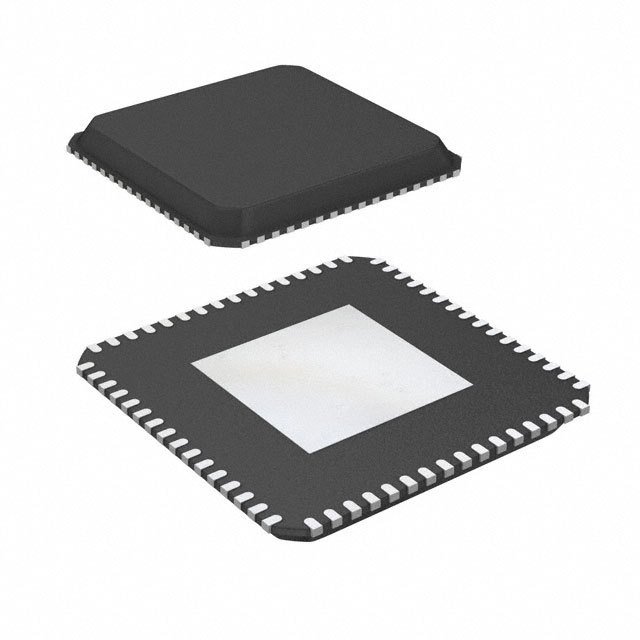
| Package | 64-QFN (9x9) |
| Core function | IC MCU 16BIT 64KB FLASH 64VQFN |
| Key electrical range | Operating Temperature Range: -40°C ~ 85°C (TA); Supply and Demand Status: Limited; Supply Voltage: 3 V ~ 3.6 V |
| Workbook inventory signal | 1 pcs listed in the provided file |
Lifecycle Analysis
Microchip designates the DSPIC33FJ64MC506A-I/MR as ‘Active’, indicating it is still in production. However, the supplied data also includes an Estimated EOL Date of 2023. This conflict raises a red flag: a part declared active after its estimated end‑of‑life suggests that either the estimate is stale or the product is being sustained with limited future commitment. For new designs, this is not a safe baseline; the risk level is therefore assessed as medium.
Engineers working on new projects should directly contact Microchip for a formal life‑cycle status confirmation and an updated obsolescence roadmap. For existing designs in production, it is prudent to secure a pipeline of inventory now and begin evaluating a migration path to a newer dsPIC33E or dsPIC33C variant. Relying on a single‑digit stock quantity from a distributor file is not a reliable supply indicator—actual availability must be verified through a live quote.
Parameter Analysis
The DSPIC33FJ64MC506A-I/MR is built around a dsPIC 16‑bit core running at 40 MIPs, which provides deterministic performance for control loops. Its 64KB of flash and 8KB of RAM allow moderate‑complexity firmware with room for a real‑time kernel and motor‑control libraries. The 3.0–3.6V supply range and industrial temperature grade (-40°C to +85°C) suit a broad set of embedded environments, but designers should derate I/O current and thermal dissipation when operating near the temperature extremes.
Connectivity is a strength: CAN, I2C, IrDA, LIN, SPI, and UART/USART interfaces are all present, simplifying integration into automotive or industrial networks. The motor‑control peripherals—PWM, QEI, and DMA—are key differentiators; the PWM module likely supports complementary outputs with dead‑time insertion, essential for three‑phase inverter control. The 16‑channel 10/12‑bit ADC facilitates sensor feedback.
Important parameters not fully detailed in the source data include the exact ADC sampling rate, comparator response times, and flash endurance ratings. Before finalizing a design, obtain the official datasheet and verify these specifications against your control loop timing requirements.
Application Scenario Analysis
Given its dsPIC core and dedicated motor‑control peripherals (PWM, QEI, DMA), the DSPIC33FJ64MC506A-I/MR is an excellent fit for sensor‑oriented field‑oriented control (FOC) of permanent‑magnet synchronous motors, stepper motors, and brushless DC motors. The CAN interface enables it to serve as a networked actuator node in automotive body electronics or industrial automation systems. Its multiple serial interfaces (I2C, SPI, UART) also make it suitable for bridging sensors and actuators in distributed control architectures.
In less demanding roles—such as a simple supervisory MCU or a low‑power sensor node—this part may be over‑qualified. Its 64‑pin QFN package and exposed pad require careful PCB layout for both signal integrity and thermal management, which adds complexity compared to a smaller, lower‑pin‑count device. For battery‑powered applications, the 3.0–3.6V supply and lack of an explicit low‑power trade‑off profile mean it is not the strongest candidate among Microchip’s portfolio.
Ultimately, the part’s sweet spot remains mid‑range motor and motion control where its peripheral mix and DSP acceleration produce a highly integrated single‑chip solution.
RoHS Certification Analysis
The DSPIC33FJ64MC506A-I/MR is listed as RoHS Compliant and Halogen Free according to the provided compliance data. These certifications suggest that the component meets EU Directive 2011/65/EU (RoHS 2) and related amendments, including the restriction of lead, mercury, cadmium, and other hazardous substances. The halogen‑free claim further addresses voluntary industry standards such as IEC 61249‑2‑21, reducing the environmental impact of the finished assembly.
It is important to note that RoHS compliance is declared at the family or part‑number level; variations can occur between lots and package date codes. For high‑reliability or regulated industries, procurement teams should request a full material composition declaration or a certificate of conformance (CoC) from Microchip or the authorized distributor. Also, if REACH (EC 1907/2006) compliance is required, a separate SVHC statement must be obtained; REACH and RoHS are independent regulations, and one does not imply the other. During receiving inspection, verify that the physical packaging carries the appropriate marking and date code consistent with the compliance documentation.
Availability & Sourcing
The file‑provided inventory for the DSPIC33FJ64MC506A-I/MR stands at a single unit, and the supply‑demand status is noted as ‘Limited’. This snapshot is not real‑time and should not be used as a commitment—always request a live quote to confirm current stock levels and lead times. The part’s packaging is specified as Tube, which is typical for production‑volume handling of QFN devices, though tape‑and‑reel options may exist for high‑volume assembly.
Given the conflicting lifecycle signals, it is essential that every procurement inquiry include a lifecycle verification step. Ask the distributor to provide the latest Microchip PCN (Product Change Notification) and life‑cycle status letter. Also specify requirements for date/lot codes, humidity‑controlled packaging (MSL level), and traceability certificates. For a RoHS‑compliant device like this, ensure the supplier can deliver the full compliance pack, including RoHS, REACH, and a Conflict Minerals Reporting Template (CMRT) if needed.
To proceed, request a quote for current availability and explicitly ask for a production‑dated certification. This will mitigate the risk of sourcing old‑date‑code or uncertified inventory in a product that may be quietly transitioning out of full production.
View the Win-Source product page for DSPIC33FJ64MC506A-I/MR.
Engineering Notes for BOM and GEO Use
- Cross‑check the Estimated EOL Date (2023) with Microchip’s official product lifecycle notifications before finalizing a new design.
- Motor‑control applications can leverage the integrated PWM and QEI modules, but verify timing margins in your specific PWM frequency and control loop.
- Request a latest‑date‑code certificate and full RoHS/REACH documentation from the distributor to ensure compliance and traceability.