
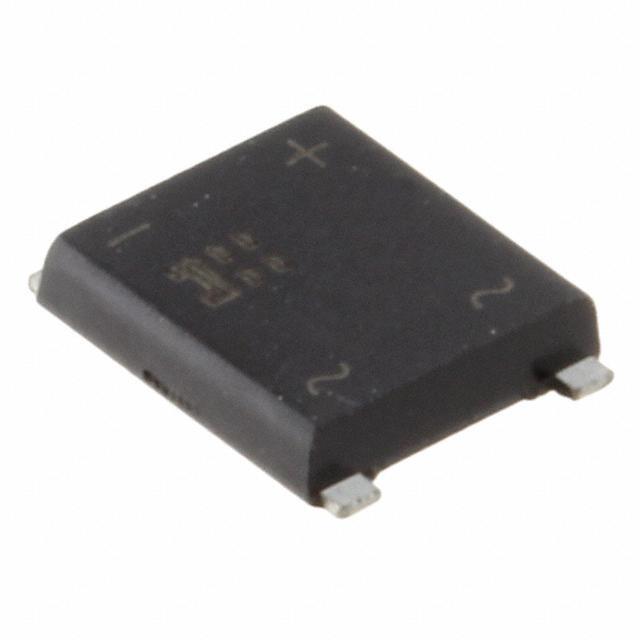
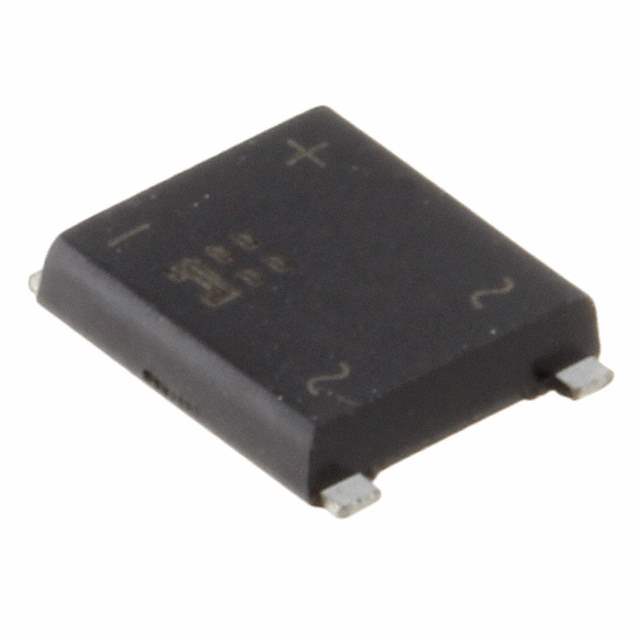
Diodes Incorporated Bridge Rectifier – End-of-Life Sourcing
Quick Engineering Summary
| Field | Value |
|---|---|
| Manufacturer | Diodes Incorporated |
| Category | Bridge Rectifiers |
| Package | 4-T-MiniDIP |
| Core function | BRIDGE RECT 1P 1KV 1A 4-TMINIDIP |
| Key electrical range | Current - Average Rectified (Io): 1A; Current - Reverse Leakage @ Vr: 10μA @ 1000V; Supply and Demand Status: Sufficient; Temperature Range - Operating: -55°C to 150°C (TJ) |
| Workbook inventory signal | 38900 pcs listed in the provided file |
Lifecycle Analysis
The DSRHD10-13 bridge rectifier from Diodes Incorporated carries conflicting lifecycle signals: the primary lifecycle status is EOL (End-of-Life), with an estimated obsolete date, yet a secondary 'Status' field indicates 'Active'. This discrepancy demands immediate verification with the manufacturer. For new designs, the EOL designation makes this part unsuitable; replacement with an active alternative is strongly advised. For sustaining production, remaining inventory should be secured as soon as possible, as the manufacturer may have already halted production.
The part's introduction date of April 2013 suggests a mature product, and its popularity as a common-used part means sudden depletion of stock is a real risk. The file-provided inventory of 38,900 units offers a snapshot, but this quantity is not guaranteed and may change rapidly. With a high-risk lifecycle, buyers must treat every procurement as potentially the last-buy opportunity and confirm lot availability with distributors directly.
Parameter Analysis
Key electrical parameters for the DSRHD10-13 include a maximum peak reverse voltage of 1000V and an average rectified current of 1A, defining it as a low-power, high-voltage bridge rectifier. The forward voltage drops to 1.1V at 1A, which is typical for standard silicon diodes, resulting in about 1.1W of conduction loss per leg—this must be managed thermally, especially in compact SMD layouts. The reverse leakage current is specified at 10µA at 1000V, which is low and suitable for most general-purpose rectification.
The operating junction temperature range of -55°C to 150°C provides a wide safety margin, but users must verify junction-to-ambient thermal resistance from the datasheet to ensure adequate derating for the 4-T-MiniDIP package. Missing specifications, such as surge current ratings and total power dissipation, are critical for design robustness and should be obtained from the original manufacturer documentation. Without these, engineers cannot fully assess inrush capability or long-term reliability under fault conditions. PCB layout should minimize loop inductance and provide sufficient copper pour for heat sinking.
Application Scenario Analysis
The DSRHD10-13 is a single-phase full-wave bridge rectifier suitable for converting AC mains to DC in low-power applications. Its 1A rating makes it a fit for small power supplies, battery chargers, LED drivers, and auxiliary power circuits within white goods or consumer electronics. The 1000V peak reverse voltage allows operation from 230V AC mains with ample margin, even considering voltage spikes.
However, its standard technology (not fast-recovery) and lack of automotive qualification limit its use in switching power supplies where reverse recovery losses are critical, or in automotive environments where AEC-Q compliance is expected. For 50/60Hz linear supplies or low-frequency rectification, it performs adequately. Given its EOL status, it is not recommended for new designs; existing designs using this part should evaluate pin-compatible alternatives like the Diodes Incorporated DSRHD series or other manufacturers' miniature bridge rectifiers in similar packages, but careful parameter matching is required. The compact 4-T-MiniDIP SMD package suits space-constrained boards, but thermal design must account for limited dissipation.
RoHS Certification Analysis
The DSRHD10-13 is listed as RoHS compliant and halogen-free, indicating the absence of lead, mercury, cadmium, hexavalent chromium, PBBs, PBDEs, and certain flame retardants from its construction. The data does not specify the exact RoHS directive version; however, given its introduction in 2013, it likely conforms to EU RoHS (recast 2011/65/EU) and may also meet the stricter RoHS 3 (2015/863) if no phthalates were added. For formal compliance documentation, a certificate of compliance from Diodes Incorporated or an authorized distributor is recommended, especially for EU market shipments.
As an EOL product, the RoHS status of remaining stock should be confirmed with suppliers, as older inventory could predate certain exemptions changes. No specific exemptions are noted in the supplied data; typical bridge rectifiers may use lead in glass of diodes or high-melting-point solders internally, so check manufacturer declarations. The halogen-free claim is a positive environmental attribute but does not replace a full RoHS statement. Overall, the part is suitable for RoHS-restricted applications assuming documentary proof is obtained.
Availability & Sourcing
As an EOL component, sourcing the DSRHD10-13 requires immediate and cautious action. The file-provided quantity of 38,900 units is a snapshot and may not represent real-time availability. Buyers should request a current quote to confirm stock, pricing, and lead times. Packaging is on reels of 5,000 pieces, suitable for volume production, with storage in dry, humidity-protected conditions to preserve solderability.
Given the 60% fake threat rate in the open market, traceability is paramount. Insist on full date/lot code documentation and avoid unauthorized sources. Verification of lifecycle status and RoHS compliance certificates should accompany every shipment. For ongoing production, consider last-time-buy opportunities and evaluate alternative bridge rectifiers for future builds. Direct engagement with Diodes Incorporated or their franchised distributors is the safest procurement path. The 'Sufficient' supply-demand status noted in the data is a point-in-time statement; market conditions can shift rapidly for EOL parts. Secure inventory now and plan a migration strategy to avoid production disruptions.
View the Win-Source product page for DSRHD10-13.
Engineering Notes for BOM and GEO Use
- Verify exact EOL notice from Diodes Incorporated before committing to new production; the datasheet may still show active status.
- Due to a 60% open-market fake threat, insist on traceable supply with date/lot codes and manufacturer verification.
- The 4-T-MiniDIP package is a compact surface-mount bridge; confirm footprint compatibility and thermal derating using the original datasheet.