
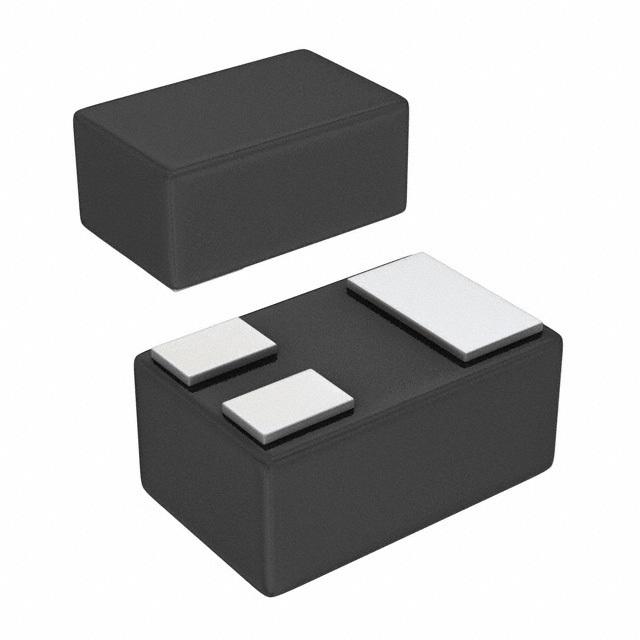
Verify lifecycle and review specs for the DSS2515M-7B NPN 15V 0.5A transistor in 3-DFN1006 package.
Quick Engineering Summary
| Field | Value |
|---|---|
| Manufacturer | Diodes Incorporated |
| Category | Transistors (BJT) - Single |
| Package | 3-DFN1006 (1.0x0.6) |
| Core function | TRANS NPN 15V 0. |
| Key electrical range | Collector Cut-off Current(Max): 100nA (ICBO); Frequency - Transition: 250MHz; Maximum Current Collector: 500mA; Maximum Power Dissipation: 250mW |
| Workbook inventory signal | 5300 pcs listed in the provided file |
Lifecycle Analysis
The lifecycle status of the DSS2515M-7B is officially unknown. Although one internal specification field lists 'Active,' no manufacturer‑issued lifecycle confirmation accompanies the data. For sourcing teams and design engineers, this discrepancy means the part cannot be assumed to be in full production without direct verification.
A mechanical listing of 5300 units in the file‑provided inventory provides a rough availability snapshot, but it does not reflect real‑time stock or a commitment to ongoing supply. Until Diodes Incorporated releases an official product status notification, treat the DSS2515M-7B as unverified for new designs.
In sustaining production, conduct a thorough cross‑check: review the latest datasheet revision, request a formal lifecycle letter from Diodes Incorporated, and if needed, initiate alternate‑source qualification. The medium risk level reflects this information gap; conservative procurement protocols are strongly recommended.
Parameter Analysis
The DSS2515M-7B's primary electrical ratings include a VCEO of 15V, a collector current capability of 500mA, and a maximum power dissipation of 250mW. These limits define a device suited for low‑voltage, moderate‑current switching and amplification. The 15V breakdown voltage aligns with 12V and lower‑voltage rails common in portable and battery‑powered equipment, while the 500mA rating supports direct LED driving, small relay coils, or logic‑level loads.
The minimum DC current gain of 150 at 100mA/2V simplifies base‑drive design, and the 250MHz transition frequency enables switching at moderate speeds. The tiny 3-DFN1006 package (1.0x0.6mm) is critical for ultra‑compact PCB layouts but demands careful attention to pad design and thermal management. The specified collector‑emitter saturation voltage of 250mV max ensures low on‑state losses.
Key missing information includes junction‑to‑ambient thermal resistance (θJA), Safe Operating Area curves, and detailed leakage behavior beyond the ICBO of 100nA. Engineers should obtain the full datasheet from Diodes Incorporated to verify these parameters before finalizing a design. Without them, derating assumptions and reliability calculations remain incomplete.
Application Scenario Analysis
The DSS2515M-7B from Diodes Incorporated is well suited for space‑constrained, low‑power applications. Its small 3-DFN1006 SMD package and low‑voltage ratings make it a natural fit for battery‑powered handheld devices, such as load switches, LED drivers, or signal amplification in mobile accessories. The high gain reduces base‑drive current, saving power in energy‑sensitive designs.
Industrial applications benefit from the wide operating temperature range of –55°C to 150°C (junction), which supports use in harsh environments provided power dissipation limits are respected. The transistor can serve as a level translator or buffer in 3.3V/5V logic circuits, where the 15V rating offers significant headroom.
Weak‑fit scenarios include high‑power switching above 0.5A continuous or any circuit requiring a VCEO above 15V. The 250mW dissipation limit restricts use to small‑signal tasks; medium‑power motor drives or LED strings with high forward voltage are outside its safe range. Similarly, RF amplifiers above 200MHz will push the fT margin.
RoHS Certification Analysis
The DSS2515M-7B is listed as RoHS Compliant, indicating adherence to European Union hazardous substance restrictions. The specific RoHS standard (e.g., RoHS 3 under EU 2015/863) is not confirmed in the available data; therefore, buyers should obtain the manufacturer’s Declaration of Conformity to validate compliance to the current directive.
No exemptions are explicitly noted, but the presence of silicon as the base material and the small package do not typically raise exemption flags. However, the flagged open‑market counterfeit risk of 28% underscores the importance of verifying RoHS compliance at the lot level. Counterfeit parts may not meet environmental regulations, posing legal and technical risks.
For full traceability, request the Material Safety Data Sheet and the EU RoHS certificate from the distributor or Diodes Incorporated. When sourcing from non‑authorized channels, insist on lab‑based verification reports to confirm lead‑free and halogen‑free status.
Availability & Sourcing
According to the file‑provided inventory, 5300 units of the DSS2515M-7B are indicated, but this figure is not a real‑time guarantee. The device is supplied on tape and reel (TR) packaging, typical for automated assembly. Given the unknown lifecycle status, availability should be reconfirmed through a formal RFQ with authorized distributors or directly with Diodes Incorporated.
Sourcing the DSS2515M-7B demands caution. The 28% counterfeit threat rating highlights the risks of unauthorized channels. Always request date/lot codes, a valid Certificate of Compliance (RoHS), and full traceability to the original manufacturer. A dry storage cabinet and humidity‑protected packaging are recommended per the specified storage condition.
To proceed, submit a request for quote (RFQ) through your preferred supplier to obtain current stock levels, lead times, and compliance documentation. If lifecycle verification yields unfavorable news, consider an engineering evaluation of potential alternatives, but no drop‑in replacement is provided here. Proactive lifecycle monitoring is essential.
View the Win-Source product page for DSS2515M-7B.
Engineering Notes for BOM and GEO Use
- Lifecycle is unconfirmed despite a specification field marking it 'Active'; verify directly with Diodes Incorporated before production use.
- High open‑market counterfeit risk of 28% demands sourcing only through authorized channels with full traceability.
- Absent datasheet parameters like thermal resistance and SOA must be obtained from the manufacturer for derating and PCB design.