
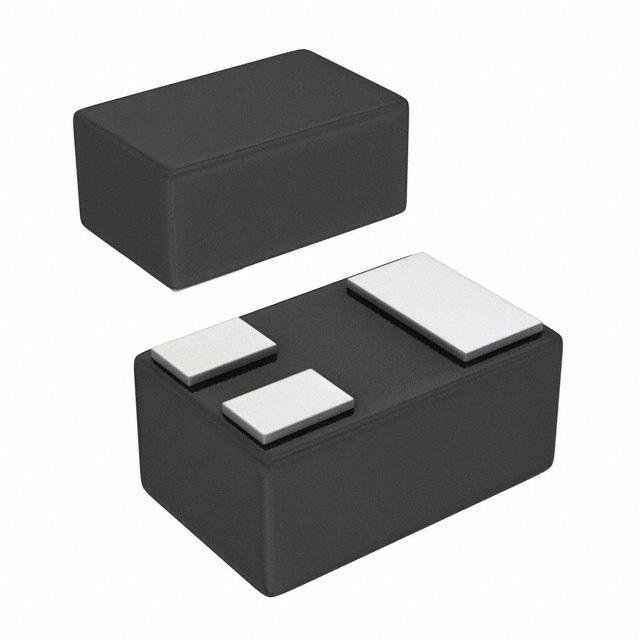
A practical engineering sourcing reference for the DSS2540M-7B NPN transistor, covering lifecycle, parameters, applications, compliance, and procurement.
Quick Engineering Summary
| Field | Value |
|---|---|
| Manufacturer | Diodes Incorporated |
| Category | Transistors (BJT) - Single |
| Package | 3-DFN1006 (1.0x0.6) |
| Core function | TRANS NPN 40V 0. |
| Key electrical range | Collector Cut-off Current(Max): 100nA (ICBO); Frequency - Transition: 300MHz; Maximum Current Collector: 500mA; Maximum Power Dissipation: 250mW |
| Workbook inventory signal | 163790 pcs listed in the provided file |
Lifecycle Analysis
The lifecycle status of the DSS2540M-7B from Diodes Incorporated presents conflicting data. One specification field lists the part as ‘Active’, while a separate supply-chain analysis categorizes the status as Unknown with medium risk. An estimated EOL date of 2028 is provided but cannot be relied upon as a formal manufacturer notice.
For new designs, this inconsistency demands caution. Active status would normally allow full qualification, but the Unknown assessment raises the possibility of a pending change that has not been formally published. Engineers should contact Diodes Incorporated directly to obtain a product change notification (PCN) or an official lifecycle statement before locking in this part.
A file-provided inventory quantity of 163,790 units suggests current availability, but this is not a real-time guarantee. In sustaining production, secure a sufficient buffer stock and plan for re-validation in case a last-time buy is announced.
Parameter Analysis
Key parameters from the supplied data include a collector-emitter breakdown voltage (VCEO) of 40V, maximum collector current of 500mA, and a total power dissipation of 250mW at an ambient temperature likely derived from FR-4 board conditions. The DC current gain (hFE) is specified as a minimum of 150 at 100mA and 2V, which is moderate for a general-purpose small-signal BJT.
The transition frequency (fT) of 300MHz indicates that the DSS2540M-7B can handle RF and high-speed switching signals, making it more than adequate for typical low-frequency control applications. Saturation voltage (VCE(sat)) tops out at 250mV under a 50mA/500mA test condition, which is acceptable for low-side switching in battery-operated circuits.
Missing from the datasheet excerpt are critical thermal resistance values (junction-to-ambient and junction-to-case) and safe operating area (SOA) curves. Without these, engineers must perform conservative derating, especially when operating near the 150°C maximum junction temperature. Verify these metrics in the full Diodes Incorporated datasheet before finalizing the thermal design.
Application Scenario Analysis
The DSS2540M-7B fits well in ultra-compact consumer electronics and portable devices where board space is at a premium. Its X1-DFN1006-3 package, measuring only 1.0mm x 0.6mm, suits wearable technology, sensor modules, and miniaturized IoT endpoints that require low-current switching or small-signal amplification.
It can serve as a level shifter, relay driver for miniature relays, or a buffer in battery management systems where the 40V rating provides headroom above common lithium-ion pack voltages. In audio preamplifier stages, the combination of 150 hFE and 300MHz fT offers decent linearity at low signal levels.
Designs that demand higher current – such as motor driving or power LED strings – should look elsewhere. The 500mA collector current limit and 250mW power ceiling make the part borderline for even moderate power applications. Similarly, automotive or industrial environments with high transient voltages may exceed the 40V breakdown limit without external clamping.
RoHS Certification Analysis
The DSS2540M-7B is marked as RoHS Compliant in the supplier data, and the material declaration also indicates Halogen Free compliance. This suggests the part meets the requirements of EU RoHS Directive 2011/65/EU and its amendments, including the restriction of lead, mercury, cadmium, and other hazardous substances.
Although the compliance label is present, engineers should treat it as a family-level statement until confirmed at the production lot level. When sourcing from distributors, request a full RoHS certificate of conformance that references the specific date code and lot number. This is especially important for products destined for the European market, where import inspections may require documented proof.
The absence of a specific MSL (moisture sensitivity level) rating in the provided data means you should verify the floor-life requirements from the Diodes Incorporated datasheet or packaging label before reflow soldering. The 'Dry storage cabinet & Humidity protection package' storage condition suggests adherence to proper handling practices, but no numerical MSL is assigned.
Availability & Sourcing
A file-provided inventory quantity of 163,790 units indicates substantial availability of the DSS2540M-7B through the reporting channel. However, this figure is not a real-time stock level and should be confirmed through an RFQ. The part is supplied on tape-and-reel (Reel - TR) packaging, which supports high-volume pick-and-place assembly.
Given the lifecycle uncertainty, buyers should incorporate a lifecycle verification step into their procurement process. Request the manufacturer’s official PCN subscription or a direct confirmation of production status before issuing a purchase order for production quantities. The part is categorized as 'Sufficient' in supply-and-demand status, and carries a 35% fake-threat rating in the open market – notable enough to insist on traceable, authorized distribution sources.
Traceability is critical: specify full date/lot code tracking in your RFQ, and consider requiring compliance documentation such as RoHS certificates and country-of-origin statements (China, per the data). With a lifecycle tagged as Unknown, conservative procurement calls for sourcing an initial evaluation quantity, qualifying the lot, and only then scaling to volume with a reserve stock position.
View the Win-Source product page for DSS2540M-7B.
Engineering Notes for BOM and GEO Use
- Verify lifecycle status with Diodes Inc. before new design commitment; conflicting signals exist between provided data fields.
- The 300MHz transition frequency makes this part suitable for RF small-signal applications within its current limits, but derate for safe operation.
- Observe the 250mW power dissipation limit; ensure adequate thermal relief in dense PCB layouts to prevent thermal runaway.