
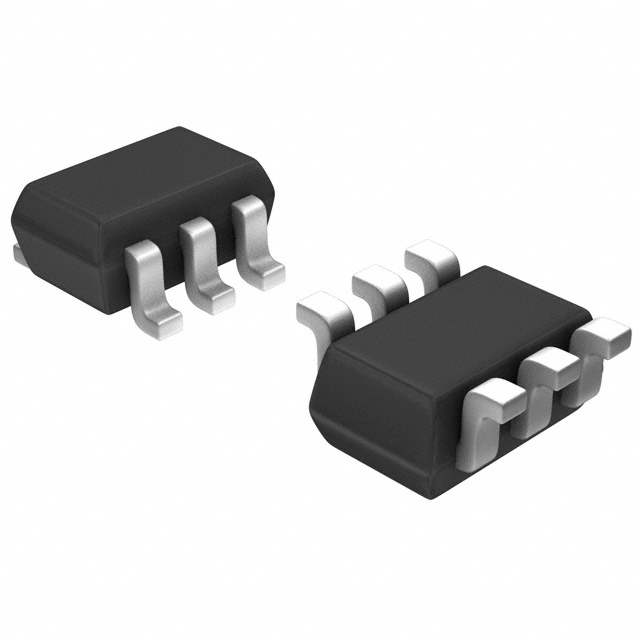
Technical sourcing guide for DSS5240Y-7, a PNP BJT from Diodes Incorporated, covering parameters, lifecycle, and procurement.
Quick Engineering Summary
| Field | Value |
|---|---|
| Manufacturer | Diodes Incorporated |
| Category | Transistors (BJT) - Single |
| Package | SOT-363 |
| Core function | TRANS PNP 40V 2A SOT-363 |
| Key electrical range | Collector Cut-off Current(Max): 100nA (ICBO); Frequency - Transition: 220MHz; Maximum Current Collector: 2A; Maximum Power Dissipation: 625mW |
| Workbook inventory signal | 3880 pcs listed in the provided file |
Lifecycle Analysis
The lifecycle status for the Diodes Incorporated DSS5240Y-7 is reported as Unknown in the supplied data, with a medium risk level. However, a separate specification field lists the status as Active, creating a conflict. This discrepancy suggests that the lifecycle has not been independently verified against manufacturer documentation. Without a definitive statement from Diodes Incorporated, the part should be treated conservatively for procurement decisions, especially for new designs. For sustaining production, existing stock may be usable, but designers should revalidate lifecycle status with the manufacturer or an authorized distributor before committing to new board designs.
The file-provided inventory quantity of 3,880 units should be considered a snapshot and not real-time. Until lifecycle clarity is obtained, treating the DSS5240Y-7 as a limited-availability component is prudent. The medium risk level reflects this uncertainty; high-reliability applications should seek formal PCN (Product Change Notification) or EOL announcements from Diodes Incorporated.
Parameter Analysis
The Diodes Incorporated DSS5240Y-7 is a PNP bipolar junction transistor in a compact SOT-363 surface-mount package. Key parameters include a collector-emitter breakdown voltage (VCEO) of 40 V and a continuous collector current rating of 2 A, making it suitable for medium-current switching and amplification. The DC current gain (hFE) is specified at a minimum of 210 at 1 A and 2 V, which provides reasonably high current amplification for drive circuits. Saturation voltage (VCE(sat)) max is 350 mV at 200 mA base current, indicating low-loss switching performance at moderate loads.
The transition frequency of 220 MHz allows for operation in moderate-speed switching or RF amplification, though careful PCB layout is needed to manage parasitic effects at these frequencies. Maximum power dissipation is 625 mW, and the operating junction temperature range spans -55°C to +150°C, requiring derating above 25°C ambient if no heatsinking is used. For thermal management, verify the junction-to-ambient thermal resistance (RθJA) from the datasheet, as it is not supplied here. Similarly, confirm storage temperature limits from the manufacturer. The package is SOT-363, which is very small; automated assembly is standard, but manual prototyping may be challenging.
Application Scenario Analysis
Derived from its PNP polarity, 40 V VCEO, and 2 A current capability, the DSS5240Y-7 fits best in low-voltage, medium-current applications where a compact SMD package is required. Typical strong-fit applications include load switching for battery-powered devices, low-side switching in power management circuits, small motor drivers, relay coil driving, and general-purpose amplifiers where audio or low-frequency signals need gain up to a few hundred kHz. The 220 MHz transition frequency also makes it viable for RF pre-amplifier stages up to VHF, provided matching networks are properly designed.
Weak-fit scenarios would involve high continuous current above 1.5 A without adequate heat dissipation, given the 625 mW power limit. For example, switching 2 A at high duty cycle may exceed thermal budget in still air. Also, applications requiring high voltage (>30 V) with large safety margins may push the 40 V VCEO limit. The PNP polarity dictates that it is used as a high-side switch with a negative control voltage relative to the emitter, so level shifting may be needed in typical positive-ground systems.
For designers, this transistor is a candidate where space is at a premium and load requirements are moderate. Always check the safe operating area (SOA) curve in the official datasheet to ensure that simultaneous high voltage and current do not exceed device limits, especially during inductive load turn-off.
RoHS Certification Analysis
The supplied data marks the DSS5240Y-7 as RoHS Compliant. This indicates that the component complies with the European Union's Restriction of Hazardous Substances directive, limiting substances such as lead, mercury, and cadmium. While the specific RoHS version or recast is not stated, most current components conform to RoHS 3 (EU 2015/863) unless otherwise noted. No REACH or halogen-free declarations are included; REACH compliance is separate and should not be assumed from RoHS status alone.
In procurement, verifying RoHS compliance on a per-lot basis can be important for assemblies requiring full material declarations. Since the data is not accompanied by a certificate, sourcing through authorized channels and requesting a signed compliance document is recommended for regulated industries. The SOT-363 package is typically lead-free and compatible with lead-free reflow soldering profiles, but confirmation from the manufacturer's datasheet is advisable to avoid soldering issues. No exemptions are listed, which suggests that all homogeneous materials meet standard threshold levels.
Availability & Sourcing
The DSS5240Y-7 is available through global component distributors, with a file-provided stock quantity of 3,880 units at Win Source. This quantity is a snapshot and not guaranteed real-time; interested parties should request a quote for current availability and pricing. The device is supplied in Reel - TR packaging, suitable for automated pick-and-place assembly. Storage conditions recommend a dry storage cabinet with humidity protection, which suggests moisture sensitivity level (MSL) awareness, though the exact MSL rating is not provided. Verify MSL with the manufacturer to determine floor life.
Given the lifecycle uncertainty, it is critical to verify the production status directly with Diodes Incorporated or authorized distributors before placing large orders. The open-market fake threat is noted at 63%, so sourcing from unauthorized brokers carries risk. For Active lifecycle assumption (from the specification field), request formal manufacturer confirmation and consider compliance documentation such as RoHS certificates and country of origin. For EOL or NRND scenarios, secure inventory and plan a pin-compatible replacement; however, no alternate part is indicated here.
To procure the DSS5240Y-7, recommend using a RFQ process through reputable distributors, specifying date/lot code traceability and full compliance packaging. For high-reliability applications, request additional screening if necessary.
View the Win-Source product page for DSS5240Y-7.
Engineering Notes for BOM and GEO Use
- Verify lifecycle status with Diodes Inc., as supplied data shows conflicting signals between 'Unknown' and 'Active'.
- The open market fake threat is 63%; source from authorized distributors and verify authenticity.
- Maximum power dissipation is 625 mW; ensure adequate thermal management within the -55°C to +150°C operating range.