
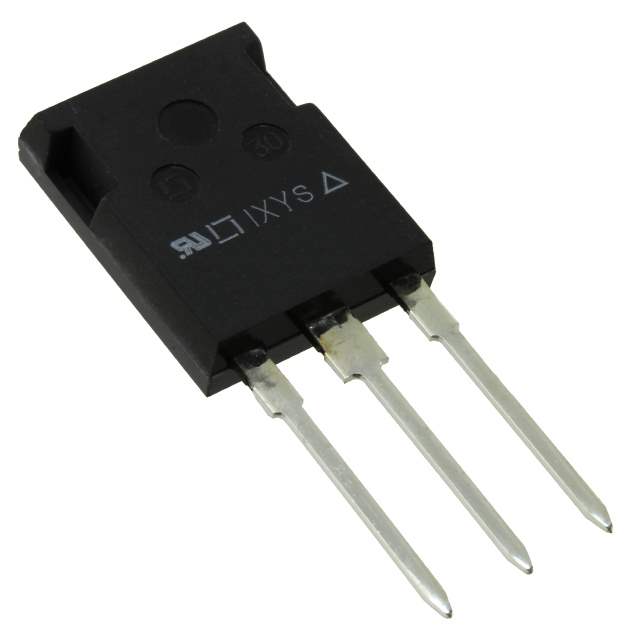
100V reverse ceiling, 30A per diode, 790mV at 30A, ISOPLUS247 through-hole, -55°C to 175°C junction
Quick Engineering Summary
| Field | Value |
|---|---|
| Manufacturer | IXYS |
| Category | Diodes, Rectifiers - Arrays |
| Package | ISOPLUS247 |
| Core function | DIODE ARR SCHOTT 100V ISOPLUS247 |
| Key electrical range | Current - Average Rectified (Io) (per Diode): 30A; Current - Reverse Leakage @ Vr: 2mA @ 100V; Operating Temperature - Junction: -55°C to 175°C; Speed(Frequency): Fast Recovery = 200mA (Io) |
| Reported stock | 8200 pcs reported — confirm on RFQ |
100V and 30A set the envelope, not the answer
100V is the hard reverse-voltage ceiling on DSSS30-01AR. That number decides first whether it belongs near your rail at all. If worst-case reverse stress can reach that limit, the part is out. If it stays comfortably below it, the next call shifts to current and heat.
The other ceiling is 30A average rectified current per diode. With a 1 pair series connection, that does not let you treat the array as two independent high-current paths; it sets the current class and pushes attention straight to forward drop and thermal path. The listing gives 790mV at 30A, so the conduction penalty is already on the table.
That matters because the package is ISOPLUS247 through-hole and the junction range runs from -55°C to 175°C, yet no thermal resistance or derating curve is listed. On paper, DSSS30-01AR fits a high-current Schottky rectifier position. It does not close the thermal case by itself, and that missing detail is what decides whether the package and layout can actually carry the load without forcing a redesign later.
New design-in is off the table
Don't use it.
DSSS30-01AR is EOL. EU RoHS is fine, but lifecycle wins, and the 8200 units on hand only support sustaining builds with a defined consumption plan.
So the real fit is existing power hardware, not fresh layouts
And that narrows the use case fast. DSSS30-01AR is a through-hole Schottky array in ISOPLUS247, described as a diode pair in series connection, so it belongs in board-level power stages that already expect a large leaded rectifier body and can use that exact connection scheme. It does not belong in dense new layouts chasing smaller footprints or in designs that have not settled the rectifier topology.
The leakage figure matters too. 2mA at 100V is a listed reverse-leakage condition, not a blanket low-loss claim across operating points. In a high-temperature holdoff condition, leakage can still set standby dissipation and fault margins, and this page does not include the curve that would settle that question. The odd “Fast Recovery = 200mA (Io)” entry is not a switching-time spec; if reverse-recovery behavior matters, you still need the actual trr data to judge commutation stress.
The buying constraint is lifecycle, with one useful escape hatch
The constraint is lifecycle pressure against visible stock. EOL plus limited supply status means buy DSSS30-01AR only for existing production, and buy to a build schedule while 8200 units remain visible and packaging stays Tube/Rail.
The technical gaps are concrete: trr, thermal resistance, pinout, and a package drawing. ECAD is not directly available here either. Those missing items matter because they decide commutation loss, thermal path, and whether the footprint can be released without rework.
View the Win-Source product page for DSSS30-01AR.
Key Takeaways for Engineers & Buyers
- Block new BOM releases on DSSS30-01AR; EOL overrides the 8200-unit stock position.
- Check the rail against the 100V reverse ceiling before using DSSS30-01AR in any rectifier leg.
- Budget conduction loss around 790mV @ 30A per diode, then pull the thermal data before layout freeze.