
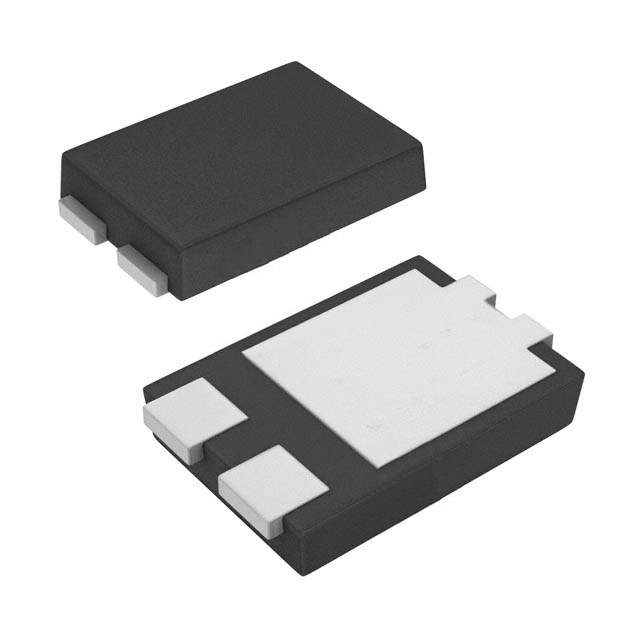
100 V reverse ceiling, 10 A average rectified ceiling, TO-277B package, -55°C to 150°C junction range
Quick Engineering Summary
| Field | Value |
|---|---|
| Manufacturer | Littelfuse Inc. |
| Category | Diodes, Rectifiers - Single |
| Package | TO-277B |
| Core function | DIODE SCHOTTKY 100V 10A TO277B |
| Key electrical range | Supply and Demand Status: Limited |
| Reported stock | 16090 pcs reported — confirm on RFQ |
100 V is the line that decides this diode
100 V is the reverse-voltage ceiling, and that one number tells you where DST10100S belongs. It fits rails and rectifier positions that stay comfortably below that limit. It does not settle surge behavior, avalanche headroom, or transient abuse, because none of those figures are listed.
The other number that matters right away is 10 A average rectified current. Treat that as a ceiling, not a working point. In a Schottky, the current rating only gets you to the thermal conversation, and the listed 700 mV at 10 A says conduction loss will be a real budget item. Good candidate for new design-in.
The constraint is heat, not package count
The constraint is thermal, not electrical. DST10100S can block 100 V and carry 10 A average rectified current, but the 700 mV forward-drop figure at 10 A says the thermal budget will decide how much of that current is usable in your layout, copper, and airflow, which is why the TO-277B package matters more here than the word Schottky on its own.
As a surface-mount single rectifier in TO-277B, it fits compact power stages, output rectification, reverse-polarity blocking, and freewheel paths where board area is tighter than with through-hole parts. The -55°C to 150°C junction range keeps it in industrial temperature conversations. It does not answer the harder question of ambient headroom at load, because no thermal resistance or derating curve is shown.
Leakage matters too. Reverse leakage is listed as 250 µA at 100 V, so a design that parks near the full reverse ceiling has to carry that into the standby and hot-case picture. What is missing is how leakage moves with temperature, and for a Schottky that absent curve can separate a clean bench result from a field return in a sealed enclosure.
10 A does not make it universal
10 A is the headline current ceiling, but DST10100S is not a catch-all rectifier. It fits board-mounted power conversion where a single Schottky in TO-277B matches the assembly flow and where reel packaging is welcome, not a nuisance.
It is a poor fit when the review hinges on dynamic behavior. The listing says Fast Recovery <= 500ns, > 200mA (Io), yet the reverse-recovery time field itself is blank. Junction capacitance is also absent, so switch-node ringing, EMI behavior, and high-frequency loss still depend on the full datasheet.
Buy it, but schedule it
Buy early.
DST10100S is Active and EU RoHS compliant, with 16090 in stock, but the real purchasing constraint is the combination of Limited supply status, 32 Weeks estimated lead time, and 5000 per reel. If this part is going onto a running line, place coverage buys before qualification closes.
View the Win-Source product page for DST10100S.
Key Takeaways for Engineers & Buyers
- Hold reverse stress below the 100 V ceiling; this listing gives no surge margin beyond that limit.
- Budget conduction loss from 700 mV at 10 A, then check the thermal path because no thermal resistance is listed here.
- Place buys against the 32 Weeks lead time and 5000 reel quantity if DST10100S is going onto a running line.