
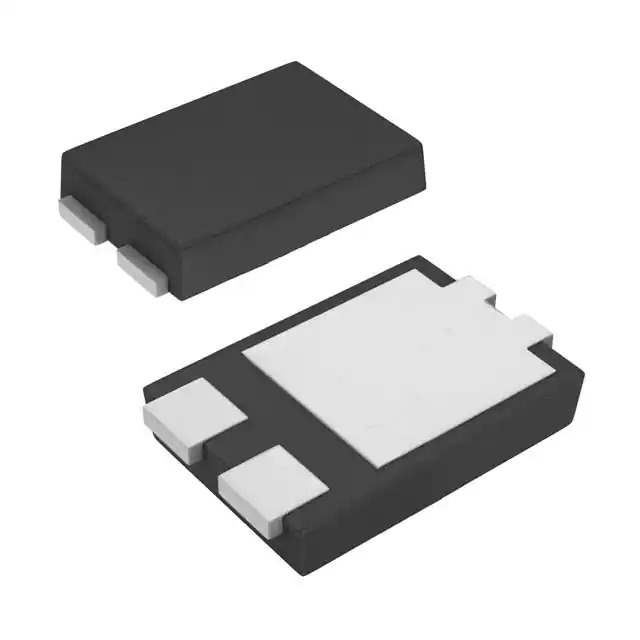
40 V reverse ceiling, 10 A average rectified limit, 570 mV at 10 A, TO-277B, -55°C to 150°C junction
Quick Engineering Summary
| Field | Value |
|---|---|
| Manufacturer | Littelfuse Inc. |
| Category | Diodes, Rectifiers - Single |
| Package | Tape & Reel |
| Core function | DIODE SCHOTTKY 40V 10A TO277B |
| Key electrical range | Capacitance @ Vr, F: 639pF @ 5V, 1MHz; Current - Average Rectified (Io): 10A; Current - Reverse Leakage @ Vr: 800 µA @ 45 V; Operating Temperature - Junction: -55°C ~ 150°C |
| Reported stock | 2127 pcs reported — confirm on RFQ |
40 V is the number that decides this part
40 V is the hard limit that makes this part either usable or irrelevant. If reverse stress can touch that ceiling, there is no extra rail headroom here, so margin comes first.
The rest of the case for new design-in is solid, just narrower than the headline current suggests. It is Active, the lifecycle signals agree, and EU RoHS is clean. In practice, DST1040S fits low-voltage power paths, freewheel positions, and output rectification where TO-277B already works and the reverse rail stays comfortably under 40 V.
And the 10 A line is still only a ceiling
And that is why the 10 A average rectified rating has to be read as a ceiling, not as proof that any board can run there without thermal work. Set it beside the listed 570 mV @ 10 A forward drop and the real design question appears quickly: conduction loss.
The leakage figure needs the same treatment. 800 µA @ 45 V is a limit near the top end, not a description of reverse loss at your actual operating point below the 40 V reverse ceiling. The -55°C to 150°C junction range is broad on paper, but it remains only a junction limit until the thermal path is known.
Good fit for dense low-voltage rectification
It fits.
Compact surface-mount power stages that want Schottky behavior and can use a TO-277B body are the natural home for this device. The 639pF @ 5V, 1MHz capacitance matters most when switching edges and EMI are already tight, because that stored charge can shape node behavior even though the listing does not include the switching waveforms that would settle the point.
2127 pieces on hand is the immediate buying constraint
2127 pieces on hand is enough to keep a build moving, but it does not line up neatly with the 5,000 pcs standard package if the goal is to start a clean running line on one reel format. That is the immediate purchasing wrinkle, not lifecycle risk, because the part is still marked Active and the compliance fields are straightforward.
Package form matters too. It is listed in Tape & Reel, with TO-277, 3-PowerDFN / TO-277B as the mechanical target, so it suits automated assembly rather than hand-loaded service stock. If the line wants one uninterrupted package quantity, lock that plan before committing the part across a wider build.
There is also a simpler filter that should come before quantity. This is not a part to source by headline current alone; the 40 V ceiling and the TO-277B footprint decide fit first, and only then does availability become the practical question.
The missing items are the ones that close thermal risk
Wrong for unresolved thermal or switching questions. What is still needed is concrete: reverse-recovery time, thermal resistance, derating curve, and a package drawing or pinout.
View the Win-Source product page for DST1040S.
Key Takeaways for Engineers & Buyers
- Hold reverse stress below the 40 V ceiling; DST1040S does not close any rail above that.
- Budget conduction loss from 570 mV @ 10 A, not from the 10 A headline alone.
- Match the footprint to TO-277B / TO-277, 3-PowerDFN before releasing the PCB.